DOEE recommends avoiding fishing in the Potomac River due to sewage spill
On Monday, January 19, 2026, a section of a 72” diameter sewer line collapsed near the Clara Barton Parkway in Montgomery County, Maryland. The sewer line, called the Potomac Interceptor, carries up to 60 million gallons of wastewater daily from Virginia and Maryland to Blue Plains Advanced Wastewater Treatment Plant. This collapse means that a significant quantity of untreated sewage flowed into the Potomac River. As a result of this spill, all DC residents and visitors should avoid unnecessary contact with water from the Potomac River, including avoiding fishing and boating until additional test results come in. If you touch the water, wash your hands and any gear that comes in contact with the water promptly and thoroughly.
DC Water and DOEE are regularly testing water quality at sites along the Potomac and Anacostia Rivers. As of February 13, due to the continued uncertain nature of the spill, and the fact that weather conditions (such as ice on the river) may impact test results, DOEE recommends continued precautions and avoiding unnecessary contact with the Potomac River until these results can be confirmed by longer-term sampling. DOEE wants to ensure we are measuring consistently safe results before revising this guidance. More information about water quality testing and a set of frequently asked questions about this spill is available here.
February 18th, 2026
Winter arrived in full force after the start of the new year. Last month we saw one of our largest winter storms in many years that dropped several inches of snow and ice across the city. Freezing temperatures followed the storm that is still persisting this month. Most areas of the Potomac and Anacostia Rivers in D.C. are covered in ice, with remaining open water limited to fast-moving sections and outflows. This has caused fish activity in the rivers to be extremely slow as their metabolism slows significantly in frigid water. Current water temperatures in the Potomac and Anacostia are in the low to mid 30s. Cold water temperatures and ice on the rivers create dangerous conditions during the winter. Safety is always the top priority, and DOEE strongly advises anglers and boaters to avoid venturing onto ice or navigating partially frozen channels. Ice thickness is inconsistent and unsafe, and cold-water immersion poses severe risks. DC Harbor Regulation 1039.7 states that “Except as permitted by the Harbor Master under safe conditions, no person shall engage in any recreational activities that include, or may result in, direct physical contact with ice on District of Columbia waters.” These activities include walking on the ice on rivers, canals, reservoirs, and reflecting pools.
Expect limited fishing opportunities until a sustained warming trend breaks up ice and raises water temperatures. Once conditions improve, blue catfish will be among the first active species as water warms up. Look for them in deep holes and slow-moving tidal sections and use fresh cut bait for the best results. The spring shad migration typically begins in late March to early April when water temperatures reach the mid-50s. Hickory and American shad will stack up near Fletcher’s Cove and other upstream access points, providing fast-paced action for anglers using light tackle. Until conditions improve, focus on gear preparation and trip planning rather than actively fishing. This downtime is ideal for getting ready for the spring season. Start by giving your rods and reels a thorough inspection. Clean and lubricate reels to prevent corrosion, especially if you fish brackish sections near the tidal Potomac, and check guides for cracks or wear. Replace old fishing line now. Cold weather and UV exposure weakens monofilament and braid, and fresh line will prevent breakoffs when you hopefully hook a big fish. Organizing tackle boxes now will allow you to be ready to go once the conditions improve and our migratory fish arrive. For catfish anglers, stock up on heavy-duty circle hooks in the 6/0–8/0 range and make sure you have enough sinkers for strong spring currents. Pre-tie slip-sinker rigs and three-way setups so you can get on the water quickly when conditions improve. For shad anglers anticipating the spring run, prepare light spinning outfits with six-to-eight-pound test line and organize shad darts and flutter spoons in bright colors like chartreuse, pink, and white. These are proven producers during the spring spawning run. Also, consider adding blade baits and jigs to your arsenal for early-season cold-water conditions when fish are sluggish. Friends of Fletchers Cove is hosting their annual shad night on February 22nd from 4pm to 8pm. FFC is partnering with Orvis Tysons Corner to offer a fun and informative evening, just weeks before the return of shad to our area rivers. Admission is free but make sure to register online to help with their planning for the event.
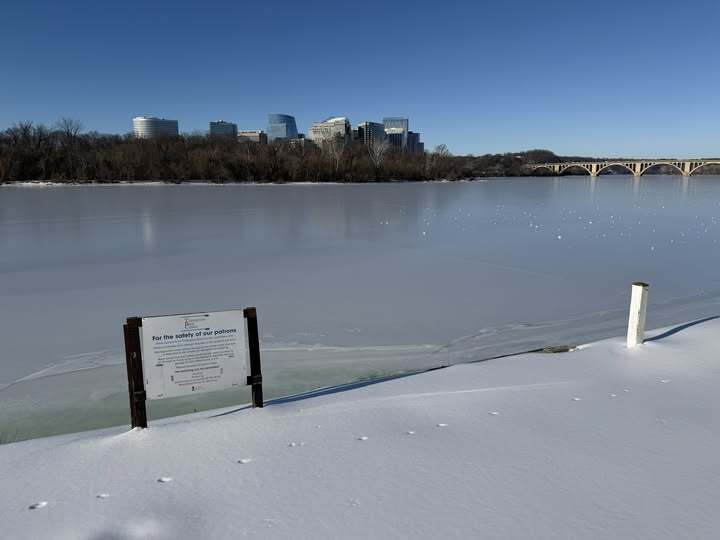 |
A frozen Potomac River overlooking Theodore Roosevelt Island – Photo Courtesy of Fish The Potomac.
Volunteer Angler Creel Survey
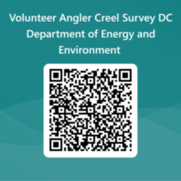
The Department of Energy and Environment’s Fisheries Research Branch is conducting it’s annual creel survey and encourages local anglers to participate. The goal of the survey is to better understand recreational angling efforts, perceptions, and harvests within Washington D.C. The information obtained from the survey will be used to inform fisheries management decisions and regulations. To make it easier for anglers to participate, a QR code has been developed. To access the survey, just scan the QR code using the built-in camera on your mobile device and tap the banner that appears. Already reading this on your phone? Click here. The survey is voluntary, but we encourage anglers to fill out the form after every fishing trip. Good luck fishing and let us know how you do! |
|
 |
|