|
In a strategic move to enhance public health and safety, the District of Columbia’s Department of Energy and Environment (DOEE) has transferred its Healthy Housing Branch previously housed in the Lead-Safe and Healthy Housing Division to DC Department of Health’s Division of Indoor Environment. This Division will be part of the new Environmental Health Administration and Office of Environmental Protection at DC Department of Health. This transition, effective October 2024, aims to streamline efforts in addressing environmental health hazards within residential settings.
The Healthy Housing Branch has been pivotal in mitigating risks associated with lead poisoning, asthma, pest infestations, and other indoor environmental threats. The Branch is responsible for the Childhood Lead Poisoning Prevention Program (CLPPP) and the Healthy Homes Program. CLPPP provides education and case management to families with a child who has received a blood lead test level above 3.5 micrograms per deciliter (μg/dL) to help identify potential lead exposure sources and reduce the child’s blood lead level. The Healthy Homes Program aims to identify health and safety hazards in the homes of renters and reduce environmental asthma triggers. The operations of these programs will continue from the Division of Indoor Environment at DC Health. Residents can expect continued support through comprehensive home assessments, educational programs, and case management services.
For more information about DC Health’s Environmental Health Administration, visit Environmental Health Administration | doh (dc.gov)
 National Lead Poisoning Prevention Week (NLPPW) 2024 is set to take place from October 20-26. This annual event is a collaborative effort by the U.S. Environmental Protection Agency (EPA), the U.S. Department of Housing and Urban Development (HUD), and the Centers for Disease Control and Prevention (CDC) to raise awareness about the dangers of lead exposure and to promote preventive measures to protect children and families.
Key Objectives and Themes
The goal of NLPPW is to reduce childhood exposure to lead by increasing public awareness and encouraging preventive actions. The theme for this year is “Bright futures begin lead-free”. This theme highlights the importance of ensuring a lead-free environment for the healthy development of children. The campaign focuses on three main messages:
-
Get the Facts: Lead can be found in the home, in water, in soil, and in cultural products. Being informed will help protect your family.
-
Get Your Child Tested: A blood test is the best way to detect lead poisoning in children. Speak to your child’s healthcare provider about testing your child for lead.
-
Get Your Home Tested: Hire a certified lead professional to test your home for lead, especially if it was built before 1978.
Why Lead Poisoning Prevention Matters
Lead poisoning is a serious health concern, particularly for pregnant people and young children. Exposure to lead can cause a range of health issues, including developmental delays, learning difficulties, and behavioral problems.
Activities and Resources
Throughout the week, various activities and resources will be available to the public. These include webinars, informational kits, social media campaigns, and community events. Some notable activities include:
How to Get Involved
Individuals and organizations can participate in NLPPW by hosting events, sharing information on social media, and utilizing the resources provided by the EPA, HUD, and CDC. By working together, communities can make significant strides in preventing lead exposure and ensuring a healthier future for children.
For more information and to access resources, visit the EPA’s NLPPW page.
UPCOMING EVENTS
Mitchell Park Fall Fun Day
 Join us on Sunday, October 27, 2024, from 2:30 PM to 5:00 PM at Mitchell Park for a fun-filled community event. Enjoy pumpkin decorating, free pizza, live music, moon bounce, crafts, a photo booth, haunted house, and a yoga class by Yoga District. Plus, visit the Lead-Safe Healthy Housing Division table for information on National Lead Poisoning Prevention Week.
Where: Mitchell Park (23rd St NW & S Street NW), accessible via Dupont Circle Metro (Red), 42 / N2 / G8 buses, or local street parking.
For more information visit Fall Fun Day! — Friends of Mitchell Park (mitchellparkdc.org)
We look forward to seeing you there!
A YEAR OF OUTREACH: PARTNER WITH US!
The Lead-Safe and Healthy Housing Division at DOEE is gearing up for an exciting year of outreach activities. We invite all interested parties to join hands with us in promoting lead-safe living environments. Reach out to Olivia Davida at Olivia.Davida@dc.gov for collaboration opportunities. Here’s a glimpse of what’s coming in 2024.
- October (Last Full Week): Lead Poisoning Prevention Week
- December: Safe Toys and Gifts Month
Together, let’s make a difference in the District!
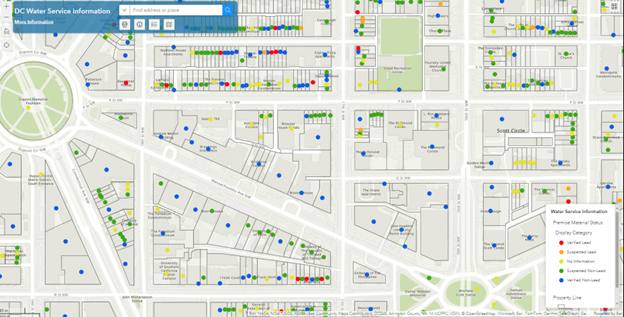
 Understanding the DC Water Service Line Map
The DC Water Service Line Map is an interactive tool designed to help residents of Washington, D.C., identify the materials used in their water service lines. This map is part of DC Water’s ongoing efforts to provide transparency and ensure public health and safety.
How It Works
To use the map, residents can enter their address in the search box or zoom in on the map to locate their property. By clicking on the circle within the property boundaries, users can view detailed information about their service lines. This includes data on whether the service lines are made of lead, copper, or other materials.
Importance of the Map
The primary goal of the map is to help residents identify potential lead service lines. Lead pipes were commonly used in the past, particularly before the mid-1950s, and can pose significant health risks if not properly managed. DC Water has collected data from various sources, including permit records and physical inspections, to provide the most accurate information available.
Ongoing Updates and Community Involvement
DC Water continuously updates the map as new information becomes available. They encourage property owners to share any additional data they might have about their service lines, including records of replacements. This collaborative approach helps ensure the map remains a reliable resource for all residents.
Health and Safety Measures
DC Water emphasizes the importance of removing lead sources to minimize exposure. They offer to replace lead service lines in public spaces if property owners agree to replace the lines on their private property. This initiative is part of a broader effort to maintain low lead levels in the city’s drinking water and protect public health.
For more information, residents can visit the DC Water website and explore the interactive map to learn more about their water service lines and take necessary actions to ensure their safety.
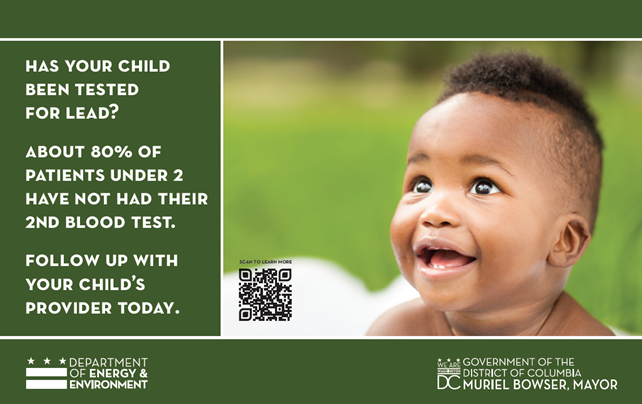
Twice by Two: Lead Testing for Children in Washington, D.C.
 Why It Is Important
Children under six years old and pregnant people are the most vulnerable to lead poisoning. Lead poisoning can have serious consequences for a child’s development. Even low levels of lead can cause learning disabilities, anemia, hearing loss, behavior problems, and permanent IQ deficits. That’s why lead testing is crucial for all children.
District Law Mandates Testing
In Washington, D.C., the law mandates that all children should be tested twice by two:
- Between 6 and 14 months.
- Again between 22 and 26 months.
What You Can Do
If you have concerns about your child’s potential exposure to lead, don’t hesitate to ask your pediatrician for a blood lead test. Remember: Test every child, twice by two! For more information about lead poisoning prevention and blood lead testing, visit doee.dc.gov/lead
RECENT RECALLS
Red Toolbox Recalls Stanley-Branded Jr. Kids Garden Sets Due to Lead Poisoning Hazard; Violation of Federal Ban for Lead in Paint; Sold Exclusively by Costco Wholesale
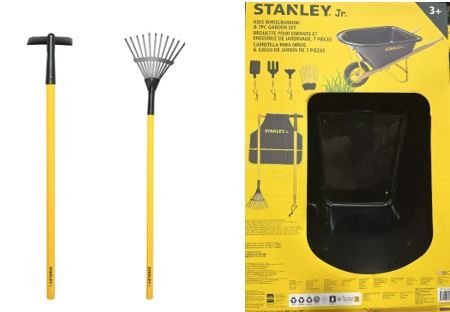 Recall Description: This recall involves the long hoe and rake in the Stanley Jr. Kids Wheelbarrow and 7-piece Garden Set, model number 1662178. The Stanley Jr. Kids Wheelbarrow and 7-piece Garden Set includes a wheelbarrow, apron, gloves, rake, hoe and hand tools. The wheelbarrow has a white label on the bottom that states “Red Toolbox” and the manufacturing date of 12.2023. The recalled long hoe and rake have a yellow-painted long wooden handle with the words “Stanley Jr.” painted in black. The hoe and rake are black-painted metal. Only the long hoe and rake in the set are included in this recall.
Recall Date: September 12, 2024
Action Steps: Consumers should stop using the long hoe and rake in the garden set immediately. Visit Red Toolbox’s recall website, https://www.recall-rtb.com/, for information on how to obtain a free replacement long hoe and rake. The consumer will need to fill out a form and upload photos of disposing these items and the white label on the bottom of the wheelbarrow showing the 12.2023 manufacturing date. Costco is contacting all known purchasers directly.
Affected Stores: Exclusively at Costco stores nationwide and online at www.costco.com from February 2024 through June 2024 for about $35.
Consumer Contact: Red Toolbox by email at CS@recall-rtb.com, or online at https://red-toolbox.com and click “Recall Information” at the bottom of the page for more information.
Children’s Jewelry Sets Recalled Due to Risk of Lead and Cadmium Poisoning; Violations of the Federal Lead Content Ban and Federal Hazardous Substances Act; Sold Exclusively on Amazon.com by Newmemo
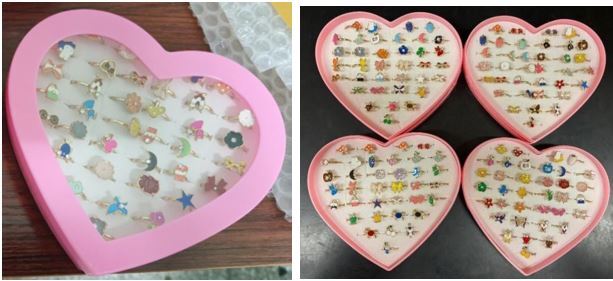 Recall Description: This recall involves Newmemo’s children’s ring sets. The recalled sets were sold in a pack of 36 rings in multiple designs, packaged inside a pink heart-shaped display case. “Newmemo” and “Amazon FNSKU X0034COQMP” are written on a white label attached to the underside of the case.
Recall Date: September 19, 2024
Action Steps: Consumers should immediately stop using the recalled rings, take them away from children and contact Newmemo for a full refund. Consumers will be asked to dispose of the recalled jewelry and send a photo of the disposed product to cly2167@163.com. Newmemo and Amazon are contacting all known purchasers directly.
Affected Stores: Amazon.com from January 2022 through March 2024 for about $12.
Consumer Contact: Newmemo by email at cly2167@163.com, or online at the seller’s profile https://www.amazon.com/sp?ie=UTF8&seller=AVVUCA891OMBV and click “Ask a question.”
To search all products recalled by Consumer Product Safety Commission, visit their website at https://www.cpsc.gov/Recalls
FDA Expands Public Health Alert on Cinnamon Products Due to Elevated Lead Levels
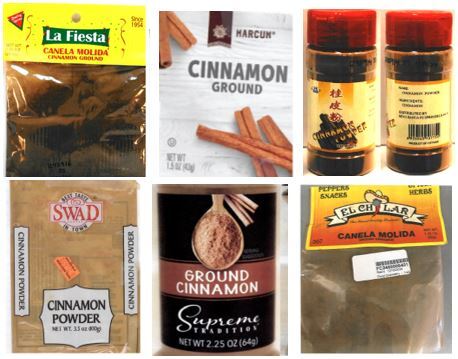 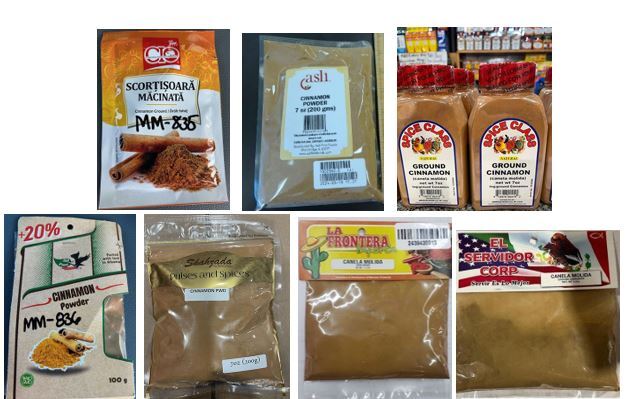 The U.S. Food and Drug Administration (FDA) has issued an extended and updated alert to consumers and retailers regarding certain ground cinnamon products found to contain elevated levels of lead. The FDA’s testing revealed that multiple brands sold across various retail chains have lead concentrations ranging from 2.03 to 7.01 parts per million (ppm), which may pose a risk with prolonged exposure. There have been a series of alerts announced or updated on March 6, 2024, July 25, 2024, and August 30, 2024.
The affected products include at least thirteen brands including La Fiesta, Marcum, MK, Swad, Supreme Tradition, El Chilar, Asli, Compania Indillor Orientale, ALB Flavor, Shzada, Spice Class, La Frontera, and El Servidor with specific lot codes identified as containing hazardous levels of lead. The FDA has advised consumers to immediately stop using these products and dispose of them. Retailers have been urged to remove the products from shelves and cooperate with the FDA’s recall efforts.
These alerts follow an incident involving Weis, WanaBanaand Schnucks cinnamon apple sauce pouches that led to lead poisoning in children. This prompting the FDA to take additional steps to ensure the safety of cinnamon products sold in the U.S. The agency is analyzing and reviewing sample results from state partners who have been testing ground cinnamon for elevated lead levels.
The FDA advises consumers to stop using and dispose of the ground cinnamon products listed. Do not eat, sell, or serve these products, and check your home for any to discard. If you suspect lead exposure, consult your healthcare provider, as symptoms may not be immediately obvious. To report issues, you can call an FDA Consumer Complaint Coordinator, complete an electronic or paper Voluntary MedWatch form, or visit www.fda.gov/fcic for more assistance.
|