|
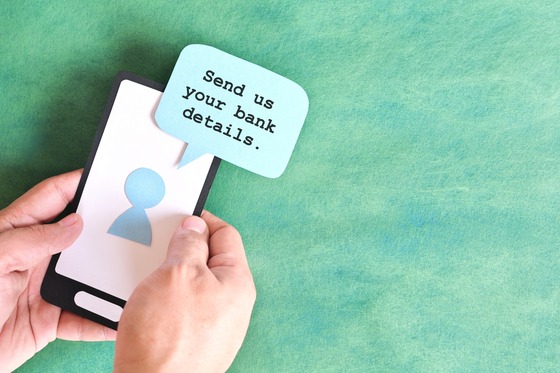 Beware of Smishing Scams Targeting Your Bank Account
“Yesterday, I got a text message from my bank saying my account was hacked and that I had to immediately call them at the telephone number provided. I was connected with someone from my bank’s security department. He told me that for security reasons, he needed to confirm my name, account number, pin, and social security number, so I gave him all the information. This morning, I tried to log into my bank account and was locked out! I called my local branch, and they told me I was scammed! The text message I got was so official-looking. It even had the bank’s official logo.”
How the Scam Works
DISB’s Enforcement and Consumer Protection Division is aware of a smishing scam targeting District residents for their financial account and personally identifiable information. Smishing is a cybercrime that uses deceptive text messages to trick victims into providing their sensitive information. Scammers use sophisticated tools – including Artificial Intelligence – to convince people they are legitimate. They are expert imposters skilled at quickly gaining your trust, and along with it, your sensitive information. They often do so by sending official-looking text messages or emails along with a phone number. The message urges you to call immediately because your computer has been hacked or your bank account’s security has been compromised. Once the victim provides their sensitive information, the scammers use it to access the victim’s account, change their password and pin, and withdraw all their money – including their overdraft protection.

Protect Yourself
- If you get a text message or email purporting to be from your bank or credit union saying your computer’s been hacked or there’s a problem with your account’s security, do not call the number provided in the text message! Instead, call your bank or credit union at the official number you’ve used for them in the past. If you can’t find the number, search for it on their official web page. When you are connected with your bank, ask to speak with a representative from the fraud or security department and tell them about the text message or email you received. In all likelihood, they will ask you to forward it to them and to then delete it.
- Never give your personally identifiable information or sensitive financial account information to anyone that contacts you out of the blue insisting they need it to debug your computer or restore your account’s security.
- If you unwittingly give someone your sensitive financial account information, report it to your financial institution as soon as possible. Additionally, consider purchasing identity theft protection and credit monitoring services. Be on the lookout for suspicious activities, like new credit card accounts or loan accounts opened without your knowledge or permission.
|
|
|
WHAT ELSE CAN YOU DO?
If you believe you are the victim of a smishing scam targeting your bank account, you can contact the Metropolitan Police Department’s Financial and Cyber Crimes Unit at 202.727.4159 or at mpd.fraud-unit@dc.gov. You may also contact the DISB’s Enforcement and Consumer Protection Division at 202.727.8000.
|
|
DISB Mission
Our mission is three-fold: (1) cultivate a regulatory environment that protects consumers and attracts and retains financial services firms to the District; (2) empower and educate residents on financial matters; and (3) provide financing for District small businesses. |
|
|
|