|
June Outreach and the Healthy Homes Principles
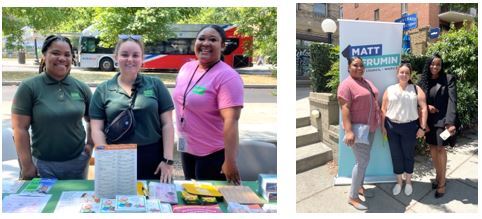
Throughout the month of June, DOEE’s Lead-Safe and Healthy Housing Division went out in the community to spread the word about the Healthy Homes Program and the Healthy Homes Principles to live by. Division staff provided resources at The Faunteroy Enrichment Center’s Juneteenth celebration in Ward 7, WMATA Metro Stations in Wards 5 and 8, and at Councilmember’s Matt Frumin’s “Workplace in the Ward” constituent event in Ward 3.
The mission of the Department of Energy & Environment’s Healthy Homes Program is to reduce health and safety hazards in the home while addressing environmental asthma triggers. When tenants have difficulty getting their landlord to address these hazards, DOEE public health analysts step in to highlight the potential health impacts, educate, and advocate for repairs to be made.
  There are eight Healthy Homes Principles to follow, to keep your home or apartment at its best:
-
Keep it Dry – Prevent leaks, standing water & excess moisture
-
Keep it Clean – Avoid clutter, throw away broken items, mop & vacuum floors
-
Keep it Safe – Ensure all locks & smoke/carbon monoxide detectors work properly
-
Keep it Well-Ventilated – Open windows & use exhaust fans
-
Keep it Pest-free – Seal food items, clean daily & remove excess water
-
Keep it Contaminant-free – Minimize use of chemicals & store away from children
-
Keep it Well-Maintained – Request repairs for broken items as needed
-
Keep it Thermally Controlled - Keep temp below 80° in summer & above 68° in winter
Visit https://doee.dc.gov/service/healthy-housing-program or call (202) 535-2600 for more information.
High Lead Levels Found in Lesser Evil and Serenity Kids Veggie Puffs
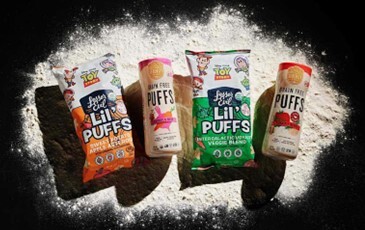 Veggie puffs have become a popular snack for kids, promising to make vegetables exciting. However, recent analyses reveal a concerning issue: some veggie puffs may contain high levels of lead, a heavy metal linked to developmental disabilities in children.
Consumer Reports (CR) recently investigated cassava-based puffs from Lesser Evil and Serenity Kids, as well as sorghum-based puffs from Once Upon a Farm. Here’s what they found:
-
Lesser Evil’s Lil’ Puffs Intergalactic Voyager Veggie Blend: These puffs had more lead per serving than all the 80 baby foods that CR has tested since 2017. CR recommends that children consume less than half a serving a day of these puffs.
-
Lesser Evil’s Lil' Puffs Sweet Potato Apple Asteroid: CR recommends that children consume less than one and a half servings a day of these puffs.
-
Serenity Kids’ Tomato & Herb, Bone Broth Puffs: These grain-free puffs were also flagged for high lead levels and it is recommended that children consume less than one and a half servings a day of these puffs.
-
Once Upon a Farm: Their sorghum-based puffs had very low lead levels.
Why Cassava May Have a Lead Problem
Cassava and sorghum are popular alternatives to rice as main ingredients in puffs. Cassava is a root, while sorghum is a gluten-free grain. If cassava is cultivated in soil with high lead levels (such as near industrial areas or places with lead-based pollution), the plant can absorb and retain the lead as it grows.
Other Heavy Metals
While all the tested puffs contained arsenic and cadmium (and one had mercury), none had levels high enough to pose significant risks. However, parents should be aware of the lead issue and consider alternative snack options for their little ones.
What Parents Can Do
Limit consumption of these products, as they have not been recalled. Explore other snack options made from different ingredients to reduce exposure to heavy metals. Remember, vigilance and informed choices can help protect little ones from potential health risks associated with lead exposure in food.
See the original report for more information.
UPCOMING EVENTS
Lead Free DC Community Workshop
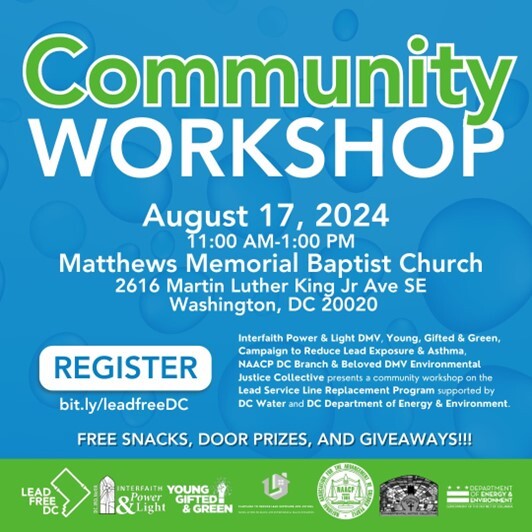 Interfaith Power & Light DMV, Young, Gifted & Green, Campaign to Reduce Lead Exposure & Asthma, NAACP DC Branch & Beloved DMV Environmental Justice Collective presents a community workshop on the Lead Service Line Replacement Program supported by DC Water and DC Department of Energy & Environment. This community event seeks to increase awareness and deepen community knowledge and understanding of DC Water’s Lead Free DC Plan which aims to accelerate lead service line replacement efforts throughout the District. Attendees will better understand the full, technical process of lead water service line replacement and other ways to keep residential drinking water lead free.
Snacks will be provided as door prizes and giveaways.
The workshop will be taking place on Saturday, August 17th from 11:00am-1:00pm at Matthews Memorial Baptist Church, located at 2616 Martin Luther King Jr Ave SE, Washington, DC 20020.
Register for free HERE.
Learn more about the Lead Free DC Plan HERE.
A YEAR OF OUTREACH: PARTNER WITH US!
The Lead-Safe and Healthy Housing Division at DOEE is gearing up for an exciting year of outreach activities. We invite all interested parties to join hands with us in promoting lead-safe living environments. Reach out to Amanda Ri’Chard at Amanda.Richard@dc.gov for collaboration opportunities. Here’s a glimpse of what’s coming in 2024.
- October (Last Full Week): Lead Poisoning Prevention Week
- December: Safe Toys and Gifts Month
Together, let’s make a difference in the District!
DOEE Resource Fair

LinkU: Connecting People to Social Care in the DMV Area
 Promoted by DC Health, LinkU is a free online resource and referral guide customized for residents and community providers in the DC, Maryland, and Virginia (DMV) area. It connects people seeking help to verified social care providers who assist with various services, including food, housing, mental health, and medical support. Whether you’re looking for healthcare, nutrition, housing, job training, or other services, LinkU can help you find the information you need.
How to Use LinkU:
Enter Your Zip Code: Visit the LinkU Public Site and enter your zip code to search for services in your area.
Explore Services: Discover resources related to health, wellness, and equity throughout the DMV area.
Contact DC Health: For more information about services and programs offered by DC Health, visit the DC Health Website or contact them directly at: (202) 442-5955.

 Why It Matters
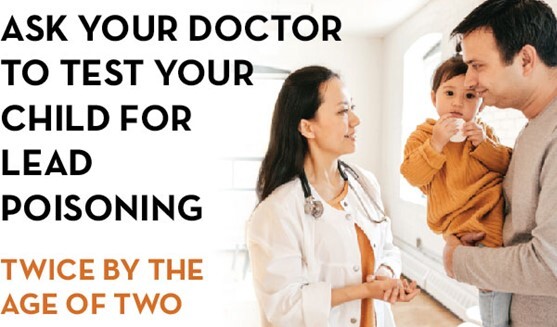
Children under six years old and pregnant people are the most vulnerable to lead poisoning. Lead poisoning can have serious consequences for a child’s development. Even low levels of lead can cause learning disabilities, anemia, hearing loss, behavior problems, and permanent IQ deficits. That’s why lead testing is crucial for all children.
District Law Mandates Testing
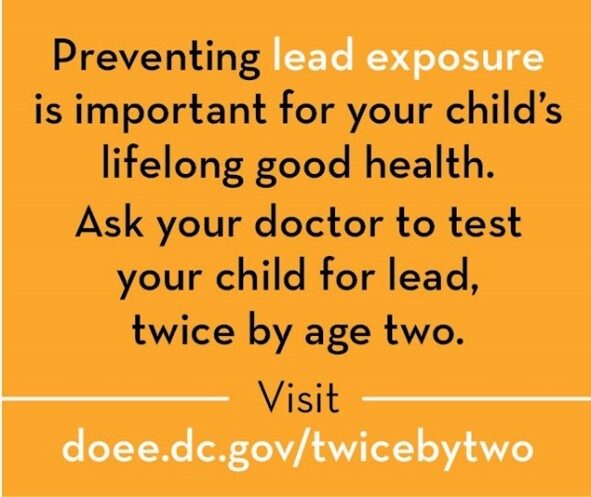
In Washington, D.C., the law mandates that all children should be tested twice by two:
- Between 6 and 14 months.
- Again between 22 and 26 months.
What You Can Do
If you have concerns about your child’s potential exposure to lead, don’t hesitate to ask your pediatrician for a blood lead test. Remember: Test every child, twice by two! For more information about lead poisoning prevention and blood lead testing, visit doee.dc.gov/lead
RECENT RECALLS
To search products recalled by Consumer Product Safety Commission, visit their website at https://www.cpsc.gov/Recalls
FDA Issues Alert on Cinnamon Products Containing Elevated Lead Levels
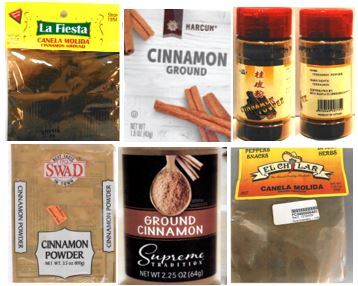 The U.S. Food and Drug Administration (FDA) has issued an alert to consumers and retailers regarding certain ground cinnamon products found to contain elevated levels of lead. The FDA’s testing revealed that multiple brands sold across various retail chains have lead concentrations ranging from 2.03 to 3.40 parts per million (ppm), which may pose a risk with prolonged exposure.
The affected products include brands like La Fiesta, Marcum, MK, Swad, Supreme Tradition, and El Chilar, with specific lot codes identified as containing hazardous levels of lead. The FDA has advised consumers to immediately stop using these products and dispose of them. Retailers have been urged to remove the products from shelves and cooperate with the FDA’s recall efforts.
This alert follows a recent incident involving cinnamon apple sauce pouches that led to lead poisoning in children, prompting the FDA to take additional steps to ensure the safety of cinnamon products sold in the U.S. The agency has reached out to all cinnamon manufacturers, processors, and distributors, reminding them of their responsibility to prevent contamination and implement necessary controls.
Consumers who suspect exposure to elevated levels of lead are encouraged to consult their healthcare providers. Health professionals and consumers can report any related complaints or adverse events to the FDA’s MedWatch Safety Information and Adverse Event Reporting Program. For updates from the FDA, see the full alert
|