In 2025, thousands of residents across Weld County did something quietly powerful: they chose to answer a few questions about their health, their daily lives and the barriers they face. Now, those answers are coming back into public view as one of the most detailed portraits of community health the county has ever assembled.
On April 21, Weld County officials will host a webinar to present the key findings from the 2025 Community Health Survey, revealing the finished product of more than a year of stakeholder meetings, question design, survey distribution, response analysis, demographic weighting and statistical testing, all intended to ensure the final findings reflect the community as accurately as possible.
Since 2007, roughly 18,000 residents have taken part in Weld County’s triennial Community Health Survey, helping build a long-term record of the needs, challenges, and concerns shaping communities from Greeley to Fort Lupton to the county’s rural areas. That local focus is what makes the survey so important. More than just research, the survey is one of the county’s clearest ways of turning local voices into local action.
‘We hold stakeholder meetings with organizations that we regularly work with or who we know use our data — the Thriving World Coalition, Sunrise Community Health, North Range Behavioral Health, Intermountain Health, the Weld County Department of Human Services and many other organizations,” said Raissa Huntley, Senior Health Data Analyst for Weld County. “It's always driven by what people are telling us they need or want to know.”
For partners like North Range Behavioral Health, the county's designated mental health center, it is not just information. It is direction. A starting point for real decisions about where to show up, who to partner with, and how to ask for funding.
"This is the one survey that gives us our local county information,” said North Range’s Community Outreach Director Micaela Sanchez. "The survey helps us have a benchmark of where the community is and helps us understand where we need to put our efforts."
|
Following the data to the door
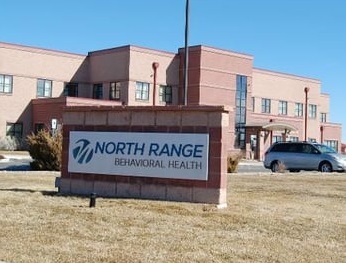
One of the most direct examples of the survey driving change came out of the 2022 findings. The data pointed to something very specific: Residents in certain Greeley neighborhoods, including areas where North Range already had service teams, reported feeling that mental health care was both hard to find and too expensive.
Armed with the information, North Range took action.
"We made the decision to completely revamp our sliding fee scale — to significantly simplify it and also lower it a little bit," recalled North Range’s CEO Kim Collins. The organization also ramped up outreach directly in those neighborhoods, making sure residents knew services were available and affordable. “We've put a real intentionality behind how we talk about services. We do not want there to be any kind of a financial barrier to accessing care.”
|
Creating collaboration across the county
When North Range began exploring a partnership with StarRise, a Greeley organization focused on housing stability, the survey helped make the case.
"If we know that people are experiencing housing instability at a higher rate than before, then we know that's going to be either the chicken or the egg," Sanchez said. "Is it impacting mental health, or is the mental health impacting housing stability? The survey gives us the evidence to say, 'We need to put our resources there. This is what our community needs.'"
Survey data has also helped drive a growing collaboration with WCDPHE itself. In 2024 the health department launched a mobile health vehicle, a decision prompted in part because the survey documented how difficult it is for rural Weld County residents to access care.
"Some of the survey data really does speak to the disconnection of some of our more rural areas of the community and underserved populations and so that has led to some really cool cross-team partnerships," Collins said. "We're trying to figure out how to really utilize the initiatives that the county's already putting in place, because of the survey data, and have behavioral health as a component of it."
This new collaboration means that, for the first time, behavioral health services will be riding alongside county public health outreach efforts, bringing care closer to people in their own communities.
The questions NOT asked
Perhaps the most interesting moment in North Range's relationship with the survey came not from data it contained, but from data that was missing.
When North Range and WCDPHE began developing "Acts of Connection," an initiative aimed at addressing loneliness and social isolation, they turned to the survey for local numbers.
"All of our partners automatically went to, 'Well, what does the community survey say?'" Sanchez recalled.
But there was no data.
In fact, because adult social isolation and loneliness was a relatively new public health topic, emerging from the 2020 pandemic and the 2023 surgeon general’s health advisory, that kind of data was not available anywhere. The health department data team took the initiative to find and review new questions about loneliness and isolation to be included in the 2025 survey and brought them to program partners for feedback.
"We realized we need to add those questions,” Sanchez said. “The data team really advocated for that to happen and there's a lot of people that are really excited about seeing where that data is going to be able to take us and transform things.”
The results of these new survey questions will be shared for the first time on April 21. Collins already knows what she'll do when the data arrives.
"If there are higher rates of isolation or loneliness in certain pockets of the county, we'll have a strategy conversation,” she said. “How do we do some psychoeducation? How do we make sure people know about virtual options, mobile options? How do we get creative with what they need?"
The voice of our residents
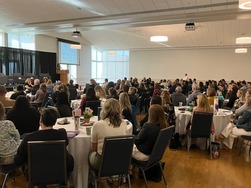
"The Weld Community Health Survey is more than just data," said Olivia Egen, WCDPHE Community Health Director. "It's the voice of our residents and is our best tool for understanding the health concerns and needs of Weld County."
Many Weld County public health partners, like North Range Behavioral Health, have come to rely on that voice. It guides their partnerships. It shapes their grant applications. It tells them where the gaps are and ensures that when they show up, whether in a Greeley neighborhood or a small rural community, they're showing up for the right reasons, in the right places, with the right support.
All because Weld County residents chose to fill out a survey.
|
|