|
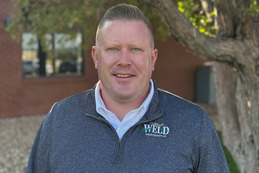
Letter from the Director
As 2025 comes to a close, I want to extend my appreciation to our operators, municipal partners, state agencies, and the Weld County community for another year of hard work, collaboration, and progress. This has been a year defined by meaningful partnerships and significant regulatory evolution, and Weld County continues to lead with clarity, consistency, and a shared commitment to responsible energy development.
Over the past 12 months, the oil and gas energy department (OGED) finalized multiple intergovernmental agreements (IGAs) with municipalities across the county, strengthening coordination on permitting, inspections, long-term compliance, and local oversight. These IGAs not only streamline expectations but also reinforce the county’s commitment to predictable pathways for operators and stakeholders.
This year also brought important Weld County code updates, including expanded notification requirements, refined drainage and noise compliance standards, and strengthened administrative and documentation practices. These changes were designed to work with with the Colorado Energy and Carbon Management Commission’s (ECMC) evolving regulatory landscape while avoiding duplication and maintaining local flexibility for both operators and staff.
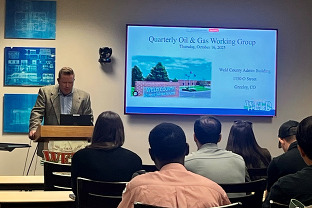
Our oil and gas working group meeting in October reflected that same focus: early coordination on remediation standards, smoother transitions during acquisitions, centralized communication, and a renewed emphasis on reviewing any operational change through the OGED for consistency and safety. We also continued strengthening communication with ECMC staff on cumulative impacts, EnviroScreen considerations, and emerging statewide guidance that will support future applications.
Through all of this, Weld County’s operators continued to demonstrate leadership in environmental responsibility, operational innovation, and community engagement across every phase of development.
Thank you all for your partnership. Together, we are ensuring that Weld County remains the model for responsible, sustainable, and economically vital energy development in Colorado for years to come.
Brett Cavanagh, Director of the Weld County Oil and Gas Energy Department
|
|
|
By Baker Geist, Weld County Communications Specialist
Think oil and gas in Weld County and think production, its impact on the economy, its impact on the environment, or the thousands of jobs the industry creates.
But there’s another element Weld County Government always brings into the conversation.
“Safety is always a top priority, and it’s something we always try to communicate,” said Brett Cavanagh, Director of Weld County’s Oil and Gas Energy Department. “So often, people think since we’re the state’s leading oil and gas producing county, that we just issue permits and look the other way, with no care or concern.
“That’s just not true.”
In a county home to 15,000 active wells that relies on the oil and gas industry for more than 50% of its total assessed value, the perception might be that safety recommendations or changes to the Weld Oil and Gas Location Assessment, or WOGLA, permitting process — what the OGED uses to oversee and surface-site permits in unincorporated Weld County — start with the needs of, or feedback from, the oil and gas industry.
Reality is often a lot different than perception, and the reality is safety starts with residents. Their feedback and concern, both of which are heard at oil and gas working group meetings held twice yearly, can bring meaningful changes.
“The biggest things we get calls about and complaints on are dust, noise, lighting, and traffic, and we’ve worked to define each of those categories more thoroughly,” Cavanagh said. “We look at complaints, understand how they may be impacting day-to-day life — think light through a window or excessive noise — and work to address those concerns.”
|
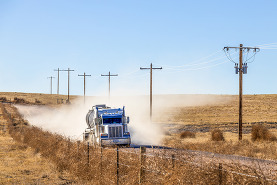
The most recent concern — noise — was addressed at working group meetings in 2024. Members of the oil and gas industry, which typically includes operators, surveyors, engineers, and planners, expressed confusion on how to meet the county’s noise requirements and compliance points designed to protect residents near production sites. The issue was better explained, and changes were made, which Cavanagh hopes will lead to better noise mitigation plans.
These discussions and others sparked a need for code changes, approved in September, showing the ability to address resident and industry concerns while still providing an attainable permitting process.
‘We don’t operate in silos’
Safety extends well beyond the OGED and the oil and gas industry. With the production process affecting so many, various county departments attend the working group meetings, serving as a voice for residents in a number of different ways.
At the most recent meeting on Oct. 16, Dr. Annareli Morales of the Weld County Department of Public Health and Environment shared the latest update on the county’s effort to monitor its air quality, part of the county’s mission to provide full and accurate data about air from Weld County and its effect on the Front Range’s non-attainment status. The sheriff’s office provided its contact information, public works shared updates on its latest road projects, and the office of emergency management (OEM) introduced itself as well as provided a reminder of its role throughout the production process.
David Burns, Senior Emergency Manager for Weld County OEM, has attended the meetings since he joined the county in 2019 and believes they are a good refresher in making sure procedures are followed and everyone has a chance to ask questions if needed.
“Everyone involved in those meetings from the county side are interested parties in the process, and every WOGLA permit evaluated by the OGED comes to OEM to make sure emergency action plans and tactical response plans are in place and coordinated between our office and the fire districts,” Burns said. “Our review also helps ensure things like setback requirements are adhered to.”
Burns explained the variety of information presented in working group meetings goes a long way in preserving safety and taxpayer resources. He mentioned hearing small reminders about remediation or the importance of heavy trucks using tracking pads near oil and gas sites to better protect the road surface, showed how much the county values the resources of its residents.
|
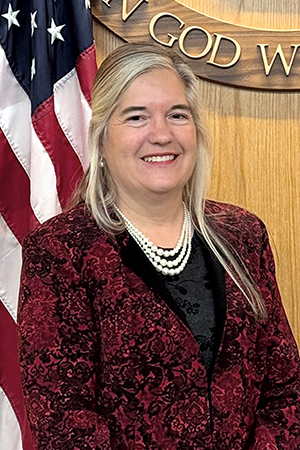
First-year Weld County Commissioner Lynette Peppler agrees, saying her biggest takeaways from attending her first oil and gas working group meeting were the collaboration and desire shown among attendees to work together in an important process.
“The meeting showed that when it comes to oil and gas, something that affects so many, we don’t operate in silos. We value our county departments’ expertise and want to have feedback from the industry,” she said. “These meetings provide that opportunity.”
As Weld County continues to grow, it’s an opportunity Cavanagh continues to look forward to. Dialogue creates familiarity with and consistency in processes, further proving a long-held belief since the OGED was established in 2019 in response to the state’s passage of Senate Bill 19-181: Health, safety, and welfare of the public and environment are best handled at the local level of government.
Have a question or concern about oil and gas production? Reach out to the OGED.
|
|
|
|
Q: I have well water and I’m concerned that oil and gas activity has affected my water supply. How can I get it tested?
A: The Weld County Department of Public health and Environment can test private wells and well water. Learn more about the program.
Q: There’s a lot written about the impact of oil and gas production in Weld County affecting neighboring counties. How bad is the air quality in Weld, and is the county doing anything to monitor it?
A: Great questions! Yes, Weld County Government has been monitoring air quality for quite sometime and has a website devoted to this effort and data to give the public a deeper understanding of Weld County’s air quality. Find resources to answer many of your questions at air.weld.gov.
|
|
|
|
|