|
Letter from the Director
Weld County has a long-standing legacy of oil and gas development, dating back over a century. Mineral interests and rights, often held by local landowners, have been central to shaping both the county’s economy and the lives of its residents. These rights provide landowners with royalty income, which can support families, be reinvested in farms and ranches and contribute to local businesses. Many landowners rely on these revenues to maintain agricultural operations, invest in property improvements and fund community initiatives, illustrating the tangible benefits of responsible mineral development.
The presence of oil and gas operations also drives job creation, from exploration and drilling to environmental compliance and field services, supporting both skilled and unskilled labor in our communities. At the same time, these activities create challenges and opportunities for county oversight, including the need to balance surface use with production, manage traffic and ensure safety and environmental protection. Landowners often face difficult decisions regarding lease negotiations, surface access and long-term planning, underscoring the importance of transparency, clear communication and equitable agreements.
As director, I see firsthand how mineral rights affect the local landscape, community prosperity, and economic resilience. Weld County remains committed to fostering a responsible energy industry that respects property rights, protects the environment and enhances public trust. By working collaboratively with operators, residents and regulatory agencies, we ensure that oil and gas development continues to be a positive driver for Weld County while honoring the critical role of mineral interests in our heritage and economy.
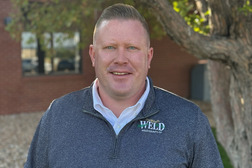
Brett Cavanagh, Director of the Weld County Oil and Gas Energy Department
|
|
|

By Baker Geist, Weld County Communications Specialist
This story is part two in examining the history of oil and gas in Weld County. Read part one.
Esther Gesick can remember it vividly — first seeing records outlining county-owned mineral interests, some dating back as far as the 1930s. It was eye opening when she first joined Weld County in the late ’90s as an agenda clerk. Now, as Weld County’s Clerk to the Board, it’s still just as eye opening when she thinks about how the mineral leases have benefited the county and ultimately taxpayers — even if the exact steps of how they came to be are somewhat unknown.
“That’s always the first question, and we don’t know exactly,” Gesick said, when asked about the exact origins of Weld County’s 40,000 acres of mineral rights. “Whether it was planned or just luck?”
It turns out, the story’s tied to a few key moments in history.
- Stock Raising Homestead Act of 1916 – Unique to Colorado and the Rocky Mountain West, this homestead act allowed for what’s known as a “split estate.” The act allowed settlers to claim 640 acres of land for stock raising, while the federal government maintained mineral rights under the land. The concept of varied ownership between the surface and subsurface was born from this agreement.
- Dark and dusty times in Weld County – Some mineral rights were obtained by the county following the establishment of county right-of-way in the 1800s. The rest were obtained as a result of some dark — and literally — dusty times in Weld County’s history.
While agriculture flourished in Weld County throughout much of the 1800s, thanks to continued advancements in irrigation along with the debut of steam-powered tractors and other equipment, the century’s final years were marked by uncertainty — brought on by drought from 1891 to 1893 and an increase in overall farmland and crops, which drove down both demand and crop prices. Still, true to Weld County’s independent spirit, many settlers and farmers found a way to persevere — shifting from raising cattle to raising sheep. By 1905, Weld County was home to 105,000 sheep, and with the arrival of the sugar beet as the new cash crop, prosperity continued.
|
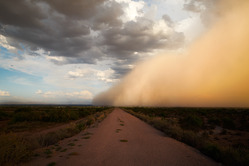
That all changed when two events — the Great Depression and the Dust Bowl — shook the stability of Weld County, the state of Colorado and the nation, as the Colorado Historical Society tells in its 1988 study.
“The problems of the stock market crash combined with weak agricultural markets were further affected by adverse weather conditions. … The winds of 1932 and '33 caused so called dust blizzards or "Dusters." … Many who could afford to left Weld County and the state looking for better opportunities elsewhere, frequently in California.”
As the people left and farmland dried up due to the arid climate, many properties were auctioned off. It can be assumed the county gained surface and subsurface (mineral) rights as a result of these sales. Some years later, as the surface rights to property were sold, the county retained the mineral rights. This wise decision has benefitted Weld County Government and residents since the early-to-mid-1900s.
“We have leases dating back from the 70s that are still active,” said Jess Reid, who keeps record and track of payments stemming from the county’s mineral leases. Reid, a Deputy Clerk to the Board, said the payment amount for these leases can vary, based on size. Some large track leases — containing more than five acres — can bring in large sums of money. $1 million or more for a lease is not uncommon, and in 2024, county-owned mineral rights brought in $21 million.
It's money that can extend Weld County’s budget and services, enabling the county to pay for projects in cash — one big one being Weld County Road 49, the county’s only highway, which was completed in 2017. A strong cash reserve, consistent low mill levy and debt-free status also serve as positive effects, fostered at least in part, by county-owned mineral rights.
To think it all started with one wise decision, the exact origins of which may forever be a mystery.
|
|
|
|
Q: So, the county has mineral rights, and I know people who have mineral rights. How can I figure out if I have mineral rights?
A: This is a good question and one the Weld County Oil and Gas Department receives often. Start by reviewing your property deed for any mention of mineral rights and check records with the Weld County Clerk & Recorder or Assessor’s Office.
Keep in mind that title documents aren’t always complete or accurate, so you may need further title research. Consider consulting a title company, attorney or landman to fully understand your mineral ownership and any existing leases or reservations.
|
|
|
|
|