|
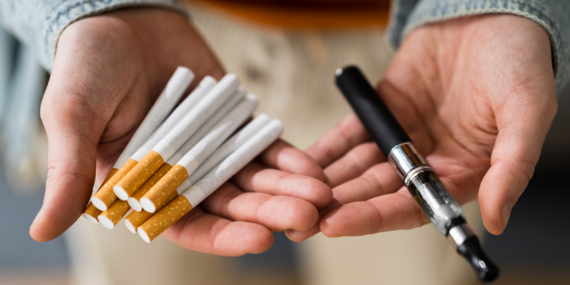 Does smoking or vaping really reduce stress?
You may have heard smoking or vaping can help you feel less anxious or stressed. Although a common belief, this is one of the biggest myths about smoking and vaping! The truth is, they can actually make feelings of stress and anxiety worse.
If this is true, then why do so many people turn to smoking or vaping to cope? The answer is nicotine—the addictive chemical found in cigarettes and vapes. When someone uses nicotine, feel-good chemicals get released in the brain which makes the brain think you are calm. This feeling only lasts for a little bit before it wears off, which is why people say they need to keep smoking or vaping to feel calm or cope with stress. The problem is that the actual reason why someone is stressed or anxious doesn’t go away when nicotine wears off. Those symptoms can come back even worse than they were before.
Although it doesn’t feel like it, nicotine physically makes your body enter a stressed state because it raises blood pressure and heart rate, tenses your muscles, and decreases the amount of oxygen in your blood. Ultimately, using nicotine to cope with stress does more harm than good because the only way to truly reduce stress and anxiety is to a) quit using nicotine, b) address the real reason why you are stressed and anxious, and c) learn healthy coping skills.
See below for resources to help you quit, or visit https://northrange.org for local mental health resources.
|
|
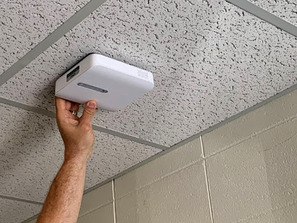
Vape detectors and metal detectors are becoming popular tools in schools to try and catch students who are vaping. Vape detectors look like smoke alarms but are designed to sense certain particles or chemicals that vaping products produce (like nicotine and even THC).
In theory, installing detectors feels like a good solution for schools to crack down on vaping at first glance, but it doesn’t provide real sustainable solutions in practice. The Weld County Tobacco Education and Prevention Program does not endorse or encourage schools to install these devices for several reasons:
|
They can be expensive. To use properly and effectively, you need to install a lot of vape sensors. This can cost schools several thousands of dollars, which most schools don’t have.
They can be avoided. There are many tips and tricks on how to avoid detection (a form of “stealth vaping”) or about which vapes are harder to detect.
They don’t prevent vaping. Just because vape sensors are installed does not mean it will prevent or stop students from vaping. It is only chasing an existing problem.
They don’t tell you who set off the alarm. When notified, school faculty with access to alerts have to stop what they are doing to catch whoever is vaping. If multiple students are in the bathroom where a sensor went off, staff must—if it isn’t obvious who was vaping—determine which student triggered the alarm. This can lead to unfair or biased treatment to certain students.
They can do more harm than good for students who are caught. If a student is caught vaping, what happens next? Most schools resort to punitive punishment, which hurts students experiencing nicotine addiction more than it helps them. Punitive punishment like suspension is shown to be ineffective in behavior change, which is ultimately what schools are looking for. Instead of only punishing students, prevention education, alternatives to suspension and supporting youth in quitting are more effective approaches to addressing vaping in schools.
If you are a school that has already installed vaping detectors, we can help you learn how to best use them and offer additional resources to help you effectively address vaping in your school.
|
|
|
Help us create a plan! Tell us more about vaping in your school.
|
|
Learn more about some of the alternatives to punitive punishment.
|
|
 Are you interested in public health, tobacco education, and making change in your community? Apply to join our team! Typical tasks for this job include community outreach and education, following up on smoke free complaints, facilitating cessation classes, development and facilitation of media campaigns and resources, coalition work, education in schools regarding vaping and cessation, and working with schools and municipalities to ensure policies align with smoke and tobacco free laws.
|
|
Free, confidential, and self-guided service for teens (12-17) trying to quit smoking or vaping. To get started, text "Start My Quit" to 36072, or call 1-855-891-9989 for individualized support, encouragement, and helpful tips. No parental consent required. |
|
Free and online quit service for Colorado residents aged 18 or older. Contact 1-800-QUIT-NOW for assistance and see if you are eligible for a free supply of patches, gum, or lozenges. |
|
Melanie Cyphers RN, BSN Substance Abuse Prevention Supervisor mcyphers@weld.gov 970-400-2423 |
Brooklyn Larimore, BS Youth Policy and Communications Specialist Blarimore@weld.gov 970-400-2371 |
|
|
|