|
|
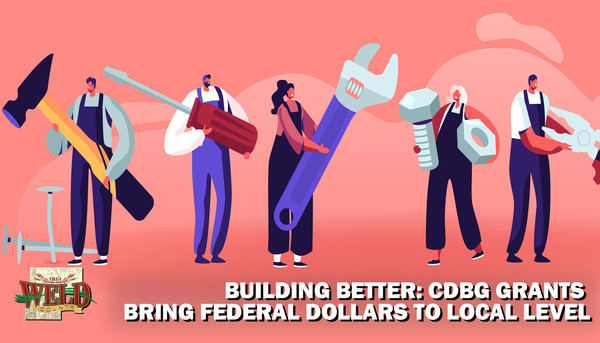
If you’ve ever built an addition to your home or put on a new roof, you know improvements are expensive. Now, imagine you are a local government charged with building and maintaining needed items for your residents, like sidewalks or transit services. Like everything in life, there is a price tag. So, when Weld County Commissioners learned the county had reached the population criteria needed to run its own Community Development Block Grant (CDBG) Program, they knew the benefit to residents would be substantial.
A program under the federal department of Housing and Urban Development, the CDBG program supports “community development activities” to “address needs such as infrastructure, economic development projects, public facilities installation, community centers, housing rehabilitation” and much more, according to its website.
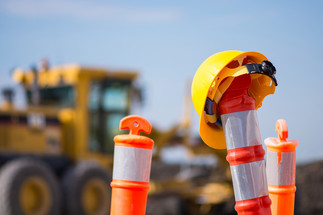
In short, the program provides funds to the states who distribute them to local municipalities and counties to help with improvements in their communities. Towns, cities and counties apply for these funds through the state allocation grant program, which selects a handful of projects each year to support.
The competition for these funds is real.
“When you apply to the state for CDBG funds, your project is competing against hundreds of other projects from other Colorado communities,” said Weld County Commissioner Chair Scott James. “There’s a finite number of dollars to go around and practically an infinite number of projects local governments across the state are working on for residents.”
|
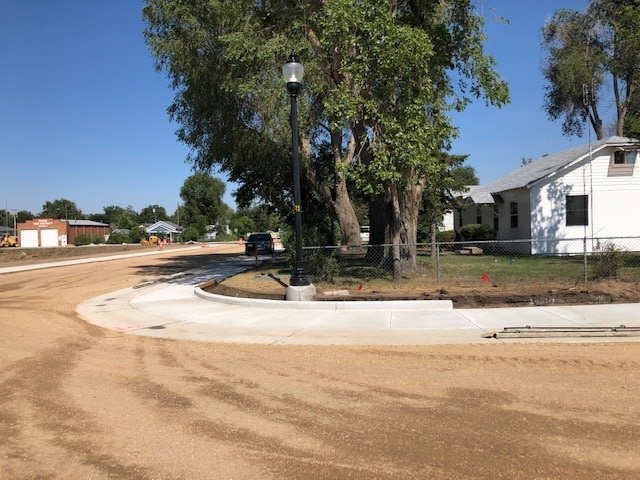
But access to those funds changes a bit when a county reaches a certain population number: 200,000. This number pushes a county from rural to urban and, in the eyes of the program, makes it eligible to receive funds from the CDBG program and distribute them to municipalities within its boundaries. Why does that matter? Now, local municipalities — 32 in the case of Weld County — only have to compete with other county municipalities for these grant dollars as opposed to municipalities statewide. Projects in unincorporated Weld County can also be submitted for consideration, with the county being the applicant on behalf of the project. This means more money will help Weld County communities thrive.
“This program ensures our towns and areas in unincorporated parts of the county have the resources needed to continue to move forward,” said James.
And move forward they have. Since the county formalized the process in 2020, a needed step before it could distribute CDBG funds, one cycle of projects has been completed. The second cycle of projects is happening now, and the third cycle is currently accepting applications.
|
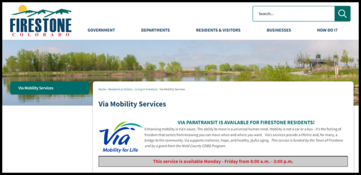
“One of our disabled residents utilizes this service regularly to get to his job, and this expansion will further help him be more independent,” said Paula Mehle of the town of Firestone in reference to a cycle one project, which provided CDBG funds to the town and allowed them to increase their transit service for residents from three days a week to five.
Other cycle one projects included the expansion of a water efficiency program for 50 households in Evans as well as a drainage and sidewalk paving project in the town.
Cycle two projects, happening now, include creating sidewalks and walking paths in Hudson compliant with the Americans with Disabilities Act, as well as improving sidewalks in Keenesburg and assisting with rehabilitation projects to correct health and safety issues for 18 to 56 low-income, owner-occupied homes in Firestone.
“The projects our communities are bringing to the table are projects that make a big difference in the lives of our residents,” said James. “And the fact that we are running our own portion of the CDBG allocation process means more of our communities will see more of these projects move forward more quickly.”
While only municipal governments can apply for the CDBG funds, residents are encouraged to communicate the needs they see in their neighborhoods to their local officials for consideration in the call for projects.
“This is truly about residents and government communicating and working together,” said James. “We encourage residents to bring concerns to their municipal leaders and work with them on possible solutions and improvements, which may include an application to this program.”
|
By Jennifer Finch, Weld County Public Information Officer
|
|
The CDBG program began in Weld County in 2020, with intergovernmental agreements from 25 county municipalities. |
Evans and Firestone have benefitted from CDBG dollars allocated in 2021. Improvement projects were completed in 2022. |
With the state demographer projecting Weld County’s growth to double by 2050, CDBG money can help municipalities strengthen infrastructure moving forward. |
|
|
Weld County's 2022 12 Months of Emergency Preparedness Tips
With the weather still relatively warm, now is a perfect time to prepare yourself and your car for winter driving. In October's emergency prep tip, learn what to remember when driving on wintery roads as well as what supplies to keep in your car if you get stranded.
|
|
|
Question: It's great that the roundabout at 35th Ave. and O St. roundabout is open, but I'm not that familiar with driving through them. Are there any things I should remember when driving through the new roundabout?
Yes! We reached out to the folks in our Public Works Department and they provided these things to remember/be aware of when navigating the new roundabout:
- Be aware of lowered speeds as you approach the roundabout. The speed limit inside the roundabout is set at 20 miles per hour.
- Always look to your left for traffic when approaching a roundabout. Vehicles already within the roundabout do not yield to vehicles entering.
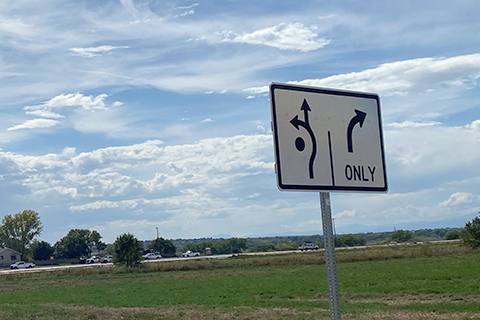
- The secret to navigating a roundabout is knowing what lane you need to be in for where you're going. In this roundabout, if you are in the right lane, you'll be exiting immediately at the next lane.
- Oversized trucks are allowed to use the truck apron (which is made of red concrete) in order to make it around the roundabout.
-
Never pass a truck within a roundabout.
- Crews will still be working on reclamation activities off the sides of the new intersection and roadway. Please give them space and drive safely when around workers.
|
|
|

Ombudsmen are critical to ensuring older adults in long-term care facilities maintain rights that allow them to continue living safely and with dignity, as they age. In honor of Residents' Rights Month, we'll explore the positive impact of Weld County's long-term care Ombudsman Program in the next issue of County Roots.
|
|
|
|
Welcome to County Roots, the official newsletter of Weld County Government. For those of us who work in county government, we think what we do is pretty interesting. So the goal of this newsletter is to highlight some of the partnerships, technology and efficiencies we are using to make government stronger and more effective for its residents.
Our goal is to establish regular communication with residents, spur interest in county projects, highlight county accomplishments and provide meaningful information to the public. In fact, our goal is to live up to the name “County Roots.” Want to know more about the meaning behind the name? Please visit our webpage, where you can also find previous editions of this newsletter.
If you have a topic idea or general feedback about this new venture, please let us know at jfinch@weldgov.com.
|
|
|
|
|