|
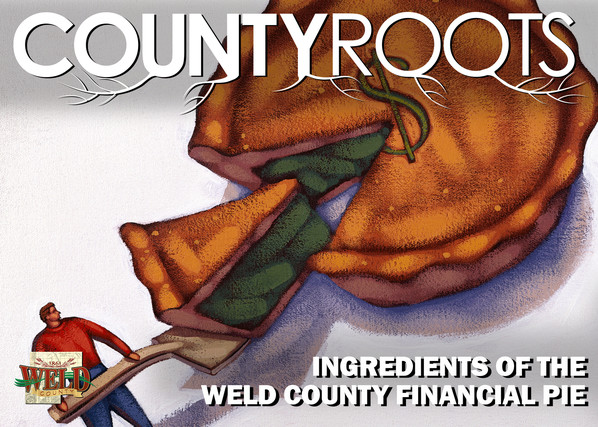
Just as you prepare pies for the holidays, Weld County Government is preparing its own pie big enough for 2021. The difference? It contains more than $350 million of ingredients — each one being critical to providing residents services they depend on — and the recipe was formally approved this week.
“As we approach 2021, we stand several months into a grave economic crisis caused by the impact of the coronavirus pandemic,” Don Warden, Weld County Director of Finance and Administration, wrote in the first pages of the 2021 budget book. He further stated, “The local economy will be impacted by the dramatic drop in oil and gas prices.”
Weld County is riding out these tough economic times thanks to being conservative in its financial management.
For 2021, Weld County’s budget is funded at $352,208,640, which comes from general and special revenue, internal service funds and enterprise funds.
As the county grows, fiscal responsibility becomes all the more important. The county’s Capital Improvement Fund is currently set at $11,566,500. These funds are used to pay for one-time, non-reoccurring projects that cost a minimum of $50,000, such as remodeling of office spaces or purchasing equipment.
“We have quite a few Capital Improvement Projects identified for 2021 that will help Weld County Government handle impending growth and transportation needs,” Warden explained. “We already completed a roundabout at County Road 54 and 17 this year. Now, we’re putting in several roundabouts, one being at 35th Avenue and O Street in Greeley, to further help minimize traffic congestion at certain intersections.”
Other improvement projects coming down the pipeline next year include the completion of the jail expansion that began in 2019, construction of a new law enforcement training center by 2022, widening 35th Avenue from F Street to O Street, and several bridge and road improvement projects.
Among the economic impacts brought on by COVID-19, oil and gas production was anticipated to potentially drop by 30% due to SB 19-181 regulations this year, as evidenced by the decreased number of active drilling rigs operating in Weld County.
Although the significant decrease in oil and gas production won’t affect the county’s 2021 budget — the assessed valuation is based on 2019 oil and gas production — the county has budgeted successfully for 2022. The county also has been building up a contingency fund over the last few years. Currently at $60 million, the fund is anticipated to reach $100 million in 2021. This fund allows the county to adapt to the fluctuation of oil and gas revenues, providing for a soft landing and peace of mind knowing the budget, and thereby county services, won’t be drastically impacted by these variations. The county also has been giving a temporary property tax credit of seven mills to property taxpayers, which will continue in 2021.
Putting the pie chart pieces together
2020 has been one of the most fiscally challenging times — a sentiment that isn’t lost on Warden and his preparation of next year’s budget. These challenges give him and county departments an opportunity to review and strengthen policies, align strategies and programs to maximize positive impacts of services to residents, and find innovative ways to reduce costs while leveraging resources.
In late April to early May every year, Warden meets with each department to see where the county is headed in terms of growth and what is needed by the departments in planning next year’s budget. But looking forward to 2021 isn’t enough.
“We can’t just look to next year for the budget,” Warden said. “We have to be looking five years ahead to make sure no surprises pop up. We even asked departments to drop their budgets by 15% going into next year so we can remain fiscally responsible and make smart moves.”
Departments submit a department budget to Warden by July. Then, Warden compiles the department budgets into one consolidated budget and recommends it to the Board of County Commissioners in September. By mid-December, the budget for the next year is approved.
Even with oil and gas revenues dropping this year, the industry has been a tremendous help in financing Weld County’s budget as the county looks to the future with growth in mind.
“We’ve faced a drop in oil and gas prices, and we’re looking toward the imminent growth of Weld County,” Warden explained. “By 2040, we’re expected to have 400,000 to half a million residents — this means our budget needs to be able to handle these variations, and we’re on track to do just that.”
No matter what comes in 2021 and beyond — be it a pandemic, natural disaster or murder hornets — Warden and staff will help ensure Weld County continues to be fiscally strong and responsible.
By Shaley Dehner, Weld County Communications Specialist
|