|
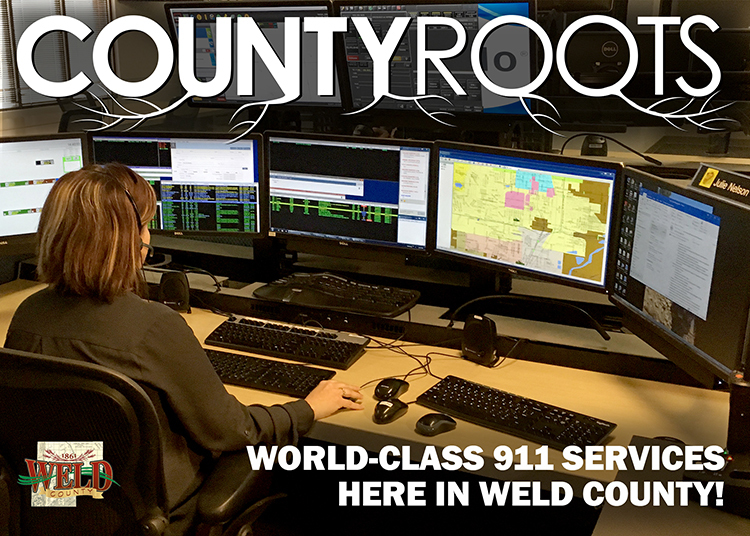
When you think of medical services in Weld County, doctors are probably the first people that come to mind. But there is another elite force of trained medical service personnel who are expected to help in emergencies. They are 911 Communications Specialists, or dispatchers, at the Weld County Regional Communications Center (WCRCC).
Did you know each dispatcher has to go through 1,500 hours of emergency medical response training before they ever take their first call? A six-week class prepares them to take calls for various emergencies to become certified as Public Safety Telecommunicators and Emergency Medical Dispatchers (EMDs) and enables them to provide the best possible emergency services to you because they can give instructions over the phone for controlling bleeding, administering CPR, delivering a baby, and much more. Robert Olsen, WCRCC Education and Quality Improvement Manager, explained further training call-takers must complete.
“After the initial six-week course, Weld County dispatchers are required to complete on-the-job training,” Olsen said. “They work with Greeley Police Dispatching, the Weld County Sheriff’s Office, and Fire and Ambulance Dispatching to learn how to communicate emergency information correctly over the radio to responding units.”
Michelle Haynes, WCRCC EMD Quality Performance Improvement Coordinator, also strengthens the quality of services residents receive when they need assistance.
“In my job, myself and a team of Quality Assurance Specialists review 911 medical calls received to make sure our dispatchers are meeting medical protocol, and that they’re giving callers the best instructions in an emergency,” Haynes explained.
If Haynes identifies a discrepancy in a call, she works with staff to remedy it, and has even helped change international emergency medical protocol regarding how to identify the appropriate response to a cardiac arrest episode.
There is a specific protocol for 911 dispatchers to use when someone is in cardiac arrest, meaning the heart has suddenly stopped beating. But cardiac arrest may happen due to several factors, including an overdose. The protocol for responding to a cardiac arrest due to an overdose is different than if the arrest is due to other factors. At Haynes’ suggestion, the International Academies of Emergency Dispatch (IAED) added a cardiac arrest code dispatchers now use when cardiac arrest occurs due to an overdose.
The extent of training, coupled with continuous quality assurance, enables the WCRCC to deliver top-notch service when you need it most.
By Shaley Dehner, Weld County Communications Specialist
|