|
SPRING 2019
In This Issue: What is PACE? • Nutrition Education and Counseling With the Friendly Fork: Take This With(out) a Grain of Salt! • Coming Soon: Friendly Fork Summer Evening Meals • Caregiver Corner: You Say You Are Not a Caregiver • Weld Aging Well Spring Workshops

PACE, which stands for Program of All-Inclusive Care for the Elderly, is operated by Health First Colorado (Colorado's Medicaid Program) and Medicare. The PACE program provides comprehensive medical and social services to certain frail individuals 55 years of age and older to help them live and stay in their homes and communities. The majority of services, including primary medical care, are received through the PACE community.
In order to qualify:
- You must be 55 years of age or older;
- You must meet nursing facility level of care (this is determined by a Single-Entry Point agency);
- You must live in the service area of the PACE organization; and
- You must be able to live in a community without risking your health or safety.
Some of the services and benefits of a PACE include:
- Adult day care
- Dental services
- Emergency services
- Home care services
- Hospital care
- Laboratory/X-ray services
- Meals
- Nursing home care
- Occupational and physical therapy
- Primary care (including doctor and nursing services)
- Social work counseling
- Transportation
Your interdisciplinary team will develop a care plan with you and anyone you designate to coordinate all the services you need to stay safely in your community. This team consists of a primary care physician, nurse, social worker and therapists, to name a few. Your interdisciplinary team will arrange for you to receive services within a PACE center or through providers within the PACE network. The team works with you and your provider to regularly assess and meet your needs, develop your care plan, and deliver and coordinate services, including acute care services and, if necessary, nursing home services.
You may be able to get PACE program benefits and services at no cost, or you may have to pay a monthly payment which may be based on income. For some, the premium can be paid by Health First Colorado and Medicare. There are no co-payments or out-of-pocket expenses for PACE covered services. You may be able to use some of your income for medical expenses not covered by Health First Colorado or other insurance, like hearing aids, eyeglasses and health insurance premiums; this is called a Personal Needs Allowance (PNA). For questions about your premium or personal needs allowance, contact your PACE organization.
|
By Lorrie Wellman, RDN
One of my main responsibilities as the Registered Dietitian Nutritionist (RDN) at the Friendly Fork, Weld County Senior Nutrition Program, is to manage the nutritional requirements of the menu. I also assist participants at meal sites with individualizing the menu as it relates to their nutrient restrictions.
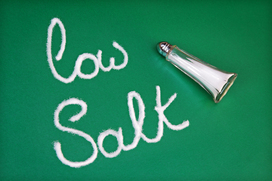
One certain nutrient comes up in conversation most often: salt, a.k.a. sodium. Now, the Friendly Fork menu may, at times, increase in some nutrients – but not sodium. I monitor sodium levels closely, as increased sodium intake may increase fluid retention and affect other syndromes in seniors. (FYI, the sodium limit for planning one daily meal at Friendly Fork is 1200 mg or 1.2 grams.)
The following restricted sodium diets are often physician-ordered for patients, and I can provide information to assist registered participants in managing these diets at home. All three of these restricted diets can be managed by the participant with some modification.
|
DIET
|
CHARACTERISTICS
|
INDICATION FOR USE
|
|
2 Grams Sodium
|
General diet is modified to promote removal of excessive fluid. Frequently prescribed on a short-term basis.
|
Edema, chronic renal disease or congestive heart failure (CHF).
|
|
No Added Salt
(4-5 Grams Sodium)
|
General diet is modified to avoid highly salted foods.
|
Mild hypertension, renal disease or cardiovascular disease.
|
|
Cardiac
(Fat and Sodium Restricted)
|
General diet is modified to provide <50 grams fat, <200 mg cholesterol and <4 grams sodium per day.
|
Indicated for use for patients with hyperlipidemia.
|
I provide monthly nutrition education materials to each of the 23 meal sites, with topics including healthy fats and oils, irritable bowel syndrome, vitamin D, folate, probiotics and various diets. I also provide a multimedia presentation to each of the meal sites each quarter; beginning in April, I will be discussing sodium restrictions as it relates to CHF, renal failure and hypertension. The presentation will include menu and recipe planning, dining out options and sodium content of various foods.
If you are interested in this topic, please contact Lorrie Wellman, RDN, at (970) 400-6118 to identify the meal site that is most convenient for you.
Learn more about Friendly Fork meal site locations, menus and more by clicking here.
|

The Friendly Fork is about to start its fourth year of serving dinners during the summer. This year, we are trying something new and fun with the menus: we are following a theme each week!
Evening meals will be offered at two meal sites: the Greeley Active Adult Center (1010 6th Street, Greeley) and the Platteville Senior Center (508 Reynolds, Platteville). Both sites will serve dinner on Tuesday evenings from May 14–August 13. Greeley will serve at 5:00 p.m., and Platteville at 5:30 p.m.
For more information about the Friendly Fork Senior Nutrition Meals, contact Meredith Skoglund at (970) 400-6132 or mskoglund@weldgov.com.
Learn more about Friendly Fork meal site locations, menus and more by clicking here.
|
You say you help your mother with meals and paying bills, but you don’t consider yourself a caregiver.
You say you help your neighbor shovel snow and get to his doctor’s appointment, but you don’t consider yourself a caregiver.
You say you help your husband with a daily shower and manage his medications, but you don’t consider yourself a caregiver.
You say you help your aunt a state away to schedule appointments and order medications, but you don’t consider yourself a caregiver.
You say you coordinate therapies and help your grandson with daily exercises, but you don’t consider yourself a caregiver.
The truth is, all of these instances are stories of caregivers. It has been said that there are four types of people: People who have been caregivers, those who are currently caregivers, those who will be caregivers and those who will need a caregiver. AARP reported that there are 584,000 people currently in Colorado who are in a caregiving role. A family caregiver is anyone who provides any type of physical and/or emotional care for a friend or relative with any special healthcare needs, of any age. You might even find yourself in multiple caregiving roles at the same time. Visit www.coloradocaregiving.org to get the support that you need today. Materials are designed to help any caregiver, no matter the age or special need of the individual receiving care. Discover the resources that you need to stay healthy and strong!
|

Make your wellness a priority and join us for one of these evidence-based workshops!
Stress-Busting Workshop:
Learn new stress management techniques, relaxation and coping skills. The evidence-based workshop is for family caregivers. Workshop meets once a week for nine weeks. FREE but registration is required by calling (970) 400-6130.
Wednesdays, 3/20/19 through 5/15/19, 9:00–10:30 a.m.: Cornerstone Church, Greeley
A Matter of Balance Workshop:
Learn ways to reduce the fear of falling and break the fear of falling cycle. A variety of activities address physical, social and cognitive factors affecting fear of falling by focusing on practical coping strategies. Workshop meets once a week for 8 weeks. FREE but registration required by calling (970) 400-6117.
Wednesdays, 4/3/19 through 5/22/19, 1:15–3:15 p.m.: Eaton Area Community Center, Eaton
OR
Mondays, 5/6/19 through 6/24/19, 9:00–11:00 a.m.: North Colorado Medical Center, Greeley
OR
Tuesdays, 5/7/19 through 6/25/19, 1:00–3:00 p.m.: Windsor Recreation Center, Windsor
Healthier Living Workshop:
Learn tools to become a better self manager of your chronic condition(s) like heart disease, diabetes, arthritis, COPD, etc. Learn to apply the knowledge you already know such as proper nutrition, developing an exercise program, problem-solving and setting achievable goals. Meet once a week for 6 weeks. FREE for those 60 years or older but registration is required by calling (970) 400-6117.
Thursdays, 5/2/19 through 6/6/19, 9:00–11:30 a.m.: North Colorado Medical Center, Greeley
Learn more about Weld Aging Well workshops and classes by clicking here.
|
|