Historical Commission Corner
Merciless storm leaves tragic results on the High Plains
Earlier in January, Superior experienced strong winds and blowing snow which limited visibility and created difficult driving conditions on McCaslin Boulevard. Difficult, yes, but imagine not being able to see past the hood of your vehicle, losing your sense of direction, ending in the barrow ditch, and then completely stranded.
Further imagine you are eight years old, along with 19 of your fellow rural schoolmates and a 30-year-old farmer at the wheel of a makeshift school bus, its engine compartment packed with so much snow it couldn’t be restarted.
Such was the scenario March 26, 1931, on what could barely be characterized as a road between the Towns of Towner and Holly near the Kansas border in southeastern Colorado. The day started much like any other in our state's early spring: sunny and bright. Because of the day's pleasant beginning, many children didn’t put on warm winter clothing before attending Pleasant Hill School.
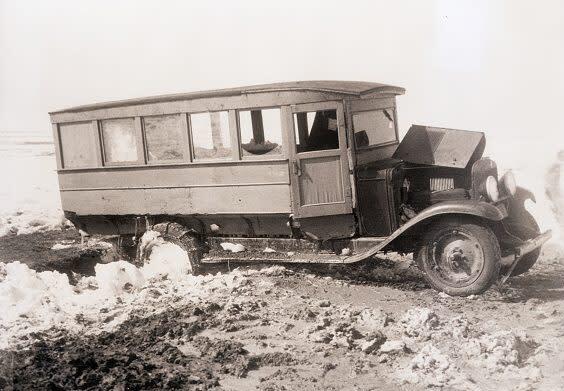
The weather changed dramatically when snow began to fall then increased in intensity. The teachers assigned to the two school buildings insisted that the children be taken home. Now facing blizzard conditions and despite his objections, driver Carl Miller loaded up the twenty youngsters and headed out. Unfortunately, the bus slid into a roadside ditch. It was an improvised rig: a bus body attached to a 1929 Chevrolet truck chassis with no heater or emergency provisions and two broken out windows covered by cardboard. Miller had the riders jump in place to stay warm; tried to create warmth by burning schoolbooks, resulting in only smoke and no heat. The children’s metal lunch boxes were frozen shut. Miller sent two older children into the breach to see if they could find help, but the severe conditions sent them right back to the bus. Miller left next.
Eventually the inevitable began to happen. Thirteen-year-old Mary Louise Stonebraker died. The children moved her body to the back of the bus. In the meantime, two fathers set out in a wagon searching for any clues as to the fate of the students. After not finding the children at the schools, they continued searching, eventually discovering the bus, and finding seventeen surviving youngsters there. Two more had died, including Miller’s eight-year-old daughter. The surviving children were put into the wagon and taken to a farmhouse. By that time, they had been in the bus for 30 hours. Mr. Miller’s remains were found 4.5 miles from the bus on March 28.
|
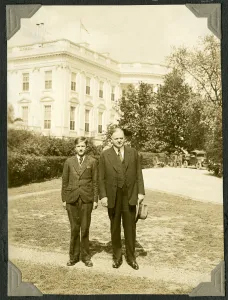
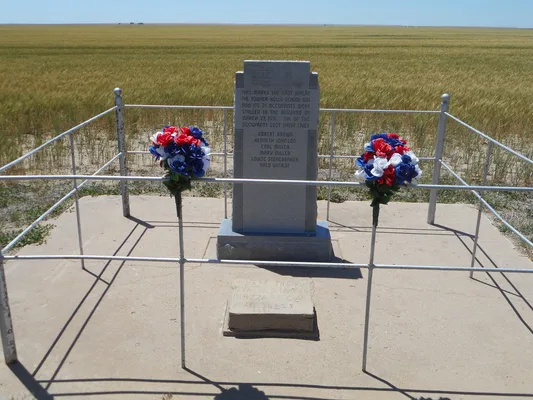
The press had a field day. The publisher of the Denver Post, Frederic Bonfils, arranged for an airplane to fly the children to a hospital in Lamar. He then focused on young Bryan Untiedt labeling him as the hero of the disaster. This publicity resulted in President Herbert Hoover inviting the lad to the White House. The tragedy ultimately led to reforms and establishment of standards for school buses nationwide. A monument to the six lost lives was erected near the location of the now long-gone Pleasant Hill school houses so as not to forget the heartbreaking event that happened there over 90 years ago.
|
Kiowa County Memorial Marker near Pleasant Hill School site.
Historical Commission news

Happy New Year from the Superior Historical Commission. We kicked off 2025 by hosting visitors to the Asti Park Historical Museum on Jan. 4. Despite the gloomy, overcast day, it was a successful opening of the rebuilt museum patterned after the historic mine camp house museum was destroyed in the Marshall Fire. The Commission will also continue to operate the Grasso Park Historical Museum and both will be open again on Feb. 1.
-
Asti Park Historical Museum, 110 W. Maple Ave.
-
Grasso Park Historical Museum, 122 E. William St.
The annual Spring Educational Program is scheduled for March 12 at 7 p.m. at the Superior Community Center (1500 Coalton Rd.). The subject is “If These Stones Could Talk, Tales From the Columbia Cemetery Boulder, Colorado.“ Mary Reilly-McNellan will share the stories of Boulder and Boulder County ancestors in the Pioneer Cemetery and the Superior Cemetery and also discuss her gravemarker assessment work in the Superior Cemetery and its importance to cemetery conservation.
|
Did you know that:
-
The original Superior schools had the same educational organization as the Pleasant Hill School? Grades 1-6 in one building and grades 7-8 in the other.
-
The Kiowa County town of Towner was named for an official of the Missouri Pacific Railroad?
-
At 3,350 feet in elevation, the lowest point in Colorado is near the town Holly? Cattle rancher Hiram Holly founded the town, and the Holly Sugar Company has its origins there.
-
The defunct Orient Mine in the San Luis Valley is now the seasonal home of at least 250,000 Mexican Freetailed Bats? They migrate from the subtropics arriving at the 9,000-foot elevation mine site in June every year.
Written by Larry Dorsey with help from Dorothy Mahan and Jennifer Garner.
For more information about the Historical Commission and its activities, contact Commission Liaison Jennifer “JG” Garner at 303-499-3675, ext. 167, Commission Chair Larry Dorsey at 303-499-1969, or just click on the “Historical Commission Info” button below.
|