Historical Commission Corner
Autumn is upon us. As winter approaches, we think of what our ancestors did to prepare for the cold temperatures of winter. If it was a hundred years ago, it would be time to stock the coal bin with fuel for the furnace. In those days, homes with basements or cellars included a bunker in which to store coal. A prominent business in towns of all sizes was the coal yard. The homeowner would order a quantity of it; then the coal was usually delivered by wagon or truck in later years. There was an iron door covering the coal chute. The truck would back into the driveway, raise the dump bed and the coal would slide into the bin via the truck’s metal chute.
This event was often a delight to the neighborhood children as watching the process was entertaining to them. But it was serious business for the adults. Often coal dust then permeated the house making cleaning a constant and arduous task for the housekeeper. This also meant the winter chore of starting a fire, keeping it from burning out, shoveling coal into the fire box, cleaning out cinders, clinkers and ashes was just around the corner.
Conditions improved for the homeowner with the development of the coal stoker. This device employed an auger that would move the coal from a hopper and feed it into the fire box. Other than maintaining the ashes, now all that was needed was to keep the hopper filled with coal. Homes without a basement were usually heated by a pot belly stove in the living room and a coal burning cook stove in the kitchen. Coal was usually stored in a shed behind the house. For the houses in the Industrial Mine Camp, the coal shed was next to the outhouse, another inconvenience by modern standards.
Today, this process seldom means more than dusting off the furnace and installing a fresh filter.
One alternative to home delivery was to go to the coal yard and pick up the ebon fuel and transport it back home.
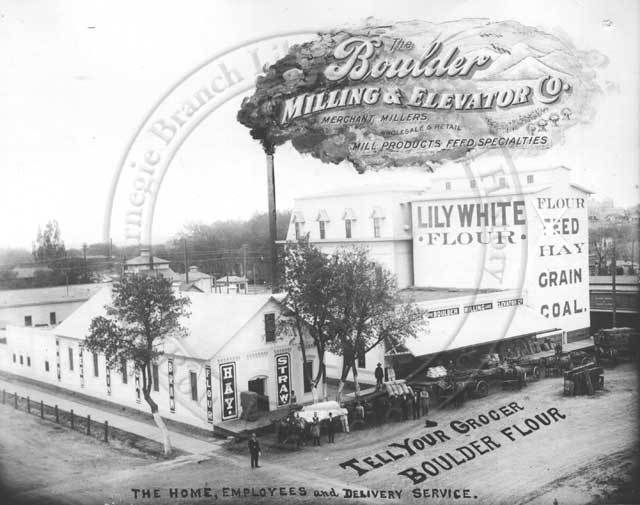
In the image below, we see a prominent Boulder business from the past: the Boulder Milling and Elevator Company flour mill located at 1830 11th Street. This business offered a verity of products from straw to coal. We wonder how the “Lily White Flour” mixed with the dusty black coal?
Photo courtesy Carnegie Library for Local History, Boulder
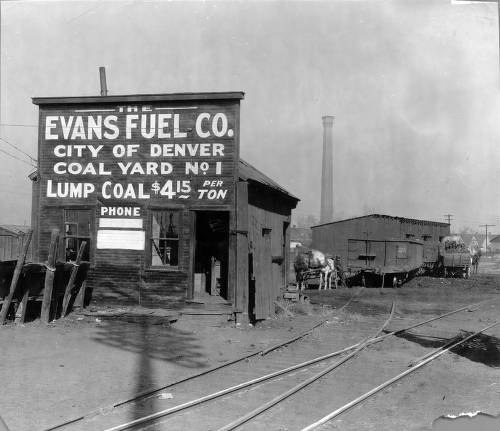
The next image is a coal only facility on 38th Street in Denver. The coal was delivered by rail then loaded onto horse drawn wagons for delivery to patrons around the turn of the last century.
Photo Courtesy Denver Public Library Western History Collection
Historical Commission Updates
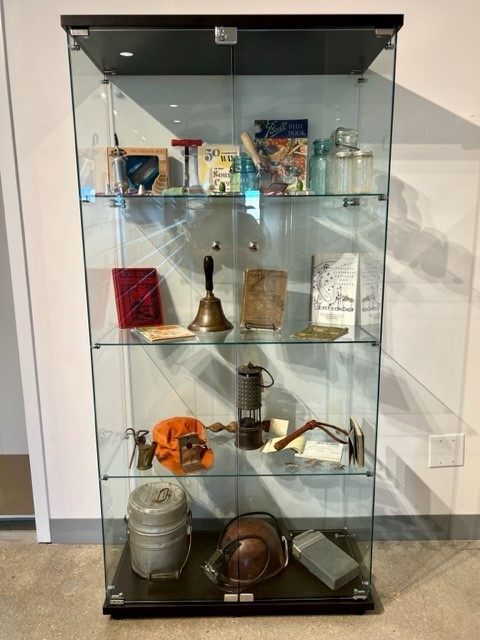
The Superior Historical Commission continues to prepare the Grasso Bungalow for use as a museum. In the meantime, our photo display in the Community Center, installed last month, has been well-received by visitors. We also recently added a display case loaded with historical artifacts in that same location and welcome you to take a look at the relics relating to the history of this area.
We have other changes to report. First, we bid a fond farewell to Lydia Yecke, our former Town liaison, as she transitions to her new post as Superior Town Clerk. Lydia has been a wonderful liaison overall but especially during the aftermath of the Marshall Fire. Her work over these past months has been above and beyond the usual. She will be missed. Our new liaison will be named soon.
Second, we welcome Scott Phillips as our newly appointed Commission member and look forward to working with him moving forward.
Did you know that:
- On October 20, 1890, Robert Womack struck gold at Cripple Creek starting one of the biggest rushes in history. The source of the name of the area came when some cowboys discovered a calf had jumped a fence, landed in a gully, and broke its leg.
- Between 1894 and 1902 around 50,000 people lived in the Cripple Creek area comprised of seven towns. 35,000 lived in Cripple Creek itself making it the fourth largest city in Colorado at that time.
- On October 28, 2007, the Boston Red Sox defeated the Colorado Rockies 4-3 to sweep the World Series in four games (we apologize for the reminder).
The Historical Commission currently has two vacancies, so applications are welcome. For more information, contact Jennifer Garner, town staff, at 303-499-3675, Larry Dorsey, commission chair, at 303-499-1969 or click on the button below.
Text by Larry Dorsey, proofed by Dorothy Mahan.
|