|
Independence Day: Museum Closure
Saturday, July 4 | Closed All Day
|
|
 |
Living Legends: Trailblazing Ladies of Louisville Walking Tour
Thursday July 9 | 3 time slots from 6–7:40 p.m.
1001 Main Street
Learn more and register here
|
|
 |
Summer Preschool Programs: Flowers and Bugs Don't Bug Me
|
|
 |
Ancestry Series
Saturday, July 11 | 2–3:30 p.m.
Saturday, July 25 | 2–3:30 p.m.
951 Spruce Street
Register here for Part 3: Immigrants
Register here for Part 4: Roadblocks
|
|
 |
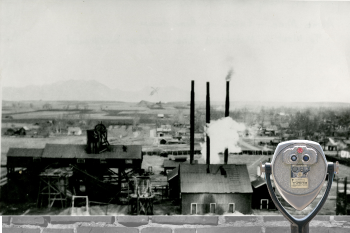
Walking Tours: Louisville 101 & Lost Louisville
Saturday, July 18 | 10 a.m.
Saturday, July 25 | 10 a.m.
1001 Main Street
Register here for Louisville 101
|
|
 |
History Happy Hour: The Long Strike with Kira Boatright
Saturday, July 21 | 5:30–7 p.m.
Gravity Brewing, 1150 Pine St. Unit B
Register here
|
|
 |
|
|
Collections Feature
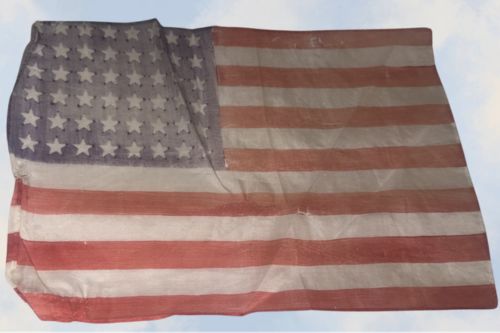
Happy Fourth of July! The Museum will be closed on the holiday.
This small, silk flag was pulled from the Museum’s collection, and you may notice it is missing a few stars! This flag was hung in Louisville when just 48 states were a part of the United States. As the 38th state, Coloradans have seen many changes to the flag as 12 more stars representing states have been added.
In 1912, the 48-star flag was created to include the two newest states, New Mexico and Arizona. That same year, President William Howard Taft would issue an executive order to create a set proportion for the flag, 6 even rows of stars, and for the stars to point upwards. The last two states to join the Union, Alaska and Hawaii, would receive stars on the flag in 1959 and 1960 respectively.
|
|
Living Legends: Trailblazing Ladies of Louisville Walking Tour
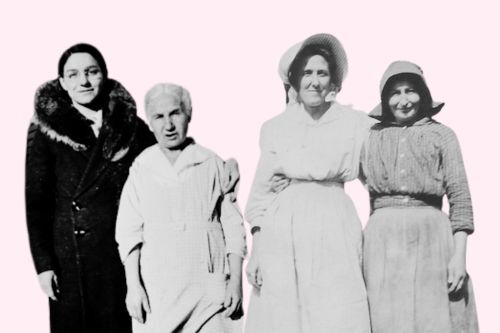
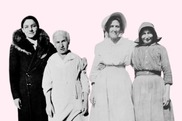
The Living Legends: Trailblazing Women of Louisville walking tour will have stories come to life. Meet notable women from Louisville’s past as re-enactors reveal how women created the city we know today! There will be 3 different time slots for this one-mile walking tour on Thursday, July 9. Select your one hour time slot, and register for this walking tour.
|
Summer Preschool Program: Bugs Don't Bug Me
This program series combines structured play, unstructured nature play, story-time, and hands-on-crafts to learn about insects in Louisville! Play scientist with your child as we learn together about insects and make a bug craft to take home. Please ONLY register for children who are participating in the crafts.
|
|
Ancestry Series Pt. 3: Immigrants
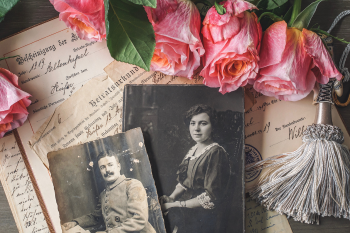
Join Bridget Bacon, former Museum Services Supervisor, to learn the basics of how to use Ancestry.com (a free in-house resource available to all Louisville and Superior library card holders). Sign up for any or all of the four sessions, each of which has a different focus. Registration is required.
|
History Happy Hour: The Long Strike with Kira Boatright
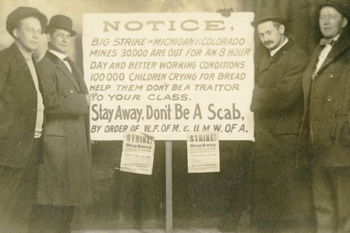
Join Museum Associate Kira Boatright at Gravity Brewing to learn about the Long Strike (1910–1914) and the role that Louisville and other coal mining communities within the northern coalfield played in Colorado's labor movement. The Long Strike, as its name suggests, was the longest strike in Colorado state history. Registration is required.
|
|
Membership
Join or Renew Today!
We love our members! Members can renew online, via mail, or in person. As a reminder, if paying by check, please make your membership check out to the Louisville Historical Museum and remember to make any monetary donations separately to the Louisville History Foundation. Thank you for your support!
Not a member yet? Join today with the perfect membership type for you. The Historical Museum offers individual, family, and business memberships, as well as gift memberships so that you can give someone who loves Louisville and history full access to all that the Museum has to offer.
Museum members receive the Louisville Historian in the mail four times each year. You can also make a donation directly to the Louisville History Foundation to support the work the Museum does and special projects.
|
|
|
740 Front
Alternating Current Press
ARC Thrift Stores
Ariel IT Services
Atomic Forge
Berkelhammer Tree Experts, Inc.
Bolder Insurance
Coal Creek Collision Center
Cory Nickerson - 8z Real Estate
Creative Framing & Art Gallery
DAJ Design, Inc.
Deep End Solutions
E & L Team at RE/MAX Elevate
Ferguson's Family Plumbing and Drain
Fingerplay Studios
|
|
Gstalder Louisville Law Group
Hofgard & Associates, P.C.
Louisville Cyclery
Louisville Tire & Auto Care
Moxie Bread Co.
Origin CPA Group
Parco Dello Zingaro MHP
Paul's Coffee & Tea
Pine Street Plaza
Pink House Co.
Premier Members Credit Union
Seward Mechanical Systems
Society of Italian Americans
Stewart Architecture
Ters Family Dentistry
The Singing Cook
|
|
Historic Photo Feature
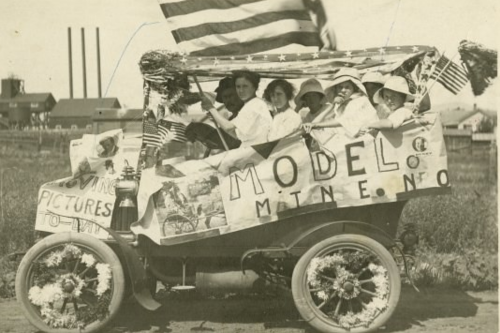
Historically, Independence Day in Louisville was characterized by community picnics and city parades. Businesses, like the Model Moving Picture, drove floats in the 1913 Fourth of July parade. Tom Metz, the theater owner, is pictured along with his twin daughters, Nora and Flora, and some family friends. The Acme Mine can be seen in the distance.
Tom Metz moved to Superior with his wife, Sarah, in September of 1897 to work at the Industrial Mine, and his daughters would be born the day after the move. Born premature, the family recalled warming the young girls by the stove during their early months in Colorado. Two years later, Tom moved his family to Louisville. He added a barbershop business to his house on 820 Main that would become known as “Temperance Hall.” This nickname was derived from Tom’s refusal to serve alcohol on the premises, and instead, he offered ice cream, soda, and tobacco to his customers. Overtime, the shop added pool and card tables. Later, he would begin selling items like used bicycles, musical instruments, and phonographs.
In 1906, Tom sold “Temperance Hall” and purchased a theater across the street. Model Moving Picture was in business for about 17 years, and every member of the Metz family helped run the theater. Sarah sold tickets at the front while Tom oversaw daily operations. Nora worked the projectors, and Flora played the piano accompaniment to silent films. Tom sold the business to the Biella family in about 1923 to fund his retirement in Los Angeles, and the theater became the Rialto until the early 1930s when it was consolidated with the Biella’s Rex Theater.
|
|
|
|
|