|
As you've probably heard by now, we're in for a frigid weekend. We hope your weekend plans include bundling up with a good book and a warm beverage, but even if you're not venturing outside, there are steps you should take to ensure you're prepared. Check out these tips to prepare your home, your business, and/or your loved ones and pets:
When temperatures get below freezing for several days, pipes in your home or business are at risk of freezing or bursting. This can cause thousands of dollars in damage, including conditions like mold that can make your home inhabitable.
Use these tips from our Building Department to protect your home (or business):
-
Turn up the heat. The minimum temperature in your home during extreme cold should not be less than 65 degrees to help keep the pipes in your walls from freezing.
-
Know where your main water line shut off valve is in the event that you do have a pipe burst. Shut off your water as quickly as possible to prevent further damage.
-
Open cabinet doors below sinks on exterior walls.
-
Let your water run at a slow drip from sinks and faucets when temperatures are below 10 degrees F.
- If you see a pipe freezing up, use a hair dryer on low heat to thaw.
- Insulate exposed pipes and outdoor faucets by putting insulation over outdoor pipes.
-
Disconnect outdoor hoses from the house; this allows your faucet to drain properly.
-
Close crawlspace vents and eliminate areas where outside air can come in.
Newborns, the elderly, people with chronic illnesses, outdoor workers, and unhoused populations are among the most vulnerable during extreme cold events. Check on your friends, family, and neighbors, and:
- Dress in loose layers and cover all exposed skin
- Limit or avoid time outdoors
- Consume hot foods and warm drinks, avoid caffeine and alcohol
- If you must drive, be sure to bring your cell phone and pack an emergency preparedness kit in your car, including: blankets, flashlight, first-aid kit, high-calorie non-perishable food, water, shovel, scraper, and a battery booster pack.
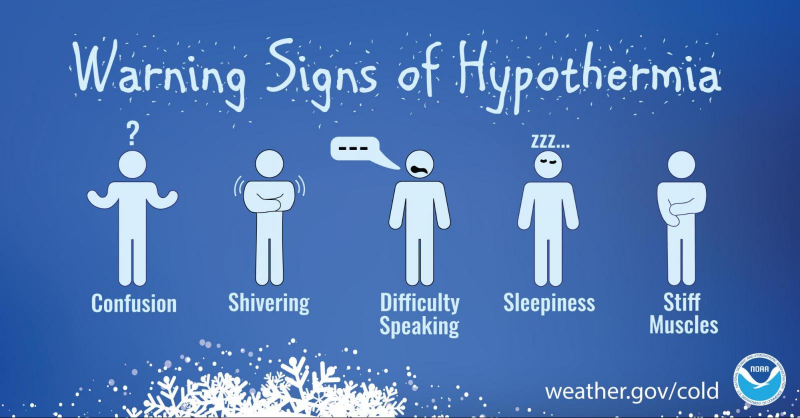
- If you or your loved ones spend time outside, know and be able to recognize warning signs of hypothermia.
Need shelter from the cold? All Roads Boulder can connect you with shelter information and resources in Boulder County.
If you have outdoors pets, make sure to bring them inside during extreme cold. Even with a natural fur coat, winter can be deadly for your pets! Follow these tips to keep pets safe during extreme cold:
- Keep pets warm and dry, and indoors whenever possible.
- Provide plenty of food and water. Dehydration is especially dangerous in winter.
- Limit outside time. When pets do go outside during extreme cold, be sure to thoroughly remove ice and snow from your pet (including paws) once they come inside. Paws are particularly vulnerable as they can easily get frostbite due to the lack of fur on the paw pads.
Check out additional tips from the American Humane Society.
|