 As we approach the close of another year, our team invited the L&D community to share what gratitude means to them in their work and lives. The responses we received were powerful, deeply personal, and beautifully varied—reminders that gratitude can take many forms: a kind word, a trusted mentor, a courageous voice, a supportive team, or simply the quiet pride in work well done.
What shines through every story is the understanding that gratitude strengthens our teams and our sense of purpose. It encourages us to pause amid busy days, recognize one another’s impact, and reflect on why our work matters.
Arianne Burger Shapiro, Statewide Director of Labor Relations
My career has had an interesting path, and I don’t know that I would have anticipated being the Director of Labor Relations almost 30 years ago when I entered the professional workplace.

What I feel the most grateful for over my career are the people who have taken time to teach me things. What I have learned is that when people take the time to explain something—to provide you a lesson—they do so because they believe in you and that you can use that information for good.
Whether it was a boss early in my career who handed me the payroll for our company or a union leader who showed me how interest-based problem solving led to a stronger labor-management relationship, all were lessons that helped me grow and develop in my career. I am eternally grateful for all of my colleagues and leaders who have given me and continue to give me those important lessons.
|
Jessica Greene, Statewide Deputy Chief Human Resource Officer

Across my professional career, one of the things I am consistently grateful for is team. The work that we do to support State employees is critically important and can be extremely challenging.
I have without fail found my colleagues in public service to be passionate, dedicated, smart, and willing to work together to rise to the challenge in order to make a positive difference.
Most recently, I have seen my team and colleagues making a positive difference in how we hire—by transitioning to a skills-based hiring approach. This foundational change to how we attract and develop top talent could not have been accomplished by any one individual, but rather reflects the work and dedication of HR professionals and leaders across agencies taking on this challenge for the betterment of the State workforce and the people we serve.
|
Janeen L. Haller-Abernethy, Director, Colorado State Employee Assistance Program (CSEAP)
Time and time again, the CSEAP team serves State employees who are experiencing stress, conflict, or other difficulty in their lives.
 |
|
Our team of 16 staff invokes a feeling of gratitude for me on a daily basis as they engage with, present to, coach, and counsel State employees in a manner that is kind, compassionate, reassuring, intentional, and enlightening to all they serve. |
Jeanette Lara, Volunteer Coordinator, Southeast Region – Colorado Parks and Wildlife
I am so very thankful for my great team of coworkers, volunteers, and my supervisor. Throughout my 12 years with Colorado Parks and Wildlife, I have been a part of the most amazing teams! My current supervisor is understanding and supportive of my need for a flexible schedule so that I could be present for my family while we faced personal difficulties.
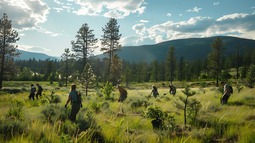
My coworkers act as thought partners, collaborators, mentors, friends, and all-around amazing human beings. I am very fortunate that as a Volunteer Coordinator, I work in a role that fosters relationships, builds community, and amplifies the work that my coworkers do to meet our agency's mission.
I hope that during this holiday season we can remember to give thanks, speak kind words to one another, and lift each other up!
|
Lori Legler, CDHS Project Manager, Planning,
Design and Construction
As we enter the season of gratitude, I want to reflect on a group of people who rarely receive the recognition they deserve—but whose work touches nearly every part of our daily lives.
Early in my career with the State of Colorado, I developed a deep respect for our Facilities Management teams—from the skilled trades and grounds crews to, most especially, our housekeeping staff. These individuals are often underpaid and overlooked, yet they are the ones who handle the toughest tasks, often those that fall outside their job descriptions but still must be done.

For the past two years, I’ve had the privilege of working with many of our tradespeople on a renovation project—one that will soon become their new workplace. Through this project, I’ve gained more than just technical knowledge. I’ve come to admire their dedication, expertise, and care—not only for their work, but for one another and the people we serve.
I was often “forewarned” that certain folks might be difficult to work with. Instead, I’ve found some of the warmest, most genuine people I’ve ever met. We’ve shared personal stories, checked in with each other on hard days, and built a strong sense of mutual respect.
While there are far too many individuals to name, I want to recognize the core planning group I’ve worked most closely with: James Williams (HVAC), Todd Dow (Electrical), Doug Sparks (Structural Trades), Bill Leazer and Aaron Henkes (Plumbing), Bill Rich (Electronics), Victor Hernandez (Painting), Aaron Olivas (Grounds), Megan Brown(Housekeeping), Ed Harrison (Millwork), and Les Welch and Jessie Maestas (District Supervisor/Manager).
And I would be remiss not to thank my supervisor, Matt McNew, whose guidance and advocacy have made all the difference.
To all those who work behind the scenes to keep our buildings running, our grounds maintained, and our spaces clean and safe—thank you. Your work matters. I see you, I respect you, and I’m honored to work alongside you.
|
Joanna Logan, Manager, Learning & Development for Colorado
I’m so lucky to have had an awesome mentor early in my career who helped me break out of a fear of making mistakes. He didn't just tell me to own my errors; he showed me, casually sharing a big mess-up he’d had and how he handled it. That lesson was invaluable.

He always stressed, "It's always an easier conversation to have when you proactively share a mistake with your boss and then bring solutions to the conversation. That way the focus is always on moving forward."
I’m honestly so grateful for that guidance, because it taught me to ditch the panic and immediately switch into a solution mindset.
|
Rosina McNeil-Cusick, Statewide Equity Director
I haven't always been in public service, but public service has always been in me. When I first started my career, I was working in the fashion industry in New York and was eager to scratch my "service-minded itch."
So I began volunteering around the world—in Peru, Guatemala, Argentina, and eventually Rajasthan, India—where I worked with a small literacy center serving women and children. This trip changed my life in more ways than one.
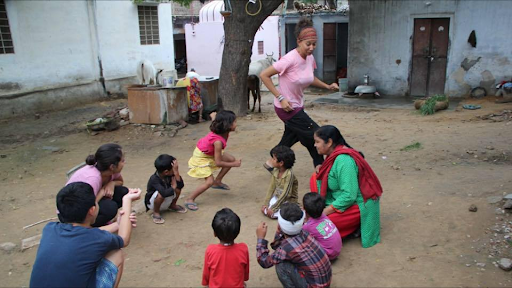
On this trip to India, I met a little girl named Laxmi and her incredible mother. Laxmi had been taken out of school because her father did not believe in the education of women. Her mother bravely told us this as we left their home, risking her safety to give her daughter a better chance. That one moment of courage changed my life.
I came back home, quit my job in fashion, and joined the Peace Corps. Through that experience, I began my career in public service, met my husband, and started our family. I have never been more grateful to strangers I met for only fifteen minutes.
|
George Russo, Statewide Policy & Compliance Director
I have worked with a lot of great individuals in my professional career and credit them for so much of my success. However, I want to highlight one who was always a good sounding board and made me a better colleague and supervisor.

She always emphasized that there was an opportunity for kindness in the workplace. Sometimes kindness meant being transparent even when it was hard to do. Sometimes it was being honest with someone during a difficult conversation. Sometimes it was giving someone grace.
Whenever I needed to communicate with my team or the organization, I would run the communication by my colleague and get her thoughts. She always provided a safe space for feedback. I am thankful for all the feedback because it made me a better communicator and employee.
|
Alexandra Soto, CDOT Administrator III, Region 1 Section 9 Maintenance

I am grateful to Brook Howard for her leadership and generosity. She has been with CDOT for almost 20 years and is currently the Maintenance & Support Supervisor with Region 1 Section 9. Since joining her team a year and a half ago, I have learned so much from her institutional knowledge and commitment to doing things the right way.
Brook not only invests in her own team’s success but also takes the time to train and support colleagues from other departments across the state. Her dedication to building up others and setting them up for success is a great example of what gratitude and service look like in action.
|
Melissa A. Walker, Statewide Workforce Solutions Director
I’m deeply appreciative of the person who, in the midst of a complex conversation, has the courage to pause and ask, “What are we really trying to achieve here?”
It’s such a simple question, but it often pulls us out of the spiral we’ve unintentionally created. Too often, we dive so deeply into solving one problem that we start trying to solve every problem—the entire workforce system, the enterprise, the process, all at once.

That kind of expansive thinking can be valuable, but it can also lead to decision paralysis. The power of that centering question is that it reorients us toward purpose. It reminds us that thoughtful, intentional problem-solving isn’t about reacting quickly or taking the easiest path forward—it’s about focusing our energy where it matters most.
I hold deep gratitude for those quiet disruptors—the individuals who speak up, not to challenge for challenge’s sake, but to bring us back to clarity. They are the ones who ground discussions when they drift, who sense when complexity has outpaced purpose, and who create openings for more thoughtful dialogue.
When teams value psychological safety and inclusivity, those quiet disruptors can ask the questions that others might hesitate to raise. They can challenge assumptions without fear of dismissal, and in doing so, they make our collective work stronger, more equitable, and more sustainable.
|
|