|
Learning & Development for the
State of Colorado
|
|
In this Issue:
- Welcome LDC’s New Manager
- AI Prompt Writing Contest Winners!
- Trainer Spotlight: Jack Sandoval
- Final Evaluations Training E-Learning
- Compliance Training Deadline & Cycle Updates
- Training Icebreaker Ideas
|
|
 We’re excited to share that Joanna Logan has joined the Learning & Development for the State of Colorado (LDC) team as Manager, effective Aug. 4. Joanna brings deep experience in learning strategy, organizational development, and team leadership—most recently as Design & Development Supervisor at the Department of Health Care Policy & Financing. Her background managing complex, enterprise-wide projects, combined with her passion for innovation and training excellence, will be a tremendous asset to LDC and the agencies we serve.
Please join us in welcoming Joanna to this important and highly visible role. We look forward to the leadership, perspective, and collaborative spirit she brings to the team.
We’ll spotlight Joanna in the coming weeks. Thank you to everyone who helped make this next chapter for LDC possible.
July Learning Leaders Forum Recap
At last month’s Learning Leaders Forum, nearly 50 trainers and instructional designers from across the State came together to share successes, new ideas, and strategies for improving our practice. The session featured lively discussions—from summer treats and icebreakers to creative uses of AI in training—and breakout groups explored ways to connect and collaborate across agencies.
Participants also shared feedback through a community survey that will help shape future forums. In addition, LDC shared updates on the statewide compliance training schedule, the new Final Evaluation eLearning module, and upcoming “train-the-trainer” pilots.
If you missed the July forum and would like to join the group, email dpa_ldc@state.co.us to be added to the invite list.
|
|
 LDC’s first-ever AI Prompt Writing Contest invited State employees to submit their best AI prompts—real examples they’ve used to solve problems, streamline work, or spark creativity. Over the past two months, we’ve highlighted the contest in the L&D Newsletter, and the submissions did not disappoint.
Entries ranged from data analysis workflows to creative design hacks and full-scale project collaborations with AI. What stood out most was how each prompt reflected not just technical skill, but also the vision to apply AI in ways that deliver real value to agencies and the people they serve.

Winner
J. Nathan Bullock
Associate Director, Staff Training & Development – Colorado Department of Corrections
The winning prompt(s) addressed a daunting challenge: analyzing more than 2,000 qualitative survey responses from staff at the Colorado Department of Corrections. Manually reviewing and categorizing this amount of open-ended feedback would take days, if not weeks.
Dr. Bullock’s AI prompt(s) broke the task into clear, replicable steps:
- Review all responses and group them into themes.
- Identify exemplar comments that best represent each theme.
- Count the frequency of each theme or point.
- Provide 2–3 actionable and practical recommendations per theme—always within ethical guidelines and focused on constructive improvements.
The result? A well-structured, AI-assisted process for turning a mountain of feedback into meaningful, actionable insights. The approach is a model for how AI can transform data-heavy tasks into manageable, impactful projects that directly support training and decision-making.
|
Honorable Mentions
Ashlee Dutton
Leadership & ODE Specialist – Colorado Department of Revenue
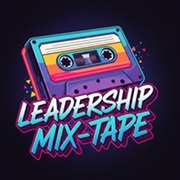
One of our honorable mentions showcased an entirely different kind of AI use case—one that combines creativity, branding, and efficiency. While developing the Aspiring Leader Program, Ashlee Dutton wanted a visual identity for its theme: “Leadership Mix-Tape.” Inspired by the nostalgia of making the perfect cassette, a bold, 80s-style graphic that would grab attention and instantly connect with the program’s concept was envisioned. |
|
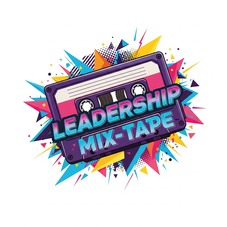 |
Instead of spending hours in Canva or pulling her graphics team away from other priorities, Ashlee turned to AI’s image generation feature. In just 20 seconds, she had multiple high-quality, on-brand options ready to go—no extensive design skills required. She now uses this approach to create logos, slides, and visuals across her projects, demonstrating how AI can make professional-grade design both fast and accessible. |
|
 |
Ken Francis
Senior Database Administrator –
Governor’s Office of Information Technology
Ken’s submission told the story of building an AI-powered Emotional Intelligence journaling app. What began as a simple tracker evolved into a dynamic coaching tool with features like:
- An interactive calendar to visualize progress.
- A “Daily Focus” list generated from user entries.
- A clean, dashboard-style layout for easy navigation.
- Engaging, thoughtful touches like animations and guided reflections.
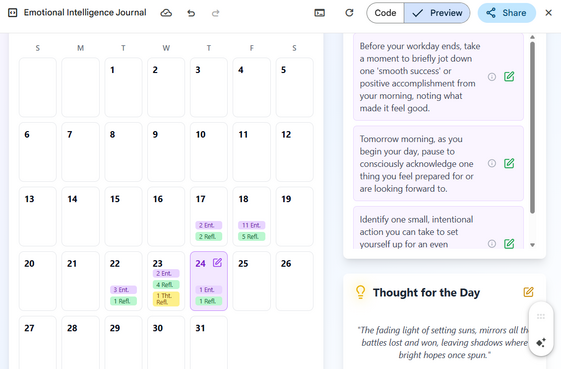 Screenshot of the Emotional Intelligence journaling app showing a color-coded calendar view, daily reflection prompts, and “Thought for the Day” feature.
The project developed through a series of evolving prompts and collaborative iterations with AI, overcoming technical challenges along the way—including debugging a persistent data issue. The result is a functional, visually engaging tool designed to help users strengthen emotional intelligence over time and a compelling example of sustained AI collaboration.
|
|
Trainer Spotlight: Jack Sandoval,
DYS Training Specialist |
|

Tell us about yourself:
My name is Jack Sandoval, and I work as a Training Specialist IV for the Office of Staff Development for the CDHS Division of Youth Services (DYS). My office is responsible for training DYS new employees. We run a three-and-a-half-week academy to prepare employees to work with youth in our Youth Centers and regional offices. I have been with the Division for 23 years, and in a training role for the last 13. Outside of work, I am a husband to my amazing wife for 22 years, and I'm the proud father of a 20-year old son.
What is your favorite tool to support employee professional development? Why?
One of the best tools/training that my office uses is the 4MAT, which focuses on understanding learning styles and differences in the work environment. This tool has helped my team learn the value of understanding each of our own learning styles and in turn value the understanding of others learning styles. It's given us a better grasp of the differences that each person goes through as a learner, as a team member and then as a leader. With that awareness, we make sure no one’s differences are overlooked, and every new employee leaves the academy better prepared for their work in Youth Centers or regional offices.
What is something you’d like to implement for statewide learners in the future?
I would like every employee to have the opportunity to take a Strength Finder course. This type of training can help employees discover their strengths, learn how to apply them, and identify areas for growth as they advance in their careers with the State.
What do you like to do in your free time?
I enjoy spending time with my family. I like video/board games and going to the movies. When time allows, we also like camping.
Is there a unique travel experience you’ve had?
Not necessarily unique, but one of my favorite trips was with my wife. We drove to Utah and hiked in Arches National Park, then continued on to Arizona for more hikes around Sedona. We finished the trip in Los Alamos, New Mexico, where we toured the history of the Manhattan Project.
What was your dream job as a kid, and how has that changed?
I wanted to be an architect and design cool houses and buildings. I earned my degree in Computer-Aided Drafting, but discovered I didn’t enjoy design work when it meant being in a small office away from people. I’m a people person, and I love helping others be the best they can be.
|
|
|
 In response to the many requests we have received, Final Evaluation training has been converted into a temporary, self-paced eLearning module!
You can find the training here: Final Evaluations eLearning Module for Supervisors or under the discover tab in the LXP.
Please note, this version is intended as an interim resource while we work toward a more robust and interactive experience.
We will launch an enhanced module later this year, in time for mid-year reviews!
|
|
Compliance Training Deadline Change
|
|
 Understanding that fiscal year end is a busy time, the Department of Personnel & Administration has updated the timing of the annual statewide compliance training. Moving forward, annual statewide compliance training will be assigned on Oct. 1 and due Sept. 30.
The due date for completing 2024–25 annual statewide compliance training is Sept. 30, 2025.
New employees hired in June and July are required to complete compliance training by Sept. 30. Agency group leaders can run reports to check training completion in the LXP for their department.
Please reach out to dpa_ldc@state.co.us with any questions.
|
|
Icebreaker Toolkit for Trainers
|
|
 Josh Beryl, LDC Training Specialist
A shoutout to Allie Rasmussen, LDC Training Specialist, who inspired this article after leading the July Learning Leaders Forum. Not only did Allie kick things off with a fun icebreaker (shared below), but she also highlighted a thought-provoking activity from an attendee.
Some folks perceive icebreaker activities as cheesy or a filler activity, but my experience tells me it is worth building a collaborative and vulnerable environment by having people share something that speaks to who they are or their interests. At the July forum, we saw firsthand how meaningful these activities can be.
Here are six ready-to-use ideas—perfect for live or virtual trainings—to encourage discussion and connection:
1. Excellent seasonal treat:
Our Learning Leader Forum was at the end of July, so summer treats were discussed extensively. There are any number of twists to put on this personal preference question. Some ideas include any of the other three seasons or a holiday themed treat discussion for those particular times of year (Halloween candy is a personal favorite). Even zeroing in on particular food categories like cakes or savory favorites. Location based twists can also work, such as picnic snacks, or things we make at home.
2. Content related opener:
I have always been a fan of dovetailing ice breakers with the content of a training to get participants’ thoughts headed in the direction of the learning goal. An example in the CSEAP/LDC Emotional Intelligence training is asking participants things they do to calm or center themselves. I often share something about playing with my dog and we are all connecting in a meaningful way, while setting the tone the discussion we will have throughout the training. This will vary depending on the content of your course, but another example is when I took one of the labor relations trainings and we were asked what our previous experience was with unions and collective bargaining relationships.
3. One word to describe yourself:
This idea came up during our Learning Leader Forum. Variations include asking, “What one word would someone else use to describe you?”—such as your best friend, your pet, or your high school English teacher. Another variation is an idealized descriptor: “What word would you most like to describe you, whether or not it applies at this point in your life?”
4. Favorite pastime/hobbies:
This is a personal favorite of mine because I love talking about my hobbies. Hitting people where they live is a great way to generate discussion and allow people to feel comfortable. I have had people talk about things from knitting and crocheting, to volunteering and bettering their community, to sports, and of course table top games.
5. First job:
This came up in a team meeting recently and generated some fun discussion. We all had unpaid or low-key first jobs, and then our first legitimate, tax-paying jobs to compare notes on. A variation on this could be, “What did you want to be when you grew up?”—mine was race car driver, if you’re curious.
6. Art:
While this is a highly subjective area, that’s exactly what makes it a great conversation starter. It can center around music—genre, artist, or group. I’m a huge genre nerd and love getting into the nitty-gritty of my favorite sub-sub-genres, but even a favorite song or era of music can be fun. Keeping the topic broad makes it more accessible, as not everyone is a music lover. Asking about an appreciated art style, artist, or something similar can also help ensure everyone feels comfortable participating.
Feel free to use or adapt these icebreaker ideas to help participants feel comfortable and engaged in your trainings!
|
|
|
|
|