|
Learning & Development for the
State of Colorado
|
|
In this Issue:
- Training with Vision
- A Year of Progress for Talent Pathways
- From Apprentice to Analyst
- Facilitation, Elevated
- Spotlight from the National Stage
- AI Prompt Writing Contest
|
|
 - Karen Capaldi, Step Pay Program Implementation Supervisor
Ever felt that twinge of anxiety when starting a new training program? You're not alone. Stepping into the unknown of learning—be it in a room full of strangers or facing a solo e-learning module—can be daunting. But what if I told you that this seemingly isolated act of "training" is actually a linchpin in shaping your entire workplace culture? Yes, even in our increasingly digital, virtual world.
Think of it this way: training isn't just about acquiring new skills; it's about sculpting behaviors and attitudes. When done right, it can be the cornerstone of a vibrant, positive work environment. And why does that matter? Because a strong workplace culture fuels employee engagement, boosts productivity, and ultimately drives business success. The secret ingredient? Leadership. Leaders are the bridge connecting training, operations, organizational development, and the ever-important team vision.

Imagine training as the skeleton, providing structure. Culture? That's the powerful muscular system, enabling action and movement. And leadership vision? That's the crucial connective tissue, binding everything together and ensuring seamless coordination. When all these elements work in harmony, a magical synergy occurs, elevating both culture and business performance. It's like a beautifully choreographed dance where everyone knows their steps.
Let me share a personal experience. During my time as a Starbucks store manager, leading a team of 38, I faced a significant challenge: high turnover. We were constantly losing valuable employees just as they were becoming proficient. As any manager knows, the cost of continuous onboarding can severely impact the bottom line. I was watching revenue slip away due to excessive training labor and onboarding expenses. It became clear that building a strong retention culture was essential to combat turnover.
Starbucks provides excellent training resources, but the implementation needed a revamp. My first step was to identify team members who excelled at and enjoyed training, Barista Trainers. However, something was still missing—the connective tissue of a shared vision. As the leader, it was my responsibility to create that cohesion. I worked with the team, including management, to craft a compelling vision. It was a simple yet powerful concept, and it worked wonders. Turnover plummeted to the lowest in the region. The team's performance soared, earning accolades from leadership. But the real reward was the palpable sense of pride and accomplishment felt by every team member, both personally and professionally.
When we strategically integrate training with a clear, inspiring vision for our teams, we have the power to shape culture intentionally. This isn't an overnight transformation or a lucky accident. It requires dedication, consistency, and collaborative effort. As trainers and leaders, we must understand the profound impact of vision, not just on business outcomes, but on the lives of the individuals who make up our teams. When employees are well-trained, understand their roles, and are united by a shared vision, we achieve business excellence and create a genuine sense of belonging.
As the saying goes, "Many hands make light work"—but let's not forget, it also amplifies the joy!
|
|
|
 - Jennie Cecere, Talent Pathways Team Manager
The recently established Workforce Solutions Talent Pathways Team merges Skills-Based Hiring (SBH) and Work-Based Learning (WBL) teams to drive the Governor's Operational Agenda and Executive Orders across executive branch agencies.
Over the past year, the Talent Pathways Team has worked to offer tailored support for both SBH and WBL initiatives. This model allows the team to provide customized support to agencies based on their unique business needs. Since the Skills-Based Hiring Executive Order was issued, it has become clear that offering only uniform guidance or training is not sufficient to to implement these strategies at the agency level. Collaboration with numerous agencies has demonstrated that personalized assistance, through consultations and facilitating connections between agencies with shared objectives, is the optimal method. This model provides us with the opportunity to learn from and support agencies, and we've seen substantial success. The Skills-Based Hiring Wildly Important Goal (WIG) was achieved well ahead of schedule, and agencies are on track to meet, and in some cases exceed, the directives of the WBL Executive Order.
Looking ahead, the Talent Pathways Team aims to strengthen our consultative model by engaging strategic partnerships and providing data-driven, targeted assistance. We are also working to enhance data collection and management for WBL programs to improve coordination and recruitment.
The Talent Pathways Team has made significant strides this year, thanks to the dedicated efforts of all executive branch agencies and their collaborative spirit. Building on this momentum, we are committed to further strengthening SBH and WBL initiatives through strategic partnerships and data-driven, targeted assistance. This will enable us to continue refining our support, ensuring that we effectively meet the diverse business needs of each agency, and ultimately enhance services for all Coloradans.
|
|
From Learner to Leader: How Work-Based Learning Changed My Life |
|
|
- Janelle Martinez, Data Analyst

When I joined the Department of Personnel & Administration, I stepped into a unique opportunity. I was the department’s first Work-Based Learner, part of a bold initiative that was still in its early stages. At the time, there was not a fully developed structure in place, which meant I had to take an active role in shaping my own experience. I sought out mentors, identified training that aligned with my goals, and volunteered for projects that would help me grow.
While this required a great deal of self-direction, it also gave me a deeper understanding of what it takes to build a successful and equitable Work-Based Learning program. I saw firsthand how important it is to design these pathways with strategy, clarity, and support, especially for those who may not have followed a traditional path into a sustainable career.
My journey was not without challenges, but it was rich with growth, connection, and meaning. I have always been a believer in alternative pathways, especially for people who have faced adversity pursuing higher education or entering professional roles. Work-Based Learning opens doors for individuals who are capable, passionate, and often overlooked.
Today, I am a full-time employee for the State of Colorado, serving on the Talent Pathways Team as a Data Analyst. I have shaped my own education and career path, guided by the lessons I learned during my apprenticeship. One of the most meaningful parts of my journey has been mentorship. At the beginning of my program, I connected with a mentor who helped me see my worth, reminded me of my capabilities, and advocated for me in moments I needed it most. Her leadership, grounded in empathy, transparency, and integrity— is something I carry with me every day.
That’s the power of mentorship. That’s the power of Work-Based learning when done with intention. That’s the power of Work-Based learning when done right.
These programs are more than a stepping stone, they are a catalyst for transformation. They uplift individuals, impact families, and expand access to long-term opportunity. As we continue to develop and expand Work-Based Learning across Colorado, I hope we center the voices of those in the program, lead with purpose, and honor the profound impact that mentors, leaders, and a thoughtful program design can have.
Now, I hope to be that kind of leader for someone else.
|
|
|
 - Melissa Walker, Statewide Workforce Solutions Director
Facilitation often hinges on seemingly small choices that create psychological safety, keep participants present, and allow meaningful dialogue. Beyond the foundational skills of managing time, setting ground rules, and encouraging participation, great facilitators rely on nuanced techniques that make sessions truly successful. Here are five lesser-known facilitation tips to sharpen your approach:
-
Set the Energy, Not Just the Agenda Instead of diving straight into logistics, set the tone by naming the energy of the session. Acknowledge if it’s a heavy topic, a visionary space, or a practical working session. Framing the emotional undercurrent allows people to show up authentically and calibrates expectations.
Try: “Today’s conversation is part visioning, part untangling. Expect some ambiguity—but also creativity.”
-
Anchor the Group with a Visual Tracker Use a visible tracking mechanism (whiteboard, shared slide, or chart paper) to anchor the group’s ideas in real time. It reinforces that their contributions are valued, reduces repetition, and gives visual learners a foothold. It’s also a subtle way to manage digressions without calling them out.
Pro tip: Label the tracker “Working Ideas” to signal that nothing is finalized and all input is welcome.
-
Use Transitional Prompts, Not Just Questions Facilitators often rely on questions, but transitions are equally powerful. Phrases like “Let’s shift gears,” “I’m hearing a theme emerge,” or “Let’s park this and return later” help participants move through different phases of thought without feeling cut off.
This builds flow and shows you’re attuned to group dynamics—not just the clock.
-
Pay Attention to Who Closes a Conversation When a topic naturally winds down, observe who gives the final comment or summary. If it’s consistently one person, it may skew group perception of consensus. Mix it up by asking someone else to reflect or summarize. This small shift can redistribute influence and increase engagement.
“Before we move on, I’d love to hear how someone else is interpreting this—any new reflections?”
-
Design for Thinking Time, Not Just Talking Time Silence is a facilitator’s secret ally. Build in moments for written reflection or paired discussion before opening up a group conversation. This reduces groupthink, makes space for internal processors, and levels the playing field.
One method: 1 minute silent reflection → 2-minute pair share → open group discussion.
Skilled facilitation is often less about what you say and more about how you guide. With these lesser-known tips in your toolkit, you’ll create sessions that feel more intentional, inclusive, and impactful.
|
|
Can the Public Sector Lead the
Shift to Skills-First?
|
|
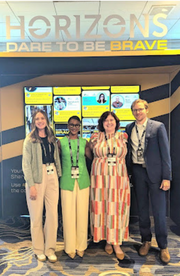
Across the country, public-sector employers are “tearing the paper ceiling” by hiring individuals who transitioned from high school into careers without following the traditional four-year college path. These individuals, known as STARs—workers who are “skilled through alternative routes,” represent a powerful and often overlooked talent pool.
State government leaders in Colorado and Louisiana are taking decisive action to transform their hiring practices—achieving tangible results that address pressing talent shortages while creating new pathways to economic opportunity.
|
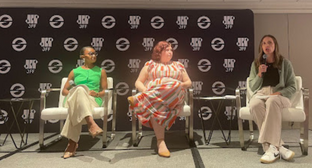
During a recent panel at the JFF Horizons Conference, participants from both states shared lessons learned through their participation in the Transformers in the Public Sector Cohort, supported by Opportunity at Work and the Volcker Alliance. Among the panelists was Jennie Cecere, Talent Pathways Team Manager, who shared insights on Colorado’s approach to skills-based hiring.
The discussion showcased how agencies in Colorado, Louisiana, and other states are challenging the public sector’s reputation for inflexibility by embedding skills-first practices into their talent strategies.
Panelists explored how public-sector leaders are:
- Identifying roles well-suited for individuals without four-year degrees
- Adapting recruitment to reach new applicant pools
- Evaluating candidates using a skills-first lens
- Reshaping their workforce—and redefining government’s role in the labor market
|
|
|
AI Prompt Writing Contest: Sharpen Your Skills, Show Off Your Creativity
|
|
 Curious about how to use AI tools effectively and ethically in the workplace? Here’s your chance to get hands-on and have a little fun.
The LDC team is hosting its first-ever AI Prompt Writing Contest—an opportunity to flex your skills, learn how to write better prompts, and explore how AI can support training and development.
We’re looking for prompts that:
- Demonstrate, thoughtful, clear, and ethical use of AI
- Are practical for professional contexts (training, course design, messaging, brainstorming)
- Can inspire others across the State to use AI more confidently and creatively
Deadline: Submit your prompt to dpa_ldc@state.co.us by July 31
Winners to be announced in the August L&D Newsletter!
Whether you’re a prompt pro or just getting started, we hope you’ll join in!
|
|
|
|
|