Neal Marquez Named Interim State Demographer
State Demographer Kate Watkins has accepted a financial leadership role with the University of Colorado system and will conclude her time as State Demographer June 12.
Projections Demographer Neal Marquez will serve as Interim State Demographer while the position is filled. Neal joined the State Demography Office (SDO) as its projections demographer in April 2025.
Prior to joining SDO, Neal provided population forecasts for the State of Oregon. His work has largely focused on developing demographic methods for population estimates and forecasts, analyzing shifts in population composition, and translating demographic findings into products that stakeholders in government agencies can use in their work.
Census Bureau 2025 Municipal Population Summary for Colorado
The U.S. Census Bureau released the July 1, 2025 population estimates for municipalities on May 14, 2026. A municipality, also referred to as an incorporated place, can be a city or town.
View highlights below, summarized by the Colorado State Demography Office (SDO), and review the full Census data release for more information, including national and regional trends.
Data note: Both the U.S. Census Bureau and the Colorado State Demography Office produce population estimates for municipalities. These estimates may differ for some municipalities due to different approaches and models. The State Demography Office will release its Vintage 2025 municipal population estimates in October 2026.
Colorado Municipalities with Population Growth
Fastest rates of growth between July 1, 2024 and July 1, 2025:
- Crestone in Saguache County at 19.4% (+27)
- Hayden in Routt County at 16.1% (+312)
- Idaho Springs in Clear Creek County at 8.9% (+151)
- Lone Tree in Douglas County at 8.9% (+1,251)
- Johnstown in Larimer and Weld Counties at 8.4% (+1,736)
The Town of Crestone, Town of Hayden, and City of Idaho Springs reported high numbers of building permits for new housing units during the time period which contributed to their population growth.
Housing units are an important input to the Census Bureau’s municipal population estimates. Population at the county level is determined by the number of births, deaths, and net migration. The county-level population is distributed to the municipalities and unincorporated areas by the number of housing units in each jurisdiction. Therefore, population for a city or town is determined by both the county population change, and by the annual change in housing units for each city and town. Counties with population growth will have municipalities with population growth, so it is not surprising that cities and towns in the faster growing counties, like Weld, Larimer, Douglas, and Elbert, also have population increases.
Largest change in population from July 1, 2024 to July 1, 2025:
- Colorado Springs, which increased by 2,288, or 0.5%
- Erie in Boulder and Weld Counties at 2,230 (5.8%)
- Windsor in Larimer and Weld Counties at 1,963 (4.7%)
- Johnstown in Larimer and Weld Counties at 1,736 (8.4%)
- Aurora in Adams, Arapahoe, and Douglas Counties at 1,728 (0.4%)
Incorporated places among nation’s fastest growing:
Nationally, of the 1,926 incorporated places with populations of 20,000 or more, three Colorado towns ranked in the top 100 for highest percent change in population from July 1, 2024 to July 1, 2025.
- Johnstown at 8.4% ranked 10th
- Erie at 5.8% ranked 37th
- Windsor at 4.7% ranked 60th
Fastest five-year rate of growth from April 1, 2020 and July 1, 2025:
- Timnath in Larimer and Weld Counties at 78.5%, with a population increase of 5,103
- Elizabeth in Elbert County at 77.8% (+1,294)
- Keenesburg in Weld County at 68.0% (+853)
- Deer Trail in Arapahoe County at 63.6% (+682)
- Severance in Weld County at 53.5% (+4,125)
Colorado Municipalities with Population Decline
- Over half of the 272 municipalities in Colorado tracked by the Census Bureau declined in population from July 1, 2024 to July 1, 2025, with cities on the Front Range with populations over 100,000 experiencing the largest numeric decreases, including the cities of Centennial, Denver, Pueblo, and Boulder.
- Since the 2020 Census, 137 municipalities have declined in population as of July 1, 2025.
- Only three cities have population decreases of more than 1,000: Arvada, Pueblo, and Boulder.
- The three towns with the largest rate of population decrease over the past five years are located in the Central Mountains and Western Slope: Walden in Jackson County (-13.0%), Silver Plume in Clear Creek County (-10.4%), and Vail in Eagle County (-9.2%).
Colorado 2030 Census Action Plan Now Available
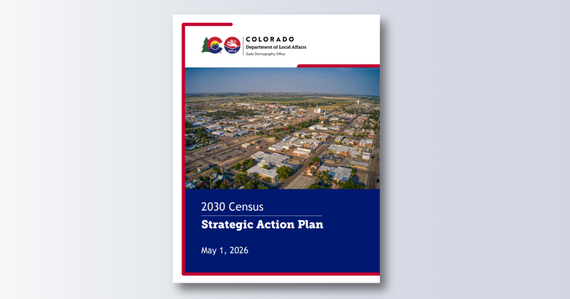 Colorado’s 2030 Census Action Plan is now available on the SDO website. The plan outlines SDO's planned 2030 Census education and outreach activities, based on Colorado's experience with the 2020 Census.
The plan fulfills the requirements of House Bill 19-1239, which requires the Department of Local Affairs and the Governor’s Office to develop a strategic action plan for funding, outreach, and education to promote a successful census count every ten years.
2030 Census Redistricting Program: Block Boundary Suggestion Program Map
Local Governments Invited to Suggest Changes to 2030 Census Blocks
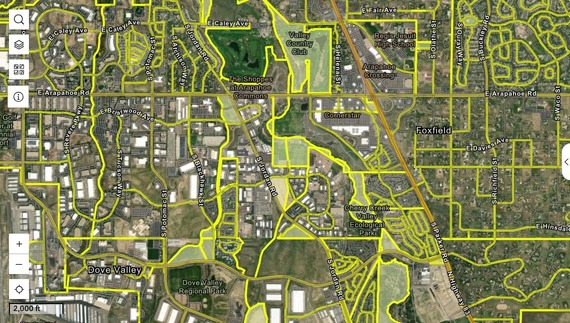 The U.S. Census Bureau is currently conducting the Block Boundary Suggestion Program (BBSP) with their state partners. The BBSP provides local governments with the ability to suggest changes to the census blocks used in the 2030 Census.
The resulting 2030 census block boundaries will be used to delineate boundaries for voting precincts and the creation of congressional and state legislative districts during redistricting in 2032. More information about the program can be found at the Census Bureau’s Redistricting website.
The State Demography Office has created an application, the Block Boundary Suggestion Program Map, to allow local governments to view the proposed census blocks and make suggestions about changes to these blocks. Changes can be made through the end of May and again next spring during the verification phase of BBSP.
U.S. Census Nationwide Trends: Population Growth Holds Steady in Midsized Cities Amid Widespread Slowdown
Largest Cities Faced Sharpest Declines in Population Growth
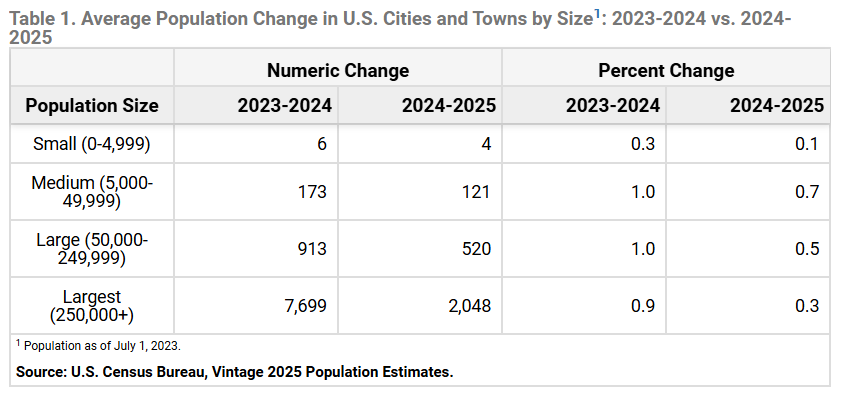
Amid a widespread national slowdown in population growth, midsized cities remained close to the previous year’s patterns between July 1, 2024, and July 1, 2025. Drop-offs in average growth were steeper among the largest cities, according to U.S. Census Bureau Vintage 2025 population estimates released May 14.
Even where the largest cities maintained strong growth, they were often outpaced by smaller cities in the outer portions of the same metro area. Similar patterns, where the growth of central cities was outpaced by surrounding midsized cities, were evident throughout the country.
Among the largest cities, average growth rates fell by at least half in every region compared with a year earlier.
Learn more in the population growth summary from the U.S. Census Bureau.
Census Now Hiring Colorado Field Representatives
 The Census Bureau is recruiting for customer-service focused field representatives and field supervisors in the Denver Region and Colorado.
Field representatives interview local residents in their homes, typically working part-time schedules, including nights and weekends. Learn more about the role.
Visit the State Demography Office website for more.
|