State Demography Office Summarizes County-Level U.S. Census Bureau Data
On March 26, the U.S. Census Bureau published new county-level estimates, providing detailed insight into Colorado’s changing population trends through July 1, 2025.
The State Demography Office summarized the estimates in a press release.
-
Colorado is still experiencing positive overall population growth statewide (0.4% year-over-year, or 24,059 people, in 2025). This latest data reflects the strongest positive net migration to Douglas, Larimer, and Weld counties, areas that have seen some of the largest increases in residential construction in recent years.
-
However, the new county data shows that some counties lost populations to other states or counties, including several high housing cost counties, and those counties that received the highest numbers of international migrants in preceding years (July 2021 to July 2024).
Read the key takeaways to learn more.
Forecast Updates to Mesa, Weld, and Broomfield Counties
The State Demography Office updated its vintage 2024 population forecasts for the counties of Mesa, Weld, and Broomfield to correct an error in the age distribution of the population in the near-term forecasts.
While the changes made were largely done to correct the age structure of the counties of the populations, slight changes to the total county-wide population, births, and deaths were also made to reflect the new updated age distribution.
These updates are now available on the State Demography Office website.
If you have any questions regarding these changes, please contact Neal Marquez at neal.marquez@state.co.us.
2030 Census Redistricting Program: Block Boundary Suggestion Program Map
Local Governments Invited to Suggest Changes to 2030 Census Blocks
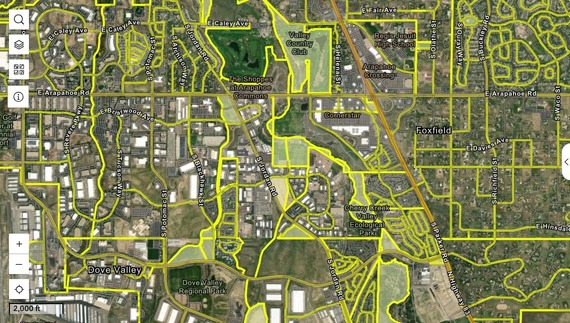 The U.S. Census Bureau is currently conducting the Block Boundary Suggestion Program (BBSP) with their state partners. The BBSP provides local governments with the ability to suggest changes to the census blocks used in the 2030 Census.
The resulting 2030 census block boundaries will be used to delineate boundaries for voting precincts and the creation of congressional and state legislative districts during redistricting in 2032. More information about the program can be found at the Census Bureau’s Redistricting website.
The State Demography Office has created an application, the Block Boundary Suggestion Program Map, to allow local governments to view the proposed census blocks and make suggestions about changes to these blocks. Changes can be made through the end of May and again next spring during the verification phase of BBSP.
Census Now Hiring Colorado Field Representatives
 The Census Bureau is recruiting for customer-service focused field representatives and field supervisors in the Denver Region and Colorado.
Field representatives interview local residents in their homes, typically working part-time schedules, including nights and weekends. Learn more about the role.
Behind the Numbers: Many U.S. Counties Had High Poverty Rates Over 20 Years
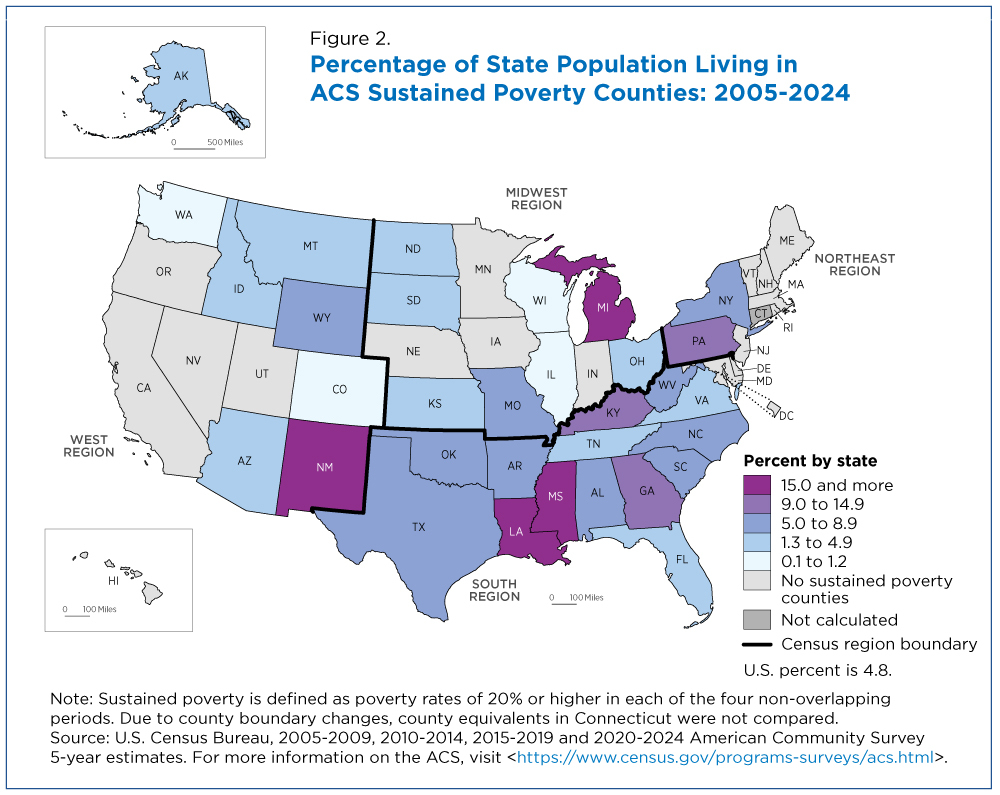
A Census Bureau analysis found that in almost 10% of U.S. counties, mostly in the South, poverty rates stayed at 20% or more for two decades, according to the recently released American Community Survey (ACS) 5-year estimates.
The latest ACS release allowed the bureau to compare changes in poverty rates in most of the nation’s 3,144 counties and county equivalents in five-year periods over the span of 20 years: 2005-2009, 2010-2014, 2015-2019, and 2020-2024.
In Colorado, two counties experienced these sustained poverty levels across the span of 20 years, Costilla and Otero.
Continue reading to learn more about:
- How poverty is measured
- How county poverty rates have changed over time
- Sustained poverty by state.
Visit the State Demography Office website for more.
|