Notes from the CRO Director:
Happy New Year!
For 2026, we are focusing on strengthening partnerships and investing in new collaborations to maximize resources and impact. We’re hard at work finalizing the 2025 Framework Update, a multi-agency collaboration to advance resiliency opportunities. We look forward to sharing the draft with you in February for public comment.
Other collaborative resilience initiatives are underway across Colorado to reduce risk and prepare our communities for future economic, social, and environmental challenges.
- Local jurisdictions across Colorado are working to implement the Colorado Wildfire Resiliency Code by July 2026. This will enhance Coloradans’ safety by ensuring new buildings are resilient to wildfire in areas of risk.
- State resilience grants including the CRO’s Rural Economic Development grants will continue to fund future-proofing projects across Colorado.
As your community identifies opportunities to build resilience, we encourage you to lean on the tools and technical assistance we provide including our Planning for Hazards and Guidance for Local Government Climate Adaptation toolkits.
Lastly, we are striving to remember that resilience in times of uncertainty means turning towards community and partners for support. We hope that, as you continue your meaningful, crucial work, you are able to surround yourself with the community support that will help sustain you and your efforts for years to come.
Be well,
Anne Miller and the CRO team
|
What's New at CRO?
 2025 Colorado Resiliency Framework coming soon!
Following our significant engagement period this fall in which we completed three summits and six roundtables, the CRO is continuing to integrate ideas into the 2025 update of the Colorado Resiliency Framework - a statewide plan that will shape the next five years of economic, social, and environmental resilience efforts. Your final opportunity to provide feedback on the draft Framework update will be during the public comment process (expected to begin in February). Be sure to join our email list to be alerted when the draft is available!
Thank you to those who have been part of the engagement that surfaced resiliency stories, new opportunities, and best practices for shaping a future-ready Colorado!
Microgrids for Community Resilience Project Updates
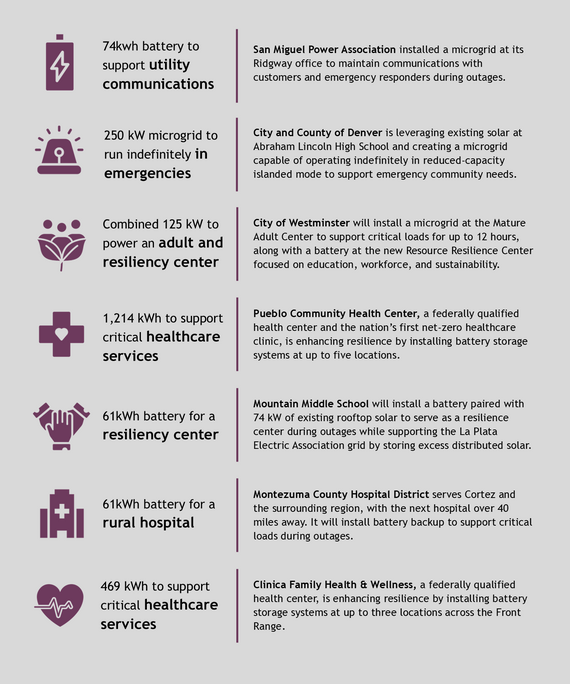
CRO’s Microgrids for Community Resilience (MCR) program is designed to reduce electric grid disruptions by funding the development of microgrids across Colorado. In 2025, MCR funded a total of $4.3M for 4 projects. Here are the highlights.
- In 2025, MCR awarded construction grants for battery storage for critical health care services at Pueblo Community Health Center, Montezuma County Hospital District, and Clinica Family Health and Wellness in the Front Range.
- The City and County of Denver and the City of Westminster will use 2025 MCR funds for the installation of new microgrids.
- San Miguel Power Association’s Ridgway office microgrid project, which will support critical communications during outages, was completed in September 2025.
 January Resilience Conversation: Colorado’s Resiliency Ecosystem
 Resilience is a team effort and Colorado is fortunate to have a strong ecosystem of actors building resilience across the State. Learn more about what the Colorado Resiliency Ecosystem was up to in 2025.
Resiliency News
Vital Landscapes and Resources Report (VLAR) and Planning Guide Published
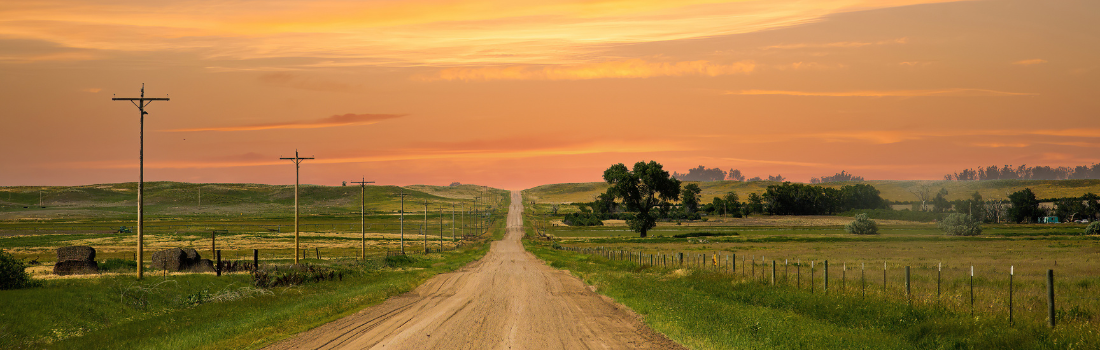 Colorado’s diverse landscapes play an essential role in supporting resilient ecosystems, moderating risk from natural hazards, and fostering social resilience through access to nature.
In December 2025, the Department of Local Affairs (DOLA) published the final Vital Landscapes and Resources Report, along with a Planning Guide, Toolbox, and Checklist to support local governments adopting or amending a comprehensive plan. The report covers what vital landscapes and resources Colorado protects and connects.
Senate Bill 24-174 (Affordable Housing Planning) directs municipal, county and regional planning commissions to consider this report, where applicable and appropriate, in their comprehensive plans.
Best and Brightest Fellowship Program Still Seeking Host Communities and Fellows
 Help us spread the word! DLG’s Best and Brightest Management Internship and Fellowship Program application cycle is still open through March 3, 2026.
This program partners with counties, municipalities and universities across the state, striving to meet the needs of communities, engage future leaders, and meet students where they are in their professional development, connecting them to community work in public service.
How to Participate
- Interested local governments should contact their Regional Manager to explore candidacy. A mentoring plan and a community profile is due February 2, 2026.
- Students: Contact your academic program director to determine if this program is right for you, or contact Program Manager Randi Snead.
Rebuilding Better: Four Years After the Marshall Fire
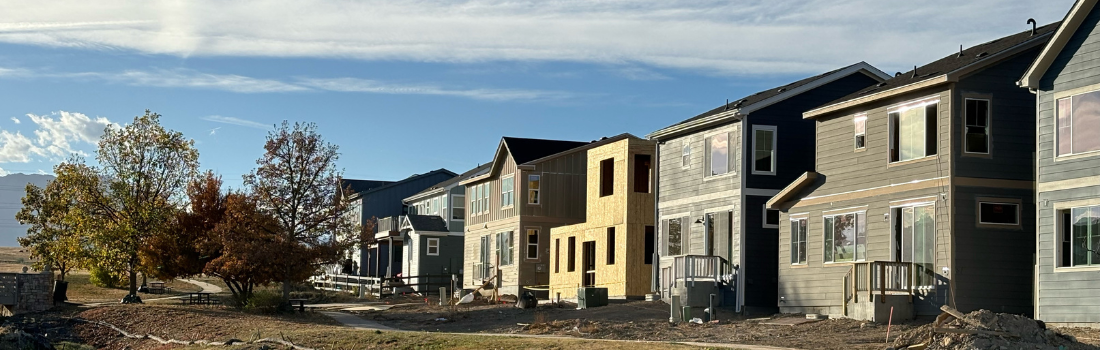 On December 30, 2021, the Marshall Fire swept through Boulder County, Colorado, resulting in the costliest wildfire in the state's history. The fire burned 6,000 acres and displaced thousands of Coloradans from their homes. Rebuilding and recovery took immense collaborative effort by impacted communities, local governments, the State of Colorado, and the federal government.
Boulder County’s local officials created the Rebuilding Better program — an incentive-based initiative to encourage homeowners to voluntarily reconstruct their homes to higher energy-efficiency and resiliency standards rather than rebuilding to existing codes. The Urban Institute, a nonprofit research organization developed a case study on the Rebuilding Better program and key lessons learned by recovery officials about its design and implementation that can apply to your community’s proactive recovery and rebuilding plans.
While we remember the tragedy of the Marshall Fire, we are proud of the collaboration among neighbors and jurisdictions as they rebuild stronger, more resilient homes and communities, and we commend Boulder County’s resilient practices.
National Sustainability Society (NSS)’s Annual Conference Requesting Contributions
The 3rd Annual NSS Conference issued a Call for Contributions that will showcase scholarship on sustainability topics that connect to the 2026 NSS conference theme: Courage, Credibility, and Collective Action in Sustainability.
Co-hosted by CSU’s School of Global Environmental Sustainability and the CSU Climate Hub, the conference will champion evidence-based research, innovative and accessible solutions, and the persistence and preparation essential to building a hopeful and resilient future.
- The conference will be held August 17-20, 2026, at CSU Spur.
- Review the call for contributions and submit your proposal by February 16, 2026.
Advancing Climate Resilience Projects Across Colorado- Lessons Learned
The International Council for Local Environmental Initiatives' (ICLEI’s) Colorado Resilience Engine (CORE) Internship Program expands Colorado local government’s capacity for climate resilience work while training graduate students in public service and resilience.
ICLEI hosted a webinar in December 2025 that dove into impacts and lessons learned from the 2025 cohort as they advanced important climate resilience projects across Colorado.
Funding Highlights
Energy/Mineral Impact Assistance Fund (EIAF) Returns - Cycle Openeds January 12, 2026
The Energy/Mineral Impact Assistance Fund Grant (EIAF) program assists local governments that are socially and/or economically impacted by the development, processing, or energy conversion of minerals and mineral fuels to facilitate essential community improvements, including water and wastewater systems, resilient public facilities, comprehensive plans, and housing infrastructure.
A total of $15M will be available with Tier I (up to $200,000) and Tier II ($200,001 to $1,000,000) applications accepted.
Municipalities, counties, school districts, special districts, and other political subdivisions are eligible to apply by February 13, 2026, at 5 p.m.
Rural Economic Development Initiative (REDI) Open Through February 4, 2026
Are you REDI to build some economic resilience in your community? The Rural Economic Development Initiative (REDI) is intended to support rural communities in creating jobs locally and building economic resilience. Program details and informational webinar recording are available on the REDI webpage.
Coming Soon: New Community Schoolyards Grant Program
The application cycle for the brand new Community Schoolyards Grant Program, an initiative created under HB25-1061 designed to fund the planning, design, and capital construction of innovative community schoolyards across Colorado, will open March 2 through April 1, 2026.
This program offers a single grant opportunity that encompasses both the planning and design, and capital construction phases for innovative community schoolyards. This unified approach aims to streamline the funding process, supporting projects from formal design to completion.
Proposition 123 Local Planning Capacity Grant Cycle Opens January 26, 2026
Is your community ready for the Proposition 123 “fast track” implementation deadline of December 31, 2026? The upcoming spring LPC funding cycle is the final opportunity to secure funding that can support your jurisdiction with implementing the Proposition 123 requirements to expedite the development review process in time to meet that deadline.
The spring funding cycle runs from Monday, January 26 through Thursday, February 26, 2026, at noon. An informational webinar recording, application materials, and other resources are available on the LPC Program website. Interested applicants must also schedule a pre-application meeting by mid-February with LPC Program staff in order to access the grant application form online.
Need assistance with Fast Track requirements? Don’t forget about our weekly Fast Track Office hours every Wednesday, 9:30-10:30 a.m.
Accessory Dwelling Unit Grant Program (ADUG)
ADUG provides grants to certified accessory dwelling unit (ADU) Supportive Jurisdictions for activities that promote the construction of ADUs.
Housing Planning Grant Program (HPLN)
The HPLN Grant Program offers funding to support Housing Needs Assessments, Housing Action Plans, and Comprehensive Plan Elements (strategic growth and water supply).
Events
Peer Exchange for Colorado’s 2025 Wildfire Resiliency Code (CWRC) Implementation
February 4, 2026, 2 - 3 p.m. | Virtual | Register for CWRC Peer Exchange
The Division of Fire Prevention and Control (DFPC), in partnership with the DLG’s Colorado Resiliency Office (CRO), hosts a monthly Colorado Wildfire Resiliency Code (CWRC) Implementation Peer Exchange for adoption of the recently released CWRC. Please register to attend and receive peer exchange-related email updates.
NOTE: The meetings are not open to the general public; the Peer Exchange is for implementing agencies and partners only.
|