Notes from the CRO Director: It’s Officially Summer!
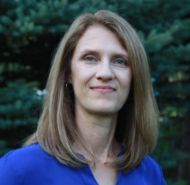
In June, we celebrate the start to my favorite season. As I’m sure is the case for many of you, we have a busy summer season, full of engagement opportunities for our 2025 Update to the Colorado Resiliency Framework (CRF)!
We will be hosting a series of virtual summits where we will ask you all, as resiliency champions and practitioners across the state, to help us shape the priorities we should focus on over the next five years and help position our state to be ready for what the future holds. Information for our first summit is below.
We will be hosting summits in August and November, as well as a series of roundtable discussions in September where we will drill into feasible and measurable actions we will take to achieve our goals. We welcome you to bookmark our 2025 CRF Update engagement webpage for information, registration, and to keep in the loop.
I hope your summer is full of plans for all the fun outdoor activities our state has to offer, and hope to see you soon at one of our events!
Be well,
Anne Miller and the CRO team
|
What's New at CRO?
Participate in the Colorado Resiliency Framework’s 2025 Update!
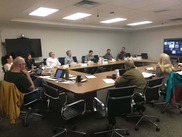
The planning process for the highly anticipated update to the Colorado Resiliency Framework (CRF) officially kicked off last month, and our team is hitting the ground running with engagement opportunities for interested entities to participate in informing this plan. Join us for the kick-off at our virtual Resilience Summit where we will cover what can be expected in this update, and garner feedback from you on how we can advance our work to prepare for the future!
Save the Date for Our Virtual Kick-Off Summit
July 17, 2025 | 2 - 4 p.m. | Register for the July Summit
|
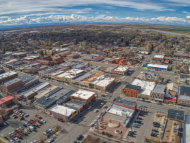
2025 Rural Economic Development Initiative Awards
The Rural Economic Development Initiative (REDI) program aims to help rural communities diversify their local economies and build resilience. For the 2025 application cycle, DOLA recently awarded a total of $780,000 to 13 projects across Colorado. The projects include early childhood education, geothermal energy drilling, workforce development, business incubation, and much more!
Check out the press release for more information.
|
Upcoming Resilience Conference Sessions
If you're attending the Colorado Municipal League Conference this week in Breckenridge, CRO Director, Anne Miller, will be moderating a panel on June 25, 2025, at 2:15 p.m., on "Demystifying Colorado's Upcoming Wildfire Resiliency Code." DOLA Executive Director Maria De Cambra will be providing an update on what’s new at DOLA and how we're dealing with uncertainty in a concurrent session. We hope to see you there!
CRO staff will also be at the Natural Hazards Workshop in Broomfield. Local Resiliency Manager, Marguerite Harden will be facilitating an energy resilience roundtable on July 15, 2025 and Anne Miller will be on an adaptation and resilience metrics panel on July 16, 2025.

Peer Exchange Launching to Support Colorado’s 2025 Wildfire Resiliency Code Implementation
The Division of Fire Prevention and Control (DFPC) in partnership with the Colorado Resiliency Office (CRO) are launching a Colorado Wildfire Resiliency Code (CWRC) Implementation Peer Exchange.
Governing bodies that are adopting or supporting the adoption of the recently released 2025 CWRC are invited to learn from each other and contribute to this peer-to-peer conversation.
NOTE: The meeting is not open to the general public; the Peer Exchange is for implementing agencies and partners only.
Please register to attend and receive peer exchange-related email updates:
Introduction to the CWRC Implementation Peer Exchange.
July 16, 2025, 2 - 3 p.m. | Virtual | Register for Intro Session
This meeting will provide a baseline of information about the CWRC, presented by DFPC. (NOTE: This will be the only recorded session and the recording will be available on the CRO Peer Exchange webpage).
Monthly Peer Exchange Kickoff Meeting: “Who is Implementing the Wildfire Resiliency Code?”
August 6, 2025, 2 - 3 p.m. | Virtual | Register for Monthly Peer Exchange
All “governing bodies” must adopt a code by April 1, 2026, that meets or exceeds the state standards set forth in the 2025 CWRC. Implementation and enforcement of that adopted code is determined by the governing bodies, which may include different entities and agreements. In this session, local jurisdictions will discuss the benefits and drawbacks of various approaches.
Future peer exchanges will cover topics as defined by the interests of those participating.
|
Camp Resilience Recap: Spring 2025
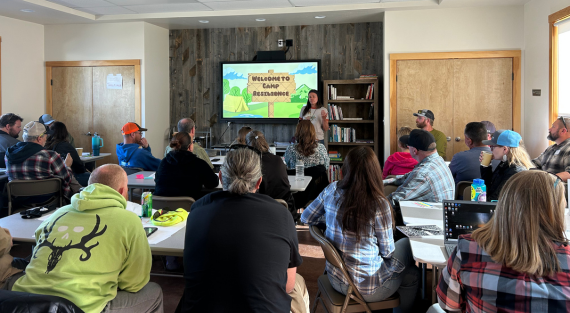 Camp Resilience once again hit the road, this time traveling to Salida, gathering communities in the South Central region for a day of training. This workshop helps local leaders identify the disruptions their community might face - such as population decline, natural disasters, and industry transitions - and how to adapt and respond to those changes.
June Resilience Conversation: Financial Resilience and Budgeting for Uncertainty

The evolving landscape of funding availability for governmental entities can present significant challenges. However, if we approach this disruption similar to that of preparing for a “traditional” disaster such as a wildfire or flood, we can better position ourselves for financial resilience. Read the June Resilience Conversation for more!
Want to dive even further into this topic? Be sure to attend July’s Local Government Resources Call focusing on Budgeting for Uncertainty on July 16, 2025, from 11 a.m. - 12 p.m.
|
Resiliency News
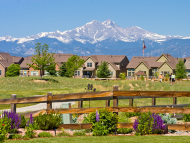
Longmont becomes First United Nations Resilience Hub in the United States
Longmont has received the international recognition of becoming the first city in the United States to be named a United Nations Resilience Hub. This means that Longmont received the highest level of recognition in the Making Cities Resilient 2030 program through the United Nations Office for Disaster Risk Reduction, a distinction given to cities that use advanced strategies to reduce risk and recover from disasters. It recognizes the city’s strong leadership in preparing for disasters, the city’s planning, investment in safer infrastructure, and Longmont’s focus on long-term benefits.
|
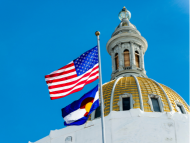
Follow Up: Federal Funding & State Budget Updates
During May’s Local Government Resources Call, DOLA’s Division of Local Government and other State agency partners covered updates related to federal funding and the State budget, as well as some new funding and technical assistance opportunities for local governments. This is part of our ongoing commitment to keeping local governments informed as we navigate an evolving funding landscape at federal and state levels. These calls occur on a bi-monthly basis, and interested participants are encouraged to register.
|

New Governor’s Office Dashboard Tracks Colorado’s Federal Funding Status
Governor Polis released a new dashboard that will track federal funding being cut or in jeopardy, as well as funding protected by the State through legal action.
To date, the State has successfully defended over $282 million protecting funding for issues ranging from substance abuse prevention and mental health support to public safety and assistance to farmers.
|

2025 Colorado Land Use Survey Now Open
The DOLA Community Development Office recently launched the 2025 Land Use Survey in partnership with the American Planning Association, Colorado Counties, Inc., and the Colorado Municipal League.
This survey is administered every five years to assess planning needs and trends. Responses will direct services, aid planners, and inform legislators. The survey deadline has been extended to July 11, 2025, and should be filled out by a local planner or someone with knowledge of land use issues in the municipality or county. Reach out to Emma Scheetz for questions.
|
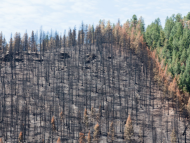
Updates to the Colorado Wildfire Planning and Recovery Playbook
The Source Water Assessment and Protection (SWAP) Program within the Colorado Department of Public Health and Environment (CDPHE) recently updated the Colorado Wildfire Planning and Recovery Playbook.
This Playbook includes 11 critical steps that counties, Tribes, municipalities, and water providers should take before, during, and after a wildfire to minimize impacts and facilitate recovery.
|
Funding Highlights
Introducing the DOLA Civic Solutions Hub
The DOLA Civic Solutions Hub, a brand new program from DLG, is designed to support local governments in capacity building and operational efficiency. DOLA will facilitate and enhance partnerships between public, academic, and private parties to explore, pilot, and implement new processes and technologies that will enhance local government operations, increase capacity, and provide more efficient constituent services.
In addition to free two-day workshop opportunities for hands-on training designed to equip local government leaders with tools and strategies to foster a culture of innovation, the pilot project funding is also expected to be available later this fall. This will include funding of up to $50,000 per project (with a 25% match) to local governments for new ideas or technologies to improve government operations and innovations.
Contact your Regional Manager for more information.
Natural Disaster Mitigation Enterprise Grant Cycle Open
The Natural Disaster Mitigation Enterprise (NDME) grant is open for the second round in 2025. NDME will fund local governments to implement resilience and natural disaster mitigation measures and will match funds required by federal grants dedicated to implement pre-disaster natural disaster mitigation measures. NDME also provides technical assistance to local governments on natural disaster mitigation. Applications are due by August 29, 2025.
Please direct questions to the NDME Administrator, Ilima Kane.
Colorado Energy Office Local IMPACT Accelerator
CEO’s Local Implementation, Mitigation, and Policy Action (Local IMPACT) Accelerator will provide $50 million in grants to support local governments with policy adoption to bolster local resilience, reduce emissions, and advance other state priorities, such as improved air quality. The program is open through July 1, 2025. Funding for this program comes from the U.S. Environmental Protection Agency’s Climate Pollution Reduction Grant (CPRG) program.
WaterNow Releases Wildfire Resilience Financing Dashboard
A free resource recently launched by WaterNow, One Water Econ, and The Water Center at Penn, this dashboard helps water managers make the business case and find long-term funding for nature-based watershed health and wildfire resilience strategies. The dashboard’s core resource is the interactive decision tool that gives users a customized feasibility assessment of possible ways to finance utility-specific resilience projects, co-benefits, legal and accounting pathways, and assesses successful partnerships.
Water Plan Grants
The Colorado Water Conservation Board (CWCB)’s Water Plan Grant Program has $36.77 million in available funding for the upcoming fiscal year. Applications must support one of the five funding categories in the Colorado Water Plan and deadlines are July 1, 2025, and December 1, 2025.
|