For many of us at CDHS, our daily routines are driven by meetings, deadlines and public service. But for Muslim colleagues across the globe, and right here in our offices, the month of Ramadan introduces a different rhythm. It is a time of "Spiritual Reset," marking the revelation of the Quran and serving as a period of profound self-discipline.
The 'Why' Behind the Fast
Ramadan is about far more than refraining from food and water from dawn to sunset. It is centered on Taqwa (God-consciousness). By stepping away from physical gratifications, we aim to purify the soul and cultivate Sabr (patience).
Perhaps most importantly, Ramadan acts as a "Great Equalizer." When a CEO and a laborer both experience the same pangs of hunger, it levels the playing field, fostering a deep empathy for those who face food insecurity not by choice, but by circumstance. This heightened awareness naturally leads to an increase in Zakat (charity). It is also a heavy moment to remember our Muslim brothers and sisters in places like Palestine, Sudan, Somalia and China (Uyghurs), who fast while facing immense hardship and persecution.
From Dakar to Denver: The Spirit of Teranga
Growing up in Senegal, West Africa, Ramadan is woven into the very fabric of the country. We call it the spirit of Teranga, a Wolof word for hospitality and community. In Senegal, the whole country slows down; work hours are legally adjusted, and the Ndogou (Iftar) is a massive communal event.
Training starts early. As a child, my parents had me fast for half-days, gradually progressing until I could manage a full day by age 9. It was a challenge at first, but that yearly practice built the resilience I carry today. During Ramadan, the air in Dakar is filled with the rhythmic chanting of the Quran and lively dahira gatherings. We break our fast with kinkeliba tea and dates, followed by vibrant dinners featuring bissap (hibiscus) or baobab juice. In Senegal, society adapts to the person fasting, and accommodations are made to allow time to return home and prepare for Iftar.
U.S. Transition: The Challenge of 'Invisibility'
Transitioning to life in the United States brought a sharp shift. Here, life does not stop. You may find yourself in a high-energy meeting or other work activities while your body is adjusting to a 15-hour fast. The challenges in the West are often quiet ones:
-
The Clock: In Senegal, daylight is consistent. The clock does not move forward or back. In the U.S., fasting hours can be significantly longer depending on the season.
-
Social Isolation: I often miss the "neighborly" feel of Dakar, where even strangers eat together on the street when it is time to break the fast.
-
The "Invisibility": Having to explain why you aren’t joining a "coffee chat" or why your energy might dip in the late afternoon.
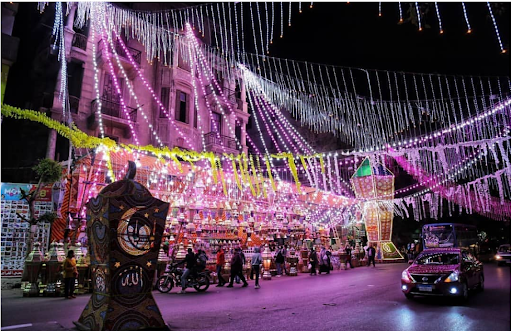
In the U.S., you break fast with people from Pakistan, Bosnia, Egypt and beyond, a beautiful global perspective you might not get in a more homogenous setting. By acknowledging Ramadan, we don't just "tolerate" diversity, we celebrate the resilience our Muslim colleagues bring to the table. Ramadan is a beautiful opportunity for us to learn from one another, breaking down stereotypes while building a more empathetic CDHS.
Ndeye Ndao
Family and Community Engagement Manager, Community Partnerships
|