In This Issue:
Celebrating National Home Visitor Appreciation Week
What better time than spring and what better occasion than a national, week-long celebration for home visitors to finally receive the recognition they deserve! The Association of State and Tribal Home Visiting Initiatives (ASTHVI), the Institute for the Advancement of Family Support Professionals, the National Home Visiting Coalition, the National Alliance of Home Visiting Models, local agencies, and states across the country have all joined together to recognize and promote the role of home visitors in the lives of young families. The first-ever National Home Visitor Appreciation Week is being celebrated this April, and we at the Colorado Department of Early Childhood (CDEC) are joining in the fun! Read on to learn more about this crucial service that, according to the American Institutes of Research, “delivers essential support and has the potential to strengthen parent-child relationships and foster children’s healthy development.”
The History of Home Visiting in Colorado
Test your knowledge! Which of these events occurred in 1989?
- The World Wide Web was introduced
- The Simpsons first aired
- Taylor Swift was born
- Home Visiting in Colorado began
- The Berlin Wall fell
- All of the above
|
|
 |
If you guessed F, you’re correct! Home visiting has been in Colorado for 36 years. Beginning with the Romer administration (Jan. 1987 - Jan. 1999), home visiting services have been part of the Colorado landscape to promote family strengthening, enhance child development, and prevent child maltreatment.
A true early childhood advocate, the late Bea Romer, a former First Lady of Colorado, saw a need to support young families and brought the Home Instruction for Parents of Preschool Youngsters (HIPPY) program to the state in 1989. Since that time, Colorado has remained committed to implementing evidence-based home visiting programs.
In 1994, Denver served as one of the original trial sites for the Nurse-Family Partnership (NFP) program, one of several ties Colorado has to the NFP model. Additionally, the NFP National Service Office is located here. The model founder, Dr. David Olds, is a Professor of Pediatrics at the University of Colorado, where he is a primary investigator in the Prevention Research Center for Family and Child Health.
Despite that history and close affiliation, there are not just one or two home visiting models implemented in the state, but many. The state continues to strongly support various models, recognizing that one size does not fit all, and all home visiting models provide critical support to families with young children. More than thirty-five years after its introduction, nine evidence-based home visiting models currently operate in Colorado, with at least one available in every county.

A Journey of Growth: My Experience as a Home Visitor
by Jackie Cordova, HIPPY Program Manager, Parent Possible

My journey as a home visitor started over 14 years ago. What began as a passion for helping families has blossomed into a career that continues to fuel my curiosity and drive me to make a lasting impact. As a mother of a son, I understood the importance of family support and a stable, nurturing home environment's pivotal role in a child’s development. Little did I know that this understanding would be the foundation of a career that would lead me to direct the HIPPY program in Colorado.
For the first three years, I served as a direct home visitor. I drove across Denver neighborhoods to visit families in their homes. Each visit was a unique experience, offering a window into the lives of families facing various challenges. My role was to listen, offer guidance, and connect families with the resources needed to succeed. Every home visit deepened my understanding of the complexities that families go through and fueled my desire to learn more.
Being a home visitor allowed me to grow both personally and professionally. I had to be adaptable, creative, and compassionate while always prioritizing the well-being of the families I served. The constant learning process was both challenging and rewarding. From learning how to communicate effectively with diverse families to understanding the intricacies of child development and family dynamics, every day offered a new lesson. I soon realized how important it was to be not just a visitor but a trusted partner in the family’s journey.
|
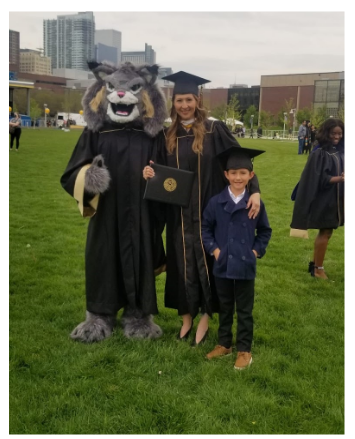
Over the years, my curiosity for learning continued to grow. I wanted to equip myself with the tools and knowledge to better serve the families I visited and support other home visitors facing similar challenges. This desire led me to pursue a Master’s Degree, a decision that expanded my perspective and refined my skills in ways I hadn’t imagined. It gave me the ability to not only improve the work I was doing directly with families but also to advocate for systemic change and better support for families across the state.
Today, I am honored to be leading the HIPPY program in Colorado, a role that allows me to shape the future of home visiting across our state. In this position, I work closely with other home visitors, supporting them as they provide essential services to families. Together, we are building a network of support that empowers families to thrive, one visit at a time.
|
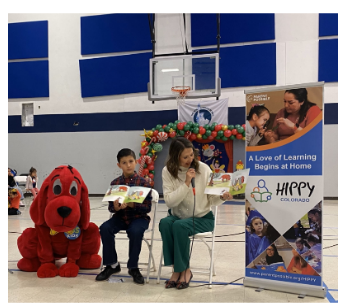
Reflecting on my journey, I am grateful for every family I’ve had the privilege to serve and every home visitor I’ve had the honor to mentor. It’s been a long road, but it has always been worth it. The lessons I’ve learned along the way continue to inspire me to do the work I do today, with an unwavering commitment to making a difference in the lives of children and families across Colorado.
My story is a reminder of the power of curiosity, compassion, and the impact one person can make in the lives of others. And as I continue this journey, I know that my work is far from being done. There is always more to learn, families to support, and home visitors to inspire. This is just the beginning.
|
Strengthening Families: The Role of Home Visiting in Child Abuse Prevention

It’s fitting that National Home Visitor Appreciation Week falls in April, as it is also National Child Abuse Prevention Month. Home visitors and local implementing agencies contribute to the systems and programs that put children and families first. Every child deserves a safe, stable, and nurturing home environment. However, challenges such as financial strain, lack of parental support, and generational trauma can increase the risk of child abuse and neglect. Preventing child abuse requires a proactive, community-based approach, and home visiting programs play a crucial role in this effort by providing families with the tools, resources, and support they need to create a safe and healthy environment for their children.
How Home Visiting Builds Protective Factors
Protective factors are characteristics that have been shown to make positive outcomes more likely for young children and their families and to reduce the likelihood of child abuse and neglect. Home visiting programs strengthen these protective factors in several key ways:
-
Parental Resilience – Home visiting helps caregivers develop coping strategies to manage stress, resolve conflicts, and build confidence in their parenting abilities.
-
Social Connections—Home visiting programs help reduce isolation and build strong support systems by linking families to local resources, community groups, and peer support networks.
-
Knowledge of Parenting and Child Development—Many new parents struggle to understand child behavior and development. Home visitors provide education and guidance tailored to each family’s unique needs, ensuring that caregivers are equipped to meet their children’s developmental milestones.
-
Concrete Support in Times of Need—Through home visiting programs, families facing economic hardship or crises can access essential services such as food assistance, housing support, and healthcare referrals.
-
Social and Emotional Competence of Children—Home visitors help caregivers nurture their children’s emotional and social development through positive interactions, creating a foundation for future well-being.
The Lasting Impact of Home Visiting
Research consistently shows that home visiting programs improve family outcomes, reduce instances of child abuse and neglect, and contribute to healthier, more resilient communities. By fostering strong protective factors, home visiting not only helps families thrive but also strengthens the fabric of society by reducing the long-term social and economic costs associated with child maltreatment.
Join us for a Family Resource Fair at The Denver Zoo on April 27, 2025, from 10 a.m. to 3 p.m. to learn more about systems of support and protective factors. Engage with organizations supporting families from around the state.
|
New Resources Help Promote Home Visiting!
Explaining home visiting can be challenging, whether speaking to potential participants, legislators, or colleagues. To simplify this, the Outreach and Advocacy Work Group of the Home Visiting Investment Task Force developed an easy-to-use toolkit.
|
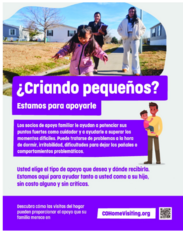
Work Group members knew they wanted the final product to include posters, flyers, social media posts, and videos that could help programs across the state explain home visiting services and their benefits. It was also important that any resources developed would use plain language, not promote any particular home visiting model, and underscore the supportive nature of home visiting. The Work Group completed that project in December 2024 and all materials are now freely available for use via the links above and have been translated into English and Spanish. The videos have also been edited for length and to match various communication platform needs. You can find the toolkit and videos through the links above or at the home visiting page of the Early Childhood Leadership Commission’s (ECLC) website.
|
Success Stories & Quotes from the Field
We’re very fortunate in Colorado to have success stories from across the state and various home visiting models. Here are a few examples highlighting the work home visitors do that supports families, helps them connect to new opportunities and resources, and the difference it makes.
Building Confidence for Moms and Kids (Growing Home PAT, Westminster)
“The PAT program helped me find the balance between what society thinks we should do vs what my daughter needs. It even helped me feel comfortable in the limbo that motherhood usually is. Our Parent Educator helped me create space in my home where my daughter and I can learn according to our needs and goals. By feeling comfortable in my role as a mother, I was able to better help my daughter reach her developmental goals, and the activities were something that we both enjoyed. Something I loved about the program was that they helped me understand that ‘confident moms equal confident kids’. Nowadays, there is a lot of pressure on how I should be as a mother and very little help on how to carry it out, and PAT is a program that helped my family and me to have a better family relationship and better academic performance.”
Strengthening Family Growth (Catholic Charities PAT, Pueblo)
“I wish all families had the opportunity to be part of home visits. I’ve learned so much, and [my child] has grown in ways I never thought possible. Not only do I feel more prepared, but our relationship has grown so much stronger.”
Connecting Families to Additional Services (Adams County NFP)
“At the final graduation visit for one of our clients, the client's brother (who was sometimes present at visits but rarely spoke) approached the NHV and thanked her for referring him to Cross Purpose, a local education/job preparation program. He received a CDL certification from them and has a new, good-paying job. Due to her brother's success, the client reported that her boyfriend/father of the child was now also participating in the program and was excited to increase his earning potential to better support his family. This represents the power of the NFP program to strengthen family networks that benefit the entire family.”
Supporting Home Visiting Programs
Role of State Intermediaries
The home visiting field includes many evidence-based service models with years, sometimes decades, of research demonstrating their effectiveness; however, any evidence-based model can only replicate those outcomes when implemented with fidelity. To ensure Colorado families receive the most effective versions of the home visiting models we implement, CDEC contracts with non-profit organizations that have been certified or otherwise authorized by the model developers to oversee the fidelity of local program implementation. Below are descriptions, in their own words, from a few state intermediary partners about the work they do to support the implementation of evidence-based home visiting models in Colorado:
 |
|
“As the state intermediary for HealthySteps in Colorado, ABCD plays a critical role in ensuring high-quality, equitable early childhood care by supporting clinics with training, technical assistance, and continuous quality improvement. By bridging systems and aligning resources, ABCD helps ensure that all families, regardless of background, can access comprehensive, relationship-based care that promotes healthy development and lifelong well-being.”
- Eileen Bennett, executive director, Assuring Better Child Health & Development, intermediary for HealthySteps
|
 |
|
“As the state intermediary for two home visitation programs, Family Connects Colorado and Healthy Families America, our role has been centered on supporting sites in meeting the needs of the communities they serve. Whether that is legislative advocacy, systems collaboration, or implementation support, Illuminate recognizes the value and necessity of home visitation supporting all families. Parenting and caregiving are hard! Having a friendly peer, nurse, or navigator come alongside families during those formative weeks and years continues to strengthen families across Colorado.”
- Anne Auld, deputy director, Illuminate Colorado, intermediary for Family Connects Colorado and Healthy Families America
|
 |
|
“The intermediary model Invest in Kids has developed over 25 years, combined with the expertise of our team, allows us to understand the research and science of each prevention program, and to effectively translate it into the hands of our partners across Colorado. From the very beginning, we have collaborated with community leaders and facilitated conversations with broad-based groups to ensure early engagement, and continuous innovation and problem solving to ensure long-term program success.”
- Lisa Hill, executive director, Invest in Kids, intermediary for Nurse-Family Partnership, Incredible Years and Child First
|
Get to Know the Home Visiting Investment Task Force
The Home Visiting Investment Task Force (HVITF) is a working group of the Program Quality and Alignment Committee of the Early Childhood Leadership Commission (ECLC) established in 2020 to strategically scale a continuum of home visiting services in Colorado. The HVITF’s purpose also includes guiding the Department of Early Childhood related to the release of future funding solicitations, including Federal MIECHV funding. The strategy will support planning for state budget requests, soliciting new federal funding opportunities, and aligning with philanthropic funding for home visiting.
Open to anyone but composed of approximately 35 members, the HVITF represents a broad range of individuals and organizations interested in and supporting home visiting across the state. Examples include state agencies, local organizations operating home visiting programs, state intermediaries, private philanthropy, public health entities, research and evaluation agencies, advocacy organizations, and early intervention programs. Current work groups of the HVITF include: Availability, Collaboration & Innovation, Data, Financing & Funding Opportunities, Outreach & Advocacy, and Qualified Workforce. Information about meetings and opportunities for engagement with the HVITF can be found at the link above.
|
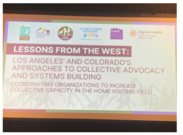
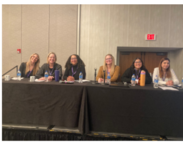
At the February 2025 National Home Visiting Summit in Washington, D.C., members of the HVITF presented on the Task Force’s work alongside a similar collaborative entity in California, Los Angeles’ Best Babies Network. In a session entitled “Lessons from the West,” the two initiatives jointly shared stories about the power of collaboration, highlighted each entity’s successes, and encouraged other conference attendees to adopt similar practices in their communities. |
|
 |
Honoring the Heart of Home Visiting: Fatima's Story
During the 2024 Parent Possible Home Visiting Conference, Fatima, a HIPPY home visitor, was honored for her incredible impact in the field and celebrated as the embodiment of connection, culture, and care.
Fatima is more than just a home visitor—she's a community builder and a beacon of hope for the families she serves. Her work goes beyond the home; it brings people together, offering a space for connection and a sense of belonging many families have not felt since arriving in the United States.
Through her lived experience, Fatima understands intimately the challenges her families face. She brings her culture into every aspect of her work, weaving it into her visits and interactions, making her guidance relatable and empowering. She inspires the women she works with to see themselves as bold, brave, confident, and capable of achieving their dreams.
Fatima’s connection to her role is deeply personal. As a HIPPY parent herself, she’s experienced firsthand the transformative power of early childhood education. This insight fuels her dedication to helping other families. When Fatima hands a family their first bag of school supplies, complete with a beloved book, the joy and hope in those moments are indescribable.
“If every child in Colorado had a home visitor like Fatima,” one colleague shared, “we would see a generation of leaders emerge. Not just because of their preparedness for kindergarten, but also their connectedness to each other and their community.”
Fatima exemplifies the magic of home visiting: a confidante, a counselor, and a trusted friend. She helps children thrive, families grow stronger, and communities come together.
This National Home Visitor Appreciation Week, celebrate and thank home visitors like Fatima. Join us in honoring their life-changing work.
|