|
|
Empowering Change Through Lived Experience: Redefining Recovery in Colorado’s Community Corrections |
By Taylor Doucet – Peer Recovery Coach & Director of Communications, NAS Recovery Solutions
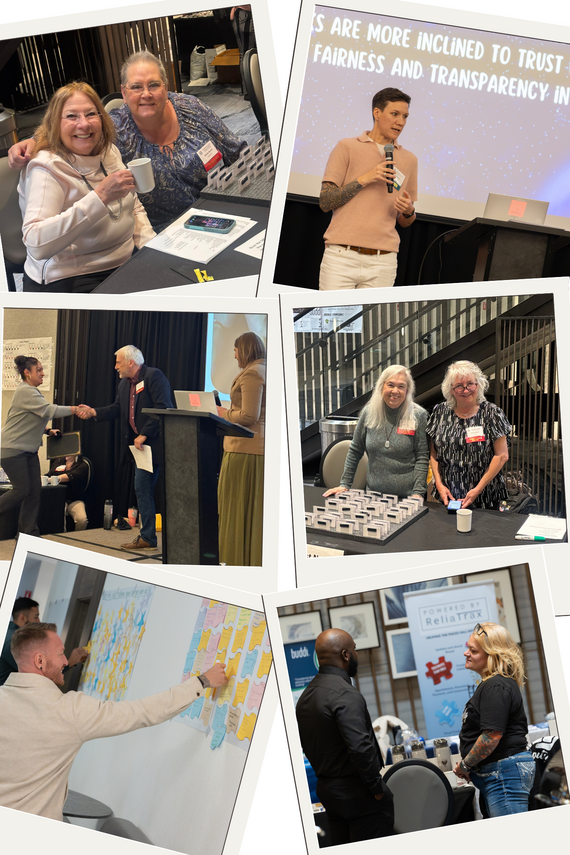
At this year’s Office of Community Corrections (OCC) Conference, themed “Empowering Change,” one truth rang louder than any keynote or statistic — lived experience changes lives.
Peers — those who’ve walked through incarceration, recovery, and reentry — are reshaping how Colorado approaches rehabilitation. What once felt experimental has become essential. Across conversations with leaders from community corrections, probation, parole, and the Department of Corrections, a unified message emerged: peer integration is working.
 |
|
CCIB Corner: Contact Directory |
By Wendy Bacchi
Have you ever needed to contact someone from another program or judicial district and wished there was an easy way to do so? CCIB has a searchable contact directory that you can use to get in contact with other programs and judicial districts around the state.
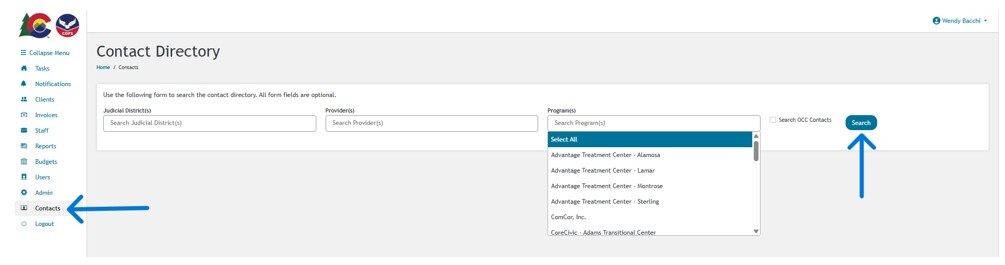 One the left-hand navigation in CCIB, click on Contacts. That will bring up a search box where you can pick what you want to search for. You can select multiple programs/JDs. Once you select what you want to search for, click the Search button. You can also search for OCC staff by clicking the OCC staff box.
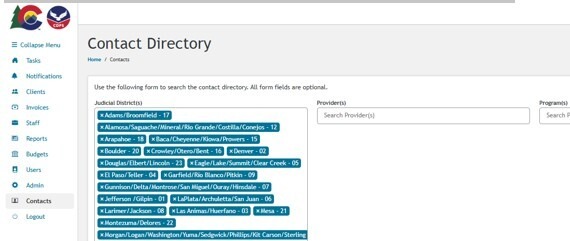 If the information you are looking for is not on the list, that means the program or JD have not added their information to the database. Leadership at each program and judicial district are responsible for updating their profile in CCIB.
Please see the link below for more information and instructions.

The SOMB Approved and Released the Evaluating Risk Factors for Internet Access and Electronic Monitoring within SOMB Treatment and Supervision in October 2025
|
In 2018, the Colorado Judicial Department implemented policy changes that eliminated blanket prohibitions on internet use, social media, and sexually oriented or stimulating materials for individuals convicted of sexual offenses. As per §18-1.3-204, C.R.S., supervision conditions must be reasonably related to the offense and not impose unnecessary restrictions. In response, the Colorado Sex Offender Management Board (SOMB) issued a white paper to support the shift toward individualized, fact- and risk-based supervision decisions.
These changes align with SOMB’s statutory mandate to promote evidence-based practice and with the principles of the Risk-Need-Responsivity (RNR) model. Courts must now justify additional conditions of supervision through individualized findings of fact. In turn, SOMB Approved Evaluators and Treatment Providers are expected to apply structured assessments and clinical judgment to guide their recommendations and treatment planning.
A recent literature review expands on the original SOMB white paper by integrating new research on online sexual activity (OSA), protective factors, and the broader role of technology in risk, rehabilitation, and daily functioning.

Sex Offender Management Board (SOMB) Training Opportunity
SOMB 100: Introduction to Colorado Sex Offender Management Board
(Adult Population focused training)
|
 |
|
DCJ Podcast: Collaborative Crisis Response Intervention |
By Paula Vargas
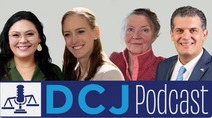
Public Safety Answering Point (PSAP) professionals are often the first voice a person in crisis hears. Collaborative Crisis Response Intervention Training (CRIT) is designed to equip all first responders with the empathy and skills needed to ensure every call receives the right, thoughtful, and effective response.
In this episode, Director Matthew M. Lunn sits down with DCJ Policy Advisors Erin Crites, Yolanda Alvarez-Montello, and Connie Johnson, Executive Director of the Colorado 911 Resource Center, to explore a groundbreaking new initiative: Collaborative Crisis Response Intervention Training (CRIT).
|
Listen to the 30 minute conversation: https://lnkd.in/g9bNVAaM
To learn more about the program, visit us online: https://lnkd.in/gnQSHnRy
 |
|
Next Governor's Community Corrections Advisory Council Meeting |
About: The Governor's Community Corrections Advisory Council advises and assists the Division of Criminal Justice in analyzing and identifying problems or needs, recommending policy modifications or procedural changes and developing strategies for the community corrections system. They also serve as a forum to address issues in community corrections brought forth by Council members or other stakeholders. Council members represent various units of government and private interests and are appointed by the Governor and receive no compensation for their participation.
 |
|
Grants Strengthen Colorado Communities |
Strength in Community: Stronger Together is a series of compelling video stories demonstrating the power of collaboration and the transformative impact of DCJ-funded initiatives. These success stories highlight the critical role grant funding plays in fostering safer, healthier, and more connected communities across Colorado.
DCJ works hand-in-hand with local agencies, nonprofits, law enforcement, and community leaders to address complex challenges such as public safety, rehabilitation, and prevention. It emphasizes that true progress happens when diverse stakeholders unite under a shared goal.
From all four corners of Colorado, these stories highlight the initiatives created throughout Colorado by grant recipients. These programs and initiatives are creating and elevating a safer, healthier, and more inclusive Colorado.
|