|
October 2025 Quarterly Newsletter |
|
In this Issue:
- OCC: 2025 Statewide Community Corrections Conference
- DCJ: Director's Message
- CCIB Corner: Updating Your Program Capacity
- OCC: Unauthorized Absence/Escape Documentation
- OCC: Training Opportunities
- OCC: Welcome to the Team!
- SOMB: Sex Offender Management Board Application for Membership
- DCJ: Meaningful Change Starts with Showing Up
- OCC: Governor's Community Corrections Advisory Council
|
|
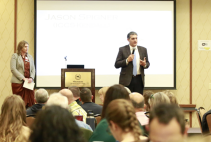
Register TODAY for the Community Corrections Conference to exchange ideas, celebrate achievements, and drive innovation for safer communities.
*A quick reminder that the Conference Hotel block expires on Monday Oct 6, 2025. Don’t miss out on the special OCC Conference rate of $119 per night — book your room today before the block expires.
Featured sessions include:
- Reimagining and Cultivating Success with Clients
- Empowering Leaders
- Maintaining Boundaries and Rapport with Clients
- Psychological Safety in the Workplace
- Wellness and Resilience for Professionals
- Utilizing a Coaching Approach with Clients
- Data Informed Strategies to Reduce Escapes
Plus:
- Inspiring keynote sessions
- Three 75-minute breakouts of your choice each day
- Networking with peers statewide
- Employee Awards Ceremony + conference game & prizes
- Breakfast, lunch, and snacks included both days
|
Questions Regarding Event Registration: Please check out our FAQ pages with the most asked questions or contact: Kate Coates | Sarah Cannady|Tahnee Santambrogio
DCJ: Director's Message
Matt Lunn - CDPS
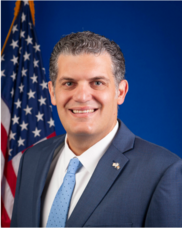
Over the past several weeks, I have had the privilege of visiting communities across western Colorado as part of my listening tour, including Grand Junction, Montrose, Ouray, Cortez, Durango, and Pagosa Springs. Each stop has reinforced a simple but powerful truth: even communities within an hour of one another have unique stories, successes, and challenges.
In Grand Junction, conversations highlighted innovative partnerships that are strengthening at risk juveniles and community safety. Just down the road, Montrose leaders spoke passionately about the importance of local collaboration to meet pressing behavioral health needs. In Ouray, residents shared both the pride they feel in their close-knit community and the concern that limited resources can make it harder to address critical issues.
Farther south in Cortez, the discussion centered on addressing chronic challenges proactively. Durango brought forward examples of creative problem-solving to connect services with those who need them most while confronting workforce challenges. And in Pagosa Springs, the community voiced both confidence in the professionals working in their communities and the strain they feel related to affordability.
A common theme across all six stops was gratitude. Community members expressed deep appreciation that we met them where they are. They want to be heard, and they expressed a strong desire for DCJ to continue to have a presence in their part of the state.
These conversations will help shape how we move forward—grounded in local voices, responsive to local needs, and committed to building safer, stronger communities for all who call Colorado home.
|
CCIB Corner: Updating Your Program Capacity
By Wendy Bacchi
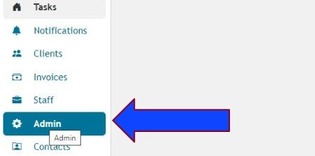
We have been asking for the capacity numbers in CCIB to be updated for the past few weeks so that we can report them to the DOC. We thought it might be helpful to review how to do this and why it is important.
The capacity numbers you have in CCIB will only change with intakes, discharges or changes in staffing levels.
Once you have followed the process outlined below, the system will do the capacity calculations for you and for our office when we run the report. That is why it is important that your recent intakes, discharges and any staffing changes are entered into CCIB in a timely fashion to keep your current client count as accurate as possible.
To make sure your capacity numbers are calculated correctly, please log into CCIB occasionally and follow the procedure below to make sure your staffed and physical bed numbers are accurately entered.
|
 |
|
To: All facilities
Re: CS-090 Unauthorized Absence/Escape Documentation
|
By Office of Community Corrections
It has come to our attention that the reports submitted for Standards CS-090-094 have limited information about unauthorized absences/escapes. Stakeholders are requesting more thorough information be included in the narrative of the report. This will also assist our office when auditing this Standard. For example:
“On 07/04/2025 at 1400 hrs, Client Smith signed out for work with an expected return time of…..”
While this conveys the action, it does not clearly identify the staff member who had direct interaction with the offender. For instance:
“On 07/04/2025 at 1400 hrs, while working the front desk at Facility Name, I, John Doe, signed out Client Smith for work with an expected return time of….”
This level of detail ensures accountability by documenting the staff member who last saw the offender, who established the return time, and who can later be called to testify if needed. Please keep this in mind moving forward as more detail is helpful for all stakeholders.
Thank you for your hard work, and please let us know if you have any questions. Email: cdps_dcj_occ@state.co.us.
|
|
 |
|
Upcoming Training Opportunities
October/November 2025
|
OCC Behavioral Management 101 Community of Practice (CoP) - VIRTUAL
- Date: Oct 7th from 9am-11am
- Follow the link to access the session: VIRTUAL CLASS
Skills obtained during our 1-day Behavioral Management 101 will be reinforced in this session.A Community of Practice (CoP) provides an opportunity for participants to practice key concepts and skills learned in prior training. CoPs are facilitated by an Office of Community Corrections trainer and allow participants to build on shared knowledge and expertise in a fun and informal learning environment. All CoPs will be virtual. Requirements: Prior attendance of formal classroom training in the CoP topic (Behavioral Management 101)
OCC Case Planning Training
-
Date/Location: Oct 29th and 30th from 9am-4pm
- Follow the link to register: IN-PERSON CLASS
This 2-day in-person workshop is designed for staff who complete or review client case plans. Participants will learn the foundational principles of the Progression Matrix and key concepts and skills for individualized case planning using the SOA-R. Trainees will review and practice the components of the case planning meeting including role clarification, normative feedback, and collaboration. This class will focus on collaborating with the client to develop individualized case plans that prioritize criminogenic needs, incorporate the client’s stage of change, and address responsivity factors.
OCC Case Planning Community of Practice (CoP) - VIRTUAL
-
Date/Location: Nov 12th from 1pm-3pm
- Follow the link to access the session: VIRTUAL CLASS
Skills obtained during our 2-day Case Planning Training will be reinforced in this session. A Community of Practice (CoP) provides an opportunity for participants to practice key concepts and skills learned in prior training. CoPs are facilitated by an Office of Community Corrections trainer and allow participants to build on shared knowledge and expertise in a fun and informal learning environment. All CoPs will be virtual. Requirements: Prior attendance of formal classroom Case Planning Training in required.
 |
|
Coming Next: The full year of training for 2026 calendar will be announced and posted at the end of November 2025.
Please check our calendar for more training opportunities!
|
For Training Questions: Sarah Cannady (sarah.cannady@state.co.us)
For Technical Assistance & Security Code: Kellen Lemos (kellen.lemos@state.co.us)
|
|
 |
|
Welcome to the team - Sarah Cannady |
Sarah Cannady joins the team as OCC’s Training and Technical Assistance Specialist.

She earned her bachelor’s degree from Colorado State University and brings extensive experience in community supervision and staff development. Sarah began her career as a case manager, working at four community corrections facilities. For the past 11 years, she has served as a Training Specialist with the Colorado Department of Corrections, where she focused on supporting evidence-based practices and enhancing training programs statewide.
Outside of work, Sarah enjoys traveling with her husband and two kids, reading, and constructing jigsaw puzzles.
Welcome to the team Sarah!
|
SOMB: Sex Offender Management Board - Application for Membership
By Raechel Alderete
Do you want to serve on the Sex Offender Management Board? Pursuant to C.R.S. § 16-11.7-103, the Sex Offender Management Board (SOMB) is seeking applications from members of Community Corrections Boards with expertise working with individuals with a sex offense conviction.
The SOMB typically meets once per month on the third Friday of the month for a full day. Meeting locations are typically in the Denver Metro Area and meetings are also conducted via Webex. Board members are expected to attend a majority of the meetings and actively participate on one committee of the SOMB.
If interested, please complete the Sex Offender Management Board Application for Membership. Feel free to contact Raechel.Alderete@state.co.us with any questions related to this position.
|
DCJ: Meaningful Change Starts with Showing Up
By Paula Vargas
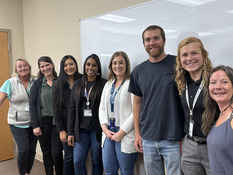
Recently, Hanna Gootee, from our Adult and Juvenile Justice Assistance team traveled to Montrose meeting with juvenile diversion partners from the 6th, 7th, 12th, and 22nd Judicial Districts. For many, it was the first time this corner of the state came together in one room.
These conversations involved data snapshots and best practices. But, just as important as these discussions is being present, listening to local needs, and reminding ourselves why we do this work.
Traveling and meeting in person underscores the importance of DCJ going to rural communities and closing the gap. This is what partnership looks like: bringing people together across agencies, across distances, and across perspectives to strengthen opportunities for young people to stay connected to school, family, and community.
Safety and justice aren’t built in isolation, they’re built together. Learn more about the work we are doing or reach out to partner and connect: https://dcj.colorado.gov/.
|
 |
|
OCC: Colorado Community Corrections Annual
Report: FY24 |
Colorado Community Corrections Annual Report summarizes efforts underway to address the mandates associated with H.B.18-1251. Subsequent to the passage of the bill, the Office of Community Corrections (OCC) within the Division of Criminal Justice (DCJ),
the Department of Corrections (DOC), and community corrections boards and programs, increased collaborative efforts to improve the referral process associated with individuals transitioning from the DOC to a community-based residential program.
In FY24, many boards continued to focus on data collection and sharing, including congruency between their structured decision-making (SDM) tools and referral screening outcomes and reasons for denials.
The OCC, partnering with boards and providers, facilitated several training sessions and presentations to educate a variety of stakeholders on Unconscious Bias in Decision-Making, community corrections programming, the referral process, and outcome data. OCC collaborated with DOC for several information-sharing virtual meetings and in-person facility tours to allow community corrections providers and boards the opportunity to engage with DOC clients and staff.
Approximately 35% of Transition referrals were accepted statewide in FY24. Fiscal year 2024 saw a slight increase in the average daily residential population for all client legal statuses.
 |
|
Next Governor's Community Corrections Advisory Council Meeting |
About: The Governor's Community Corrections Advisory Council advises and assists the Division of Criminal Justice in analyzing and identifying problems or needs, recommending policy modifications or procedural changes and developing strategies for the community corrections system. They also serve as a forum to address issues in community corrections brought forth by Council members or other stakeholders. Council members represent various units of government and private interests and are appointed by, and serve at the pleasure of, the Governor and receive no compensation for their participation.
Questions? Please DO NOT Reply to this email. If you reply, your email will go to a unmonitored email inbox. Please email cdps_dcj_occ@state.co.us.
|
|
|
|
|