|
What happens when you bring together over 400 professionals from around the state to share insights, strategies, and success stories that are making a real difference in our communities? You get the annual conference hosted by the Office of Domestic Violence and Sex Offender Management (ODVSOM) that gives space for folks to learn, connect, and have fun. This year's conference theme, "Evolving through Reflection: Teamwork, Compassion, and Innovation," perfectly captured the event's purpose. Attendees gained new tools, fresh perspectives, and renewed energy from an incredible lineup of presenters.
 There was so much packed into four days nested in the mountain air at 9,728 feet elevation. Featured keynotes included David Prescott, Director of the Safer Society Continuing Education Center, and Darrell Hammond Sr., an international speaker, facilitator and trainer in leadership. Both spoke on the importance of self-compassion and self-care and provided practical tools to avert compassion fatigue while maintaining influence, impact, and effectiveness. A special highlight of the conference was the celebration of the 25th Anniversary of the Domestic Violence Offender Management Board (DVOMB).
The conference also celebrated individuals who have made significant contributions to the field:
-
Chris Lobanov-Rostovsky received the John Davis Lifetime Achievement Award. This award honors a professional with a long career of exceptional work in sex offender management and treatment, having a positive impact on the field.
-
Cindy Jamison was presented with the Gary Burgin Sex Offender Management or Treatment Leadership Award.
-
Tara Saulibio was honored with the Senator Norma Anderson Excellence in Victim Advocacy Award.
-
Joshua Gunkel received the Denise Fransua Domestic Violence Offender Management Leadership Award.
All sessions are recorded and accessible for 90 days after the conference. We are already looking forward to next year's conference scheduled for July 14-17 and we hope to welcome you back to Breckenridge. Please keep an eye out for announcements regarding the 2026 Summit in the Rockies Conference.

Maija Roscoe - SOMB Application and Standards Compliance Coordinator
After obtaining her bachelor degree from the University of Colorado, Maija began her career as a case manager at a drug and alcohol testing agency, referring offenders to treatment and collaborating with parole. She was soon promoted to be the case manager for the sex offender parole unit, and began working with Community Supervision Teams in this capacity. After this she began working as a co-therapist for a sex offense treatment provider, then as a case manager for the Intensive Residential Treatment program at a community corrections facility. After this, Maija began her career in law enforcement. She served as a Community Parole Officer on the Specialized Supervision Unit supervising sex offenders for five years. Following this she served as a Detective Corporal for a police department on a college campus. Maija is currently in the final course for the completion of her master's degree in criminal justice.
Outside of work Maija enjoys adventuring with her husband, family, and friends. She enjoys going to ComiCon every year, watching classic rock tribute bands, and traveling as much as possible. Her husband proposed to her in Hobbiton in New Zealand last year, and that is the attached picture! She has three cats that she spoils endlessly, as well as a fourth neighborhood cat which has been somewhat adopted. She is very excited to be back working in this specific field after being away for a year!
maija.roscoe@state.co.us
|

Jessica Manrique - Program Researcher and Data Visualization Analyst
Jessica holds a bachelor’s degree in Anthropology and is currently completing a master’s degree in Criminal Justice at the University of Colorado Denver, expected by the end of 2025. She brings several years of experience as a Victim Advocate with police departments in Colorado and Utah, where she supported victims of violent crimes. Before working in law enforcement, she supported survivors of human trafficking through a refugee resettlement program. In spring 2025, she completed an internship with the Division of Criminal Justice - Office of Research and Statistics, gaining experience in public safety research.
Originally from Colombia, Jessica relocated to Colorado three years ago and now lives with her husband and two cats. In her free time, she enjoys hiking, exploring the outdoors, and trying new food from different cultures.
jessica.manrique@state.co.us
|

Agatha Chronos, a distinguished PhD Candidate specializing in the Prevention of Child Sexual Abuse at the University of Bergen, joined the ODVSOM during her summer internship. From May 5 to August 15, 2025. Agatha dedicated her time for an informal, learning-oriented placement designed to immerse her in the research, policy, and operational functions of the office.
Agatha's research focuses on sexual interests in minors and her contributions have been multifaceted and impactful. She presented her work with the "2 Ps consortium," a collaborative effort aimed at preventing child sexual abuse through various work packages. Specifically, her role in Work Package 3 concentrated on integrating prevention strategies with the mental health needs of individuals with a sexual interest in children, providing crucial insights for developing online solutions and training for frontline staff.
Beyond her primary research, Agatha undertook a systematic review examining emerging research on couples counseling in domestic violence cases, contributing to a nuanced understanding of this complex area. She also played a vital role in the ODVSOM's strategic planning efforts, assisting in the drafting, programming, and analysis of data collected from providers for an upcoming August 2025 retreat.
Throughout her internship, Agatha actively engaged with staff across various teams, gaining a comprehensive understanding of the office's functions and the work of both the Sex Offender Management Board (SOMB) and the Domestic Violence Offender Management Board (DVOMB).
|
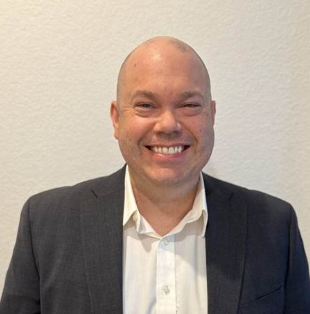
Matthew B. Brandt joined the ODVSOM as a SkillBridge intern on May 12, 2025, marking a significant transition after two decades of dedicated service in the U.S. Air Force. His internship concluded on July 24, 2025, provided a unique opportunity to apply his extensive experience in a new professional context.
Matthew's 20-year military career, including 14 years in the Chaplain Corps, has equipped him with a profound understanding of human needs and support systems. In this role, he was instrumental in ensuring service members and their families could freely exercise their religious rights. His professional expertise is deeply rooted in crisis intervention, counseling, and advocating for individuals on critical moral, ethical, and quality-of-life issues. This rich background in direct support and advocacy made him a valuable addition to the ODVSOM team.
During his internship with ODVSOM, Matthew made tangible contributions focusing on a crucial project to properly catalog and digitize records into the Provider Data Management System, enhancing the office's organizational efficiency and accessibility of vital information. Additionally, he provided valuable insights by reviewing the registration process for attending on-demand trainings, offering recommendations for future enhancements.
Matthew B. Brandt's SkillBridge internship at ODVSOM is a testament to his continued commitment to public service, leveraging his distinguished military career and professional expertise to support the office's critical mission.
|
Following the 2022 Sunset Review and statutory changes to 16-11.7-105, the SOMB has revised the Standards and Guidelines regarding recommendations and referrals for offense-specific treatment. The new legislative language was included in Section 5 of both the Adult and Juvenile Standards to guide supervising officers. Although supervising officers are now required to follow the SOMB Standards, Probation, Parole, and Community Corrections have internal policies and procedures to guide this process. Supervising Officers and Case Managers should follow their internal policies for treatment recommendations and referrals. Before the changes in legislation, supervising officers and case managers would make specific recommendations regarding agencies they felt would best meet the needs of the client. With the changes and option for clients to pick a treatment provider, these referrals should be screened by agencies and providers to ensure the client’s needs can be met within the structure and treatment strategies within each agency.
Given that the research supports the principles of Risk, Need, and Responsivity, meaning that treatment is best delivered according to the individualized needs of the client, treatment providers need to understand their programs' strengths and limitations. Programs that have clear guidelines and expectations will help clients in their search for a provider. It will also assist them in assessing and understanding why they may or may not be a good fit for a program. Agencies that provide services to I/DD, LGBTQ, Females, or other specialized populations may be more selective in the clients they accept to ensure they have the bandwidth to accept those who need their unique services.
The Legislature specifically noted that the Division of Youth Services is exempt from this requirement due to the nature of its program. It should be noted that this is not the only situation where clients may be limited in their choice of treatment providers. These situations may occur when the Courts make specific requirements regarding treatment, including the requirement to reside within a Shared Living Arrangement (SLA), or other specialized programs.
Throughout the Standard Revisions process over the last few years, revisions have focused on encouraging providers to be sensitive to cultural, ethnic, developmental, sexual orientation, gender, medical, and educational issues, or disabilities. Within Section 2, guidance was added for evaluators on Culture, Ethnic, and Language considerations and the Use of Interpreters. These revisions were approved and subsequently used to enhance the language for treatment providers in Section 3. Providers are encouraged throughout the Standards to ensure treatment is responsive to the individual needs of the client. As Section 3 was being reviewed for revisions, similar guidance was needed for treatment providers.
The document outlines guidelines for providing culturally sensitive and inclusive services, emphasizing the importance of a client's preferred language and the appropriate use of interpreters. Key points include assessing interpreter needs, utilizing approved interpreters, preparing interpreters before sessions, conducting post-session follow-ups, ensuring confidentiality, and thoroughly documenting all aspects related to interpreter use. It also acknowledges challenges with interpreters, such as delays and potential impacts on sensitive discussions, and offers alternatives for group settings if live translation is not feasible or sustainable. The purpose of the revisions was to outline requirements for treatment providers while working with foreign language interpreters. The standards aim to balance this with an acknowledgment that teams may experience challenges while trying to meet the needs of clients who require a foreign language interpreter.
The SOMB will be reviewing these revisions during the September 2025 Board meeting. If approved, the revisions will be published in the Standards and will be expected to be fully implemented by July 1, 2026
Online Risk, Digital Footprints, and Sex Offense Evaluations: Rethinking Device Access
In a world where nearly everything is connected online, the question of whether—and how—people with histories of sexual offending should access internet-enabled devices has become increasingly important. In their 2024 article, Morgan and Klein examine how online sexual activities (OSA) intersect with forensic mental health evaluations in cases involving sexual offenses.
Internet use can reflect a wide range of behaviors—from legal adult content to illegal or compulsive sexual activity—and may offer insight into an individual’s sexual interests, behavioral patterns, and treatment progress. Some OSA may indicate problematic sexual interests and elevated risk, while other behaviors may stem from loneliness, curiosity, or social isolation. In some cases, internet use may not be risk-relevant or related to offending at all.
Given this complexity, Morgan and Klein emphasize that not all individuals present the same level of risk when it comes to internet-enabled devices. Rather than imposing blanket bans, they advocate for individualized decisions based on thorough, case-by-case evaluations. This includes reviewing internet data alongside interviews, records, and structured risk tools, and ensuring any restrictions are clearly tied to documented concerns.
As digital access becomes increasingly central to employment, education, and social reintegration, understanding how online behavior fits into the broader context of risk and rehabilitation is more important than ever.
Key takeaways:
- Online behavior is diverse and complex.
- Risk must be evaluated on a case-by-case basis.
- Internet use data should be one component of a comprehensive assessment.
- Restrictions should be clearly linked to specific, documented concerns.
- Digital access plays a growing role in successful reintegration.
Full citation:Morgan, C., & Klein, C. (2024). How online data informs forensic mental health evaluations of sexual behavior: An overview. Behavioral Sciences & the Law, 42, 186–204. https://doi.org/10.1002/bsl.2650
Save The Date! October 21st - 22nd, 2025
Dates: October 21st - 22nd, 2025
Location: Delta Hotel, 10 E 120th Ave, Northglenn, CO 80233, USA
The theme of this year's conference is, "Empowering Change" and will include presentations for a variety of audiences and levels of experience in the adult criminal justice field (Community Corrections program staff and administration, Community Corrections Board members and staff, DOC/Parole, Judicial, treatment providers, and other stakeholders). The conference will feature 28 breakout sessions and two Keynote Speakers. Keynote Brian Lovins will speak about finding paths to purpose and success in community corrections, and Knutson Speaks will speak about becoming motivated from the inside out. Breakout session topics include psychological safety, working with specialized caseloads, field safety practices, active bystandership, working with clients struggling with substance use disorder and mental health, leadership, vicarious trauma, and more!
For sponsorship/exhibitor inquiries, please contact Chrystal Owin at chrystal.owin@state.co.us
For general conference questions, reach out to Kate Coates at kate.coates@state.co.us
Please note that all SOMB committee meetings are open to the public and all are welcome to attend. A couple of committee meetings have appointed members such as the Application Review Committee, Best Practices and Adult Standards Revisions Committee but anyone is welcome to join, listen, and participate in the discussion.
‘BEE’ a part of the process! Committees are where the honey is made! ALL Meetings have a virtual option. Schedule and Links can be found on the DCJ Public Calendar. You can also email the assigned SOMB Staff to be added to the email distribution list.
- Best Practices - 2nd Tuesday of each Month: Erin Austin
- Adult Standards Revisions - 3rd Thursday of each month. Erin Austin
- Juvenile Standards Revisions - 1st Monday of each month: Paige Brown
- SOMB Victim Advocacy Committee - 4th Thursday of each Month: Paige Brown
SOMB Board Meetings: 3rd Friday of each month. Subscribe to our Newsletter for updates from the SOMB. To see Board Agendas, please visit the Board Meetings Website
At Safer Society, we are committed to providing the highest quality trainings programs. Our CE credits offerings are approved by several of the world's most respected organizations, ensuring the content and delivery meet the strictest standards. The trainings cover content that is current with trends in psychology, social work, counseling, and education that best support healthier lives and safer communities. We continuously monitor participant feedback to identify opportunities for improvement, enabling us to refine the content and delivery of the trainings. Our focus is to ensure the programs remain relevant, accessible, and provide exceptional value to our attendees.
|