|
Today: Fall 2026 Groundwater Sustainability Agency Forum

DWR’s Sustainable Groundwater Management Office (SGMO) will host the Fall 2026 Groundwater Sustainability Agency (GSA) Forum today from 9 a.m. to noon. The event’s theme is “The Great Groundwater Balancing Act: Approaches to Managing Demands.” This online forum will feature discussions with GSA representatives about various demand planning programs and strategies including the Farmer/Grower Incentive Program; Allocations; and the Multi-Benefit Land Repurposing Program. DWR will also discuss the predicted historic El Niño and share SGMO updates. The full agenda is available online. Registration for this morning's online event is still open.
|
New tool monitors runoff potential by providing real-time data
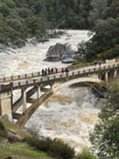
Researchers at DRI have developed the Snowpack Runoff Decision Support System tool, a new system that helps emergency managers and water agencies better understand how mountain snowpacks respond to rain-on-snow storms. Using hourly data from SNOwpack TELemetry Network (SNOTEL) monitoring stations, the tool provides near real-time estimates of runoff potential, improving flood forecasting and reservoir operations. Tested in the Upper Carson River watershed, it helped reduce uncertainty during storm events, allowing managers to better balance flood protection and water storage. Its importance is expected to grow as climate change increases rain-on-snow events and flood risks. The tool is currently available for the Sierra Nevada region of California and Nevada, including the Truckee and Carson River watersheds. Publicly available on DRI’s website, the tool is paired with a new research article validating its efficacy in water resources research. To read more about this tool, visit DRI’s website.
|
Useful guide for California winegrape growers available online
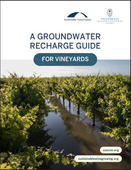
A Groundwater Recharge Guide for Vineyards, developed by Sustainable Conservation for the California Sustainable Winegrowing Alliance, helps California winegrape growers evaluate whether groundwater recharge is a practical option for their vineyards and develop an initial recharge strategy. The 51-page guide explains site suitability, water sources, vine health, water quality, recharge methods, costs, incentives, and regulatory considerations. The guide also presents science-based methods for evaluating vineyard recharge options and implementing recharge safely and sustainably and covers topics such as managed aquifer recharge (MAR) and the legal frameworks and natural resource considerations that influence farm-level recharge options, and practical guidance for conducting groundwater recharge. Growers can use the guide to create a preliminary recharge plan and work with local technical assistance providers to develop a detailed, sustainable groundwater recharge plan. The guide is available for download from Sustainability Conservation’s website.
|
2026 Special Event – Open Water Data Challenge
To celebrate 10 years of Open and Transparent Water Data Act in California, DWR and the California State Water Resources Board are hosting a virtual Open Water Data Challenge today, from 1 to 2 p.m., to share what you have done (or can do) with open water data. This event will be a “light” data challenge, essentially a showcase with no formal judging or awards. Final projects may be featured on the California Water Data Challenge website. (Note that final project submissions are due Tuesday, December 1). Visit the 2026 Open Water Datathon website for more information and event updates. Registration for today’s online event is open now.
|
2026 Draft Proposition 4 Water Desalination Grant PSP
National Academies to host webcast with release of new report

A new consensus study report from the National Academies offers guidance for maintaining the reliability of the scientific record by addressing corrections and retractions of scientific journal articles in a timely, effective, consistent, and transparent manner. Maintaining the Reliability of the Scientific Record: Corrections, Retractions, and Other Post-Publication Notices offers recommendations for journal editors and publishers, research funders, research institutions, and researchers to increase the integrity and transparency of communicating scientific results. The report is available for purchase in paperback. National Academies will host a report release webinar to discuss in detail the report’s recommendations. The webcast will begin at 10 a.m., Thursday, November 19. Registration for this event is free and is open now.
|
|
|
|
|
|