|
Rivers & Mountains Conservancy Newsletter - November 2026 |
|
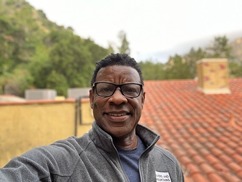
This month we take time to recognize the Indigenous peoples who were the first inhabitants of the Americas. It is with great respect that we acknowledge this history and the people who have endured so much that has been put upon them. My lineage does not come from the Americas, it comes from West Africa primarily, but given the tyranny my ancestors faced, I feel deeply about respecting others who have faced severe trauma over the course of history and have been stolen from their land by force.
Within the month, we recognize our veterans and by the end of the month, we give recognition to our complicated history. November is also a month for us to reflect, a month for us to give recognition and an opportunity to remember our history, our cultural values, and consider what we contribute to communities. Indigenous peoples have long maintained an enduring connection to the land. Their knowledge and stewardship practices continue to shape how we understand and care for the natural world.
This month, we also celebrate Veterans Day, a time to honor those who have served our country and reflect on what it means to come home. As we recognize the service and sacrifice of our veterans and the native Americans, we must also recognize the challenges many face as they transition from military to civilian life. Thankfully, some can find a sense of peace and connection through experiencing our natural environment as part of the healing process.
Time outdoors offers opportunities to connect with our surroundings and build relationships with others. Spending time outdoors has been proven to improve mental and physical health, and “just 20 minutes spent in any space that evokes nature can significantly reduce cortisol (stress hormone) levels.”1 Access to these places' matter, especially for veterans and military families navigating the transition home.
At the RMC, we work to protect and restore natural spaces throughout our region, including the urban communities where access to nature can be limited. In LA County alone, there are an estimated 184,283 veterans.2 We invest in trails, parks, and other green spaces because all 184,283 veterans, their families, and every single one of our community members deserves access to places where they can spend time with others and take a much-needed break.
This month, I want to express my deepest gratitude to all who have served. Our work at the RMC goes beyond conservation; it is an ongoing commitment to ensure that the land we protect is welcoming, accessible, and a source of strength and peace for our veterans and entire community for now and generations to come.
|
|
|
Emerald Necklace Mobility Hub Grand Opening
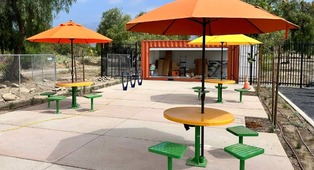
At first glance, the Santa Fe Dam Recreation Mobility Hub looks like a simple shipping container. Once the container opens, it reveals a one-stop shop for bicyclists, including bike racks, free e-bike rentals, helmets, and more. The average year-one cost of owning an e-bike, which can range from $560 to $967, can be a barrier for many people. 1 The cost of a standard bike also adds up when you include helmet and other safety equipment costs. These increasing costs should not prevent our communities from experiencing a ride along the trails, which is why hubs like this are so important.
The Santa Fe Dam Recreation Mobility Hub is the first of three planned hubs along the Emerald Necklace, 17-miles of trails along the Rio Hondo and San Gabriel Rivers. These hubs, which will help more community members connect with nature by providing free resources, are part of a larger goal to create the Emerald Necklace: a continuous, uninterrupted loop of trails within the San Gabriel Valley (SGV).2
|
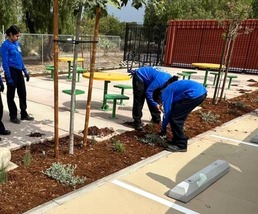
For decades, the RMC has supported the vision to create an Emerald Necklace. In 2010, the RMC awarded $200,000 to Amigos de los Rios to study the feasibility of the Emerald Necklace. Most recently, the RMC awarded $760,786 to the Los Angeles County Department of Parks and Recreation for the Emerald Necklace Mobility Hub project.
In urban areas designed for cars, walking or biking can be unsafe, as we navigate busy roads, traffic, and other barriers. Safe, connected routes that allow people to travel between parks and natural spaces are rare, but they are essential to making nature accessible to more people. The Emerald Necklace Mobility Hub is the first milestone towards creating a safer, more accessible SGV.
|
|
|
|
Fire Safe Planning and Recovery Services for Huhuunga
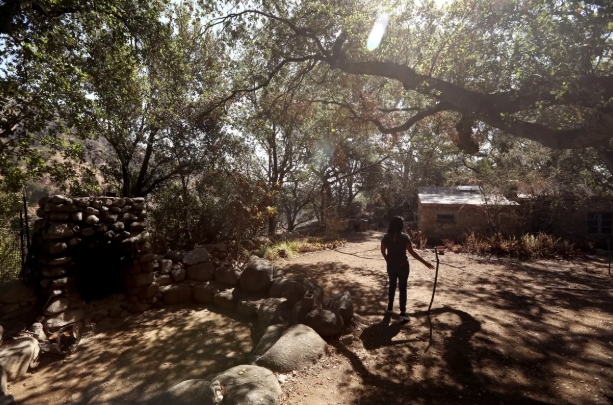 Source: Genaro Molina / Los Angeles Times
Huhuunga, a one-acre property located in Altadena, is an example of taking the next step beyond land acknowledgements. Known as the Place of Bears,1 the site is the first property to be returned to the Tongva people after 200 years. The property was returned in a private transaction between previous owner, Sharon Alexander, and the Tongva Taraxat Paxaavxa Conservancy (TTPC). 2 Before owning their land, TTPC struggled to carry out ceremonial practices.
In an LA Times article, Wallace Cleaves, a member of the Gabrieleno/Tongva San Gabriel Band of Mission Indians and president of TTPC, shared an example of these struggles. “Cleaves recalled his father’s mourning ceremony, where more than 100 community members crowded inside their Claremont home.” 2 The return of Huhuunga to the Tongva people is meaningful because Huhuunga now serves as “a sacred place for Native people to gather, practice culture, and reconnect with their ancestral roots.” 1
In 2025, parts of the Huhuunga property were destroyed by the Eaton Fire, but damage was mitigated through Traditional Ecological Knowledge (TEK). TEK, indigenous wisdom and stewardship, acknowledges nature as a “living relative,” not a resource.3 As Altadena recovers and Huhuunga rebuilds, listening to the “thousands and thousands and thousands of years of [indigenous] knowledge” 4 is critical.
The RMC supports indigenous knowledge and cultural practices as central components to land recovery and climate resilience. Last year, the RMC Board approved an $800,000 grant to TTPC for the Fire Safe Planning and Recovery Services for Huhuunga project because TTPC’s wisdom and intention are vital to restore and protect Huhuunga.
|
|
San Gabriel Mountains National Monument Improvements
Last month marked the 12th anniversary of the San Gabriel Mountains National Monument. Welcoming more than four million visitors annually, the Monument provides a vital retreat for surrounding urban communities seeking relief from the heat and a chance to spend time in nature. Despite its popularity, accessing these natural spaces remains a challenge. Limited facilities, difficult terrain, and a lack of safe, well-maintained paths can make it challenging for visitors to enjoy the outdoors comfortably. Protecting public lands is important, but making sure people can safely access and experience them is equally essential.
|
|
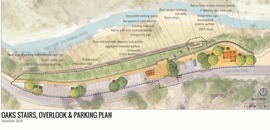 East Fork Designs (After)
|
|
The Watershed Conservation Authority (WCA) is actively working to bridge that gap. Through a series of planned infrastructure improvements throughout the Monument, including new stairs and formalized river access at the East Fork of the San Gabriel River, the WCA is making these heavily visited areas safer, more welcoming, and easier to navigate, while also protecting the surrounding watershed from the impacts of unmanaged recreation. The recent groundbreaking at Azusa Wilderness Park marks another major milestone, with plans for river overlooks, walking paths, a nature-inspired play area, and park entry improvements. Together, these projects reflect a simple but important principle: nature should be accessible to everyone. |
|
|
Azusa Wilderness Park (Before)
|
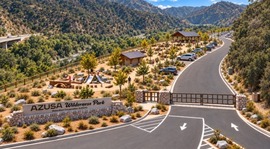 Azusa Wilderness Park Designs (After)
|
|
Getting to Know Chad Oberly – Natural Resources & Tribal Affairs Manager
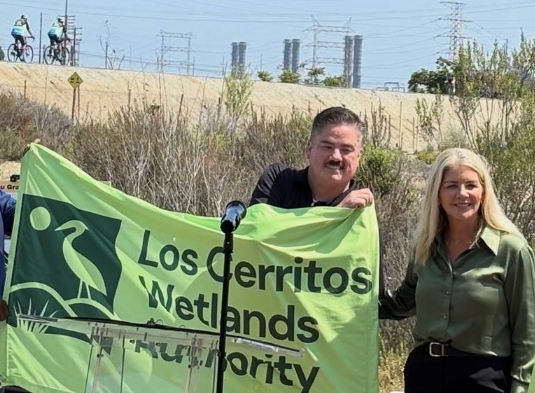
Chad Oberly (left) and LCWA Chair Kristina Duggan (right) unveil the LCWA’s new logo, July 2026.
Chad Oberly has supported the Los Cerritos Wetlands Authority (LCWA) since 2024 through his role as RMC’s Natural Resources and Tribal Affairs Manager Because the LCWA does not maintain its own staff, it relies on in-kind support from its JPA member agencies for its staffing needs. Chad represents RMC on LCWA’s Steering Committee, where representatives from each member agency collaborating regularly to coordinate day-to-day management and advance priorities approved by the Board.
Chad oversees the Southern Los Cerritos Wetlands Restoration Project and works closely with consultants, community partners, and the shared RMC and LCWA Executive Officer to implement LCWA's key initiatives and execute the JPA’s mission. He also collaborates with the Los Cerritos Wetlands Land Trust, Los Cerritos Wetlands Stewards, El Dorado Audubon, and the stewardship program to engage a diverse constituency with the wetlands and deepen public appreciation for this vital and special habitat.
Additionally, as RMC’s Tribal Liaison, Chad serves as the principal liaison for California Native American Tribes within the agency’s funding area or those potentially impacted by its actions. He has dedicated his career to state government since 2017.
To support prospective applicants navigating the grant process for Proposition 4 funding opportunities, we will host a series of virtual or in-person informational workshops. These sessions will cover eligibility requirements, application timelines, and project priorities to help you craft a competitive concept application and subsequent grant application.
Stay tuned for official workshop dates and registration details by visiting our website, follow us on our social media, or sign up to our newsletter. In the meantime, you can find the latest updates, program guidelines, and resources by visiting our Prop 4 webpage at https://rmc.ca.gov/prop-4/.
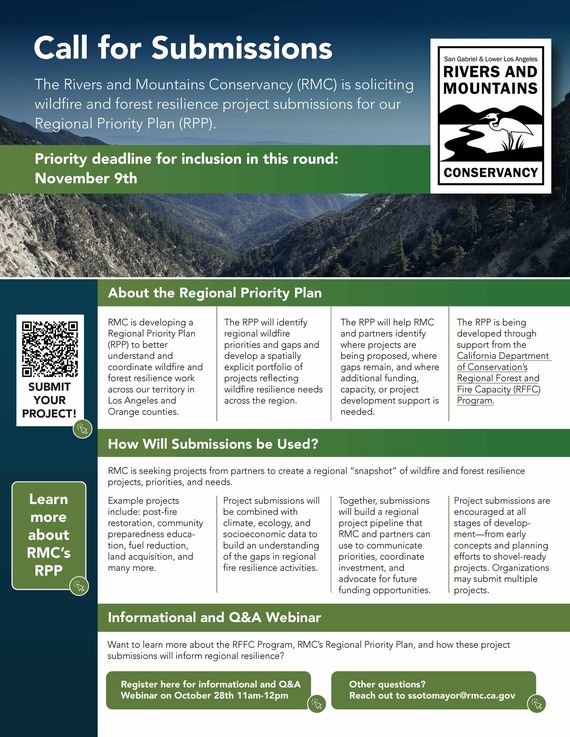
Additionally, RMC has a call for submissions to see how your project can align with our regional conservation goals. Please see our flyer below.
|
|
|
|
|