|
Reminder: Flood-MAR Network 2026 Engagement Survey

Don’t forget to participate in the Flood-MAR Network 2026 Engagement Survey. The survey is open now through Friday, August 21. Your input directly informs future programming, including the upcoming Flood-MAR virtual workshop, “A New Era of California Water Planning,” scheduled for Thursday, September 17. Please share projects that you’re working on and what resources or connections would be most valuable to you.
|
California Water Plan 2028: second Advisory Committee meeting
DWR will hold its second Advisory Committee meeting for the California Water Plan 2028 in Los Angeles over two half days, Tuesday (1–5 p.m.) and Wednesday (8 a.m. – noon), August 25 and 26. Meeting materials and an agenda are available online. All Committee meetings are open to the public. A YouTube livestream option will also be available for viewing purposes. More details are available on DWR’s public notice for this event.
|
State Water Board requests feedback on TBU guidance
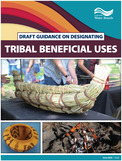
The State Water Resources Control Board (State Water Board) invites feedback on the newly released Draft Guidance on Designating Tribal Beneficial Uses. Tribal Beneficial Uses (TBUs) ensure the cultural, traditional, spiritual, and subsistence relationships that California Native American Tribes have had with water are formally recognized and protected within State water quality planning and permitting. This draft guidance document explains what TBUs are, how designations work, and how Tribes can engage in the process. The document does not create any legal requirements or make them more specific, rather it is intended only to describe existing requirements and practices. The deadline to offer feedback is noon, Monday, August 31. See the State Water Board’s Tribal Affairs webpage for details on how to submit comments via email or postal mail.
|
How wildfires affect water use and increase runoff
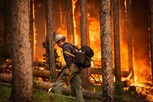
Wildfires are increasingly reshaping California’s Sierra Nevada forests and water supplies. A paper published in Hydrology and Earth System Sciences reports that wildfire impacts on potential runoff grew significantly from 1985–2023, especially after 2019. By 2023, burned areas covering approximately one-fifth of key watersheds increased potential runoff by roughly 740,000 acre-feet annually, or 5.4% of average natural flow. Researchers emphasize that although wildfire can boost runoff, lower-severity fuel treatments (such as thinning and prescribed fire) can provide similar water benefits while protecting ecosystems, communities, and other resources. Developing quantitative estimates of water and related benefits is central to advancing forest restoration. The paper’s findings support ongoing efforts to restore and protect the region's forests. For more on this story, see the UC Merced University Connections webpage.
|
New Delta report highlights 15 years of progress and challenges
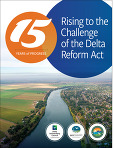
Fifteen years after the California Legislature passed the Delta Reform Act of 2009 to strengthen governance for the Sacramento–San Joaquin Delta, three state agencies—the Delta Stewardship Council, Delta Protection Commission, and Sacramento–San Joaquin Delta Conservancy—are highlighting progress made and challenges remaining. Their new report, 15 Years of Progress: Rising to the Challenge of the Delta Reform Act, details accomplishments including the adoption of the first-ever Delta Plan, major investments in science and ecosystem restoration, California’s first National Heritage Area designation, and much more. The agencies emphasize continued partner collaboration at the local, State, and federal levels to improve water reliability, ecosystem health, and Delta resilience.
|
|
|
|
|