|
Panel discussion: SGMA-ready crops for San Joaquin Valley?

A recent report released by the Public Policy Institute of California (PPIC) estimates that irrigated farmland in the San Joaquin Valley may shrink by up to 900,000 acres, or 20%, as the Sustainable Groundwater Management Act (SGMA) is implemented. The report urges area growers to consider moving away from the conventional practice of widespread and uncoordinated fallowing of farmland and adopting “SGMA-ready” crops, especially winter grains and forages, which require little water and modest investment. To that end, the PPIC will host an online presentation and panel discussion on Tuesday, July 28, 11 a.m.–noon, that takes a special look at how SGMA-ready crops could aid the farmland transitions currently underway in the valley. The agenda and list of speakers are available online. Registration is open now.
|
Learning how to use water data more effectively

California Data Collaborative will host a discussion about informative water data on Wednesday, July 22, 1–3 p.m. “Closing the Gap Between Analytics and Action” will bring together practitioners from across the water sector to share how they're building confidence in their data and putting it to work. Presenters from Eastern Municipal Water District and Elsinore Valley Municipal Water District will lead a discussion focused on real agency experiences and highlight the effort required to move from simply collecting raw meter reads to using data more effectively. This event will be offered in person and virtually via Zoom. For event details and to register, visit the California Data Collaborative webpage announcing this event.
|
How bioeconomy unlocks new value for California agriculture
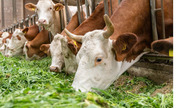
The University of California Agriculture and Natural Resources (UC ANR) reports that agricultural byproducts, forest materials, and food waste can fuel a growing bioeconomy that can support rural communities, like those in the San Joaquin Valley where groundwater regulation, labor shortages, and climate pressures are reshaping the region. Researchers say biomass can be transformed into renewable energy, manufacturing materials, and other high-value products instead of being discarded. The state’s almond industry already demonstrates circular practices by using hulls as livestock feed and shells as orchard mulch and fertilizer, adding economic value while improving soil health. Bioeconomy-related job postings have grown rapidly, especially in forestry, indicating strong demand for skilled workers and new economic opportunities across the state. To learn more, see the Food Blog article on the UC ANR website.
|
CNRA Secretary Speaker Serries webinar today at noon

Join California Natural Resources Agency (CNRA) Secretary Wade Crowfoot for an informative discussion on the environmental health of three of California’s unique, biodiverse water bodies that are under threat. “Conserving California's Iconic Waters: The Future of Lake Tahoe, the Salton Sea, and Clear Lake” will outline work under way to protect and restore these lakes and discuss challenges and opportunities to help them thrive into the future. This webinar will take place today from noon to 1 p.m. Register now to join the discussion.
|
Interweaving Traditional Knowledge roundtable meeting 3 of 3

The Delta Stewardship Council (DSC), together with Shingle Springs Band of Miwok Indians and California Indian Environmental Alliance, will host the third and final Interweaving Traditional Knowledge Roundtable meeting on Tuesday, July 28, from 2–3:30 p.m. This virtual-only meeting, “Examples of Successful Co-Governance and Co-Management,” will be offered via Zoom; registration is required. This series brings together Tribal elders and leaders, agencies, and scientists to share experiences, discuss challenges, and explore practical approaches to interweaving Traditional Knowledge, management, and science. For more information, see the agenda or visit the “Ongoing Outreach and Engagement” section of DSC Tribal Engagement webpage.
|
|
|
|
|