|
California Water Data Summit coming to Los Angeles in August
Mark your calendars for the 11th Annual California Water Data Summit in Los Angeles on Tuesday and Wednesday, August 19 and 20. Themed “Decade of Destiny,” this year’s summit will explore the digital renaissance of the water industry through the synchronization of data, technology, and human insight. This event, hosted by the California Data Collaborative, will unite individuals from water agencies, research teams, and other areas of the water sector. Water professionals, elected leaders, researchers, students, and all interested parties are invited to attend and help shape the future of water data in California. For registration information and event details, visit the California Data Collaborative webpage about this summit.
|
A look at agricultural land and water use on Tribal reservations

The Public Policy Institute of California (PPIC) recently used remote-sensing and other publicly available data to look at agricultural land and water use on Tribal reservations. The analysis finds that California Tribal agriculture is relatively small but significant. Of the 103 federally recognized reservations, about 20 consistently support irrigated farming, totaling roughly 15,800 acres annually — approximately 0.2% of California’s irrigated land. Agricultural water use averages 60,000–70,000 acre-feet per year. Unlike statewide agriculture, Tribal farms emphasize annual crops over perennial trees and vines, reflecting the hot, arid climates of many reservations. To learn more about this recent study, see Agriculture and Water Use on California’s Tribal Lands blog posted on the PPIC website.
|
Interweaving Traditional Knowledge roundtable meeting 2 of 3

The Delta Stewardship Council (DSC), together with Shingle Springs Band of Miwok Indians and California Indian Environmental Alliance, will host the second of three Interweaving Traditional Knowledge Roundtable meetings on Tuesday, July 14, from 1–2:30 p.m. This meeting will be offered via Zoom and in person at the California Natural Resources Agency building in Sacramento. This series brings together Tribal elders and leaders, agencies, and scientists to share experiences, discuss challenges, and explore practical approaches to interweaving Traditional Knowledge, management, and science. Registration (in-person or Zoom) is required. For more information, see the agenda or visit the “Ongoing Outreach and Engagement” section of DSC Tribal Engagement webpage. The last of the three meetings, scheduled for Tuesday, July 28, from 2–2:30 p.m., will be a virtual-only meeting.
|
UWUO Alternative Compliance webinar today at 10:30
Urban retail water suppliers subject to the Making Conservation a California Way of Life regulation must annually calculate and meet their Urban Water Use Objective (UWUO), which is a supplier-specific volume of water based on increasingly efficient standards. Some suppliers facing greater challenges with meeting their 2040 UWUO may be eligible for alternative pathways to compliance. This webinar will describe the alternative compliance eligibility requirements and the effort needed to enter into alternative compliance; it will also provide preliminary guidance on how to submit the required information to the State Water Resources Control Board. This webinar starts today at 10:30 a.m. Registration is required.
|
NRDC report urges State Water Board to consider nitrate limits
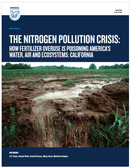
The State Water Resources Control Board (State Water Board) is considering enforceable numeric limits on nitrogen fertilizer use, following expert findings that sufficient data exists to regulate agricultural pollution in parts of the state. A report issued in May by the Natural Resources Defense Council (NRDC) finds that decades of voluntary measures have failed, with 40–60% of fertilizer going unused and contaminating water, air, and soil. Millions of Californians have been exposed to unsafe nitrate levels linked to serious health risks, including cancer and birth complications. The NRDC and more than 40 organizations are urging the State Water Board to adopt enforceable limits by the end of 2026 to protect drinking water, public health, ecosystems, and taxpayers. To learn more, read the recent Maven’s Notebook article NRDC: State Water Board to consider nitrogen regulation as new report details statewide pollution crisis.
|
|
|
|
|
|