What keeps water scientists and engineers awake at night?

Inspired by John Brockman’s book “What Should We Be Worried About?”, a recent Ebb and Flow article notes that scientists from the California State Water Resources Board (State Water Board) focus less on sensational water crises and more on long-term threats to California’s drinking water. What keeps water engineers and scientists up at night is often the quieter challenges requiring sustained attention: aging infrastructure, chronic contaminants, climate-driven extremes and unequal access to safe water. Darrin Polhemus, who heads the State Water Resources Control Board’s Division of Drinking Water, says the greatest concern is not large systems, which have resources to respond quickly, but small systems operating with limited staff and finances. While 94% of Californians are served by larger systems, thousands of smaller providers remain vulnerable. A single equipment failure or delayed repair can trigger contamination risks and water crises. To read more on what scientists and engineers talk about among themselves, see the article “What we’re watching in drinking water — and why it matters.”
|
CWRI spring 2006 webinar today at 10 a.m.

The California Water Resilience Initiative (CWRI) will host its spring 2026 webinar on Wednesday, May 27, from 10 to 11 a.m. This event will explore how companies can play a meaningful role in supporting California's agricultural resilience in a hotter, drier future. California Department of Food and Agriculture (CDFA) Deputy Director for Climate and Working Lands Virginia Jameson will be the guest speaker and will share highlights from CDFA's new climate resilient agriculture strategy. The discussion will touch on how corporate water stewardship projects — including CWRI's work on multi-benefit land repurposing and a new opportunity on groundwater recharge — help advance these State priorities. The webinar will also share updates on SF Climate Week, the upcoming 2026 California Water Resilience Forum, and CWRI's active project portfolio. Registration for this hour-long webinar is open now.
|
Data For Lunch: Co-Creating the Water Future We Deserve

As part of its ongoing Data for Lunch series, the California Water Data Consortium will host a webinar today from noon to 1:30 p.m. “Co-Creating the Water Future We Deserve” will explore how researchers and community partners are co-creating equitable water futures through scenario modeling and interactive public data. The guest speaker will be Ted Grantham, Associate Professor of Cooperative Extension in the Department of Environmental Science, Policy, and Management at UC Berkeley. He is an ecohydrologist whose research investigates the ecology, hydrology, and management of freshwater ecosystems. Registration for this free event is open now.
|
Why data transparency is key for groundwater sustainability

A new DWR website article speaks to the need for adaptive water management for continued sustainability. “Data Transparency is Key to California Achieving Groundwater Sustainability” notes that groundwater supplies nearly 40% of California’s annual water and up to 60% during droughts, making it essential for long-term water security. As climate variability increases, sustainable management will depend on recharge during wet periods, coordinated surface and groundwater use, demand management, and improved monitoring. Data transparency and expanded groundwater monitoring networks help agencies make informed decisions. California’s Groundwater: Bulletin 118 – Update 2025 highlights groundwater conditions from 2020–2024 and documents progress toward sustainability goals under the Sustainable Groundwater Management Act. Future updates, along with the California’s Groundwater Live website and California’s Groundwater Semi-Annual Update, will support ongoing collaboration, data collection, and protection of groundwater resources for communities, industries, and ecosystems statewide. To learn more, see “Data Transparency is Key to California Achieving Groundwater Sustainability.”
|
Final day of CFCC Funding Fair, June 3
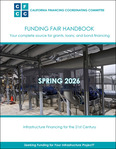
The California Financing Coordinating Committee (CFCC) will host the second and final day of its spring 2026 online funding fair on Wednesday, June 3, from 9 a.m. to noon. The CFCC combines the resources of 12 State and federal funding agencies to provide a one-stop shop for available grants, loans, and bond financing for infrastructure projects. Since 1998, the CFCC has conducted free funding fairs statewide each year to educate the public and offer potential customers the opportunity to meet with financial representatives from each agency and learn more about their currently available funding programs. Presentations will be held from 9 to 11 a.m. and participants can visit virtual booths from 11 a.m. to noon to meet with representatives. Registration is free but required.
|
Next Lunch-MAR webinar on Wednesday, June 3

The next Lunch-MAR meeting — “Flows, Fish, and FIRO” — will feature Dr. Andy Martin, acting deputy director in the U.S. Army Engineer Research and Development Center’s Environmental Laboratory at the U.S. Army Corps of Engineers. This hour-long webinar begins at 12:30p.m on Wednesday, June 3. Registration is not required to attend.
|
Improved CalHeatScore interface will help save lives
In a press release issued last week, Governor Newsom announced a new feature to integrate California Communities Extreme Heat Scoring System (CalHeatScore) data into a wide range of applications to help Californians stay safe during extreme heat. CalHeatScore, released last year, is a high-tech public health and weather-tracking tool that translates seven-day temperature forecasts into an easy-to-understand zip-code-level heat risk score. It also ranks the risk hot weather poses to public health and connects Californians with available resources to stay safe during extreme heat events. See the governor’s press release to learn about CalHeatScore and actions you can take to protect yourself and others during extreme heat.
|