Next week is National Groundwater Awareness Week 2026

Celebrate National Groundwater Awareness Week 2026, March 8–14, by joining virtual events next week that will focus on DWR’s Basin Characterization Program highlights, interactive conversations with groundwater sustainability agencies (GSAs), connections with GSAs and DWR staff by region, and updates from DWR. DWR will also release its final California’s Groundwater: Bulletin 118 – Update 2025 (CalGW Update 2025) during National Groundwater Awareness Week. A list of scheduled DWR events and registration links is available in the Groundwater Awareness Week 2026 Events flyer.
|
10th annual Water Summit in Bakersfield this week
The 10th annual Water Summit, hosted by the Water Association of Kern County, will bring together water leaders to discuss California’s long-term water future, just after the governor unveiled plans for California Water Plan 2028. This year’s summit will highlight the State’s ambitious goal of banking millions of acre-feet of water by 2050. The summit will also feature a full panel discussion on the Sustainable Groundwater Management Act (SGMA). Paul Gosselin, DWR Deputy Director of Sustainable Groundwater Management, will speak about changes over the last 10 years since SGMA took effect and how implementation efforts, including recharge basins, are playing out. Other topics include snowpack uncertainty, conservation, aging infrastructure, and emerging technologies (such as cloud seeding), with experts addressing common misconceptions. The summit will take place tomorrow, March 5, in Bakersfield. Although online registration for the event has closed, those still interested in attending can email info@WAKC.com.
|
Can AI help California manage its water?
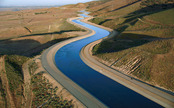
A recent blog post from the Public Policy Institute of California discusses how artificial intelligence (AI) is an extension of machine learning (ML) algorithms used by DWR and the State Water Resources Control Board since the 1980s. One of the most popular types of AI for water is ML, in which models learn and adapt without explicit instructions. Newer types of AI — particularly those that power AI chatbots like ChatGPT — are making many tasks in the water sector faster, more efficient, and more accessible to those without specialized expertise. Although AI’s ability to rapidly analyze large databases could help water managers make better decisions based on the most current information available, some users caution that AI is only as good as the data that it has access to. The blog points out that AI is still in its infancy and that policymakers will need to draft thoughtful regulations to ensure AI improves water management in California while minimizing risks, including environmental impacts.
The California Water Data Consortium is offering an opportunity to learn more about AI through its upcoming webinar, “Using AI to Track SMGA Implementation Across California.” This event, part of the Consortium’s “Data For Lunch” webinar series, will discuss how AI can help water professionals better maneuver through the complexities of the Sustainable Groundwater Management Act (SGMA). The webinar will share how AI can synthesize decisions from hundreds of groundwater sustainability agency meetings into a searchable database and create weekly digests, as well as analyze patterns emerging across water agencies, and demonstrate how making this information accessible can support a more-coordinated groundwater management approach throughout California. This 90-minute webinar will start at noon on Thursday, March 19. Registration is required.
|
Upcoming CV-NPSAT webinar

The State Water Resources Control Board (State Water Board) will host a CV-NPSAT webinar on Thursday, March 19, from 1 to 4 p.m. The webinar will provide an introduction to the University of California Davis Nonpoint Source Assessment Tool framework for the California Central Valley (CV-NPSAT), include an overview of applying CV-NPSAT to simulating nitrate pollution in the Central Valley aquifer system, and provide a hands-on tutorial to the online version, CV-NPSATweb, for simulating future nitrate leaching scenarios. The event will close with a Q&A session. See the State Water Board GAMA webinar webpage for more information about this webinar. Registration is required.
|
Digital tools for climate-resilient rural communities

The next California Water Data Consortium “Data for Lunch” webinar series will focus on empowering communities to track landscape change, advocating for natural resource management, and building long-term climate resilience. “Digital Tools for Climate-Resilient Rural Communities” will discuss the relationship between water data, community engagement, and climate resilience, with particular relevance to groundwater modeling, biodiversity monitoring, and forest ecosystem work in California. Registration is required to attend this 90-minute webinar, which starts at 9:30 a.m., Wednesday, March 11 (making this particular event more of a “Data for Breakfast”). More information about webinar is available in the registration link and on the Consortium’s website.
|
State Water Board Expert Panel meeting on Wed., March 11
On Wednesday, March 11, the State Water Resources Control Board (State Water Board) Irrigated Lands Regulatory Program will hold a working group session for the Second Statewide Agricultural Expert Panel. The in-person meeting will run from 2 to 6 p.m. and will be held at the CalEPA building (Conference Room 550) in Sacramento. Remote participation is also available via Zoom. For more details and to register for the Zoom option, see the meeting agenda.
|
Reminder: DWR survey deadline this Friday, March 6
To subscribe to California Water Plan eNews, visit the DWR email subscription page and select the “California Water Plan eNews” option.
CALIFORNIA WATER PLAN | COMMENTS and SUGGESTIONS
Subscribe to the Save Our Water newsletter.
|