Delta Heritage Courier
Jan/Feb 2026
View as web page
DELTA STORIES
The Night they Burned Old Moore’s Boat Down

Have you heard the story of Moore’s Riverboat? A restaurant located on Brannan Island, Moore’s was described by the Sacramento News & Review as a “stalwart of Delta culture, one of those quirky enclaves that make people fall in love with a sense of being lost in California’s meandering river world.”
In July 2022, this “piece of floating history” went up in flames. For a fascinating read on the story of the blaze (“the restaurant’s cameras did indeed capture a shadowy figure pouring an ignitable liquid on the boat’s dock”) check out the Sacramento News & Review’s article, “The night they burned old Moore’s boat down.”
|
Learn to Fish!
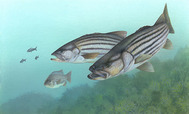
Hankering to fish, but don’t know how?
Parks staff at Brannan Island State Recreation Area are ready to teach you! Join them on Saturday, February 28 at 9am for their “Learn to Fish” program at the fishing pier.
The program includes an “engaging talk with interactive demonstrations” to get the group comfortable with fishing tackle. Attendees will learn about when and where they can fish in the California Delta and will also gain an understanding about how to fish sustainably and responsibly.
The group will then “hit the water for some free fishing time” with parks staff coaching them through the process.
Participation in the program is free, but admission to Brannan Island SRA is $10 per vehicle. (Hint: If you check out a California State Parks pass from your local library, you’ll get free admission to the park).
Loaner equipment, including fishing rods, is available to attendees on a first-come first-served basis. All participants ages 16 and older must have a valid fishing license from the California Department of Fish and Wildlife to participate. You can purchase a fishing license online at https://wildlife.ca.gov/Licensing/Online-Sales.
Contact Logan.Currin@parks.ca.gov with any questions.
|
What do Perry Mason and the Delta have in Common?
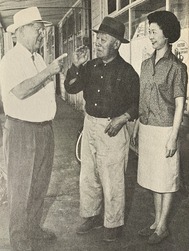
Stuart Walthall, chairman of the Locke Foundation, recently shared an informative and entertaining article about Erle Stanley Gardner and his connection to the California Delta.
Gardner was, famously, the author of the Perry Mason books. Within Gardner’s lifetime, these books became national best sellers and were adapted into radio, film, and a very successful television series.
However, according to Stuart Walthall, Gardner was also a “working rancher, an amateur geologist, photographer, archaeologist, engineer, astronomer and forensic criminologist.”
Later in life, says Walthall, “Gardner loved exploring the Sacramento-San Joaquin River Delta.” In the 1960s, he wrote three travel books about the summers he spent in the Delta: The World of Water, Gypsy Days on the Delta, and Drifting Down Delta. The books read more like journals, notes Walthall, “written in a conversational style, and filled with Gardner’s photographs.”
To learn more about Gardner’s houseboats, his many friends in the Delta and his impact on popular culture, read Stuart Walthall’s article here.
|
The Debut of the Gold Runner!
Amtrak has re-named its San Joaquin passenger train service, dubbing it the Gold Runner - signaling a “bold new era for intercity passenger rail and bus service in California’s heartland.”
The service has returned to its pre-pandemic schedule for the first time in over five years. The Gold Runner train line travels between Bakersfield, the San Joaquin Valley, and Sacramento, with stops in Modesto, Stockton, and Lodi.
The San Joaquin Regional Rail Commission is moving to expand its service - plans include the installation of new tracks, updated infrastructure, more frequent trains, and new stations in areas like Elk Grove and Natomas, with eventual expansion north to Plumas Lake, Marysville in Yuba County, and Chico in Butte County.
2026 Chinese New Year Celebration in Locke
|
Locke is celebrating the Year of the Horse on Saturday, February 14. The historic Delta town will feature a parade with a traditional lion dance, martial arts demonstrations, Chinese music and much more.
This vibrant, family-friendly event is held each year in the unique town, which was established in 1915 and is recognized as the “last remaining rural Chinatown” in the United States.
The event runs from 12-4pm. Admission and parking is free for all visitors.
For more information: (916) 776-1684; lockefoundation1915@gmail.com.
|
|
 |
How Hercules Got its Name
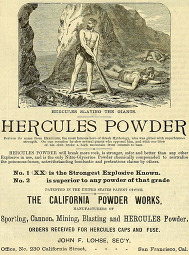
Ever wondered how Hercules got its name? The City of Hercules has your answer.
Hercules (in the Refugio Valley) was born as a company town for the California Powder Works, which was established in the area in 1881. The city’s name originated from "Hercules powder," a powerful dynamite patented (and produced) by the Powder Works.
Other fun facts, provided by the Hercules Historical Society:
- Before becoming the site of the California Powder Works, the Refugio Valley was a province of Pinole, "a 19th century agricultural hinterland of San Francisco.”
- The town of Pinole is among the earliest European-settled sites in California. With the acquisition of a Spanish land grant in 1823, the town began as the Martinez family ranch, “engaging in the California commerce of the time: trading cattle, hides, tallow and produce for finished goods in sail-powered oceanic trade.”
- The California Powder Works in Hercules was one of the largest explosives factories in the world. The explosive products produced there “were fundamental to the rise of large-scale industrial production that lifted living standards and transformed societies.”
|
Learn About the Anza Expedition
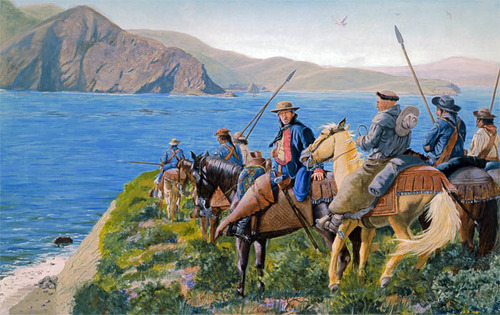
The Contra Costa County Historical Society (CCCHS) has a double celebration planned on January 24 – the commemoration of the 250th anniversary of the Juan Bautista de Anza Expedition and the 75th anniversary of CCCHS.
The annual membership meeting is open to the public and features Beverly Lane, a local museum curator, author, and California historian. Lane will present “Anza250,” a discussion of the “Anza colonizing expedition,” which arrived at its destination in San Francisco at the same time as the Declaration of Independence was being written.
Lunch and beverages will be served at the event, which also includes a raffle and book sales.
The event runs from 11:30am-2:30pm. Concord Museum & Event Center, 1928 Clayton Rd., Concord. RSVP's are required by January 16. Click here to RSVP and purchase tickets.
Wild Mushroom Advisory
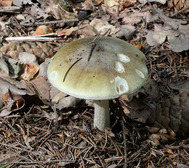
East Bay Regional Parks is warning outdoor lovers that, due to this year’s early rainy season, wild mushrooms are “popping up in great numbers” throughout local parks.
While mushrooms are an ecologically important part of the parklands and can look beautiful, some of them contain dangerous toxins.
The death cap (Amanita phalloides) (pictured above) and western destroying angel (Amanita ocreata) are two of the world’s most toxic mushrooms, and both can be found in regional parks during the rainy season. Both of these mushrooms can be lethal to humans and pets if consumed.
Collecting mushrooms in regional parks is not allowed.
|
A Salmon Cannery...in West Sacramento?
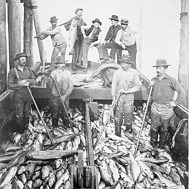
A floating cannery, in what is now West Sacramento, mined the Delta’s silvery bounty.
Stroll along the River Walk in West Sacramento, and you will notice a plaque commemorating California Registered Historical Landmark number 1040, north of the Tower Bridge.
The plaque marks the original site of the Hapgood-Hume Company’s salmon cannery, the first salmon cannery established on the West Coast.
Built on a barge moored to the bank in 1864, the cannery processed salmon caught on the river by cooking with a boiler, rather than salt packing, which was more common at the time.
At the time, salmon were so plentiful that it is recorded that cannery fish were caught mostly with gill nets and – believe it or not – spears.
By 1866 – less than three years later – the Humes moved their operation to the Columbia River in Oregon, as the salmon runs in the Sacramento River were already beginning to decline.
The decimation of the river fishery was swift: in 1881 there were 20 canneries in Northern California, six in 1885, and by the turn of the century, California ranked last in West Coast canned salmon production with only three canneries in operation - two on the Sacramento River and one on the Klamath. The state where salmon canning began saw its last cannery close in 1919.
Once the easy pickings in the river were depleted, commercial salmon fishermen concentrated their efforts on fish in the ocean heading home to spawn – a practice that continues today. Only a few West Coast canneries remain, located in Oregon, Washington and Alaska.
|
MUSEUMS
Wildlife Photography Exhibit at the Haggin
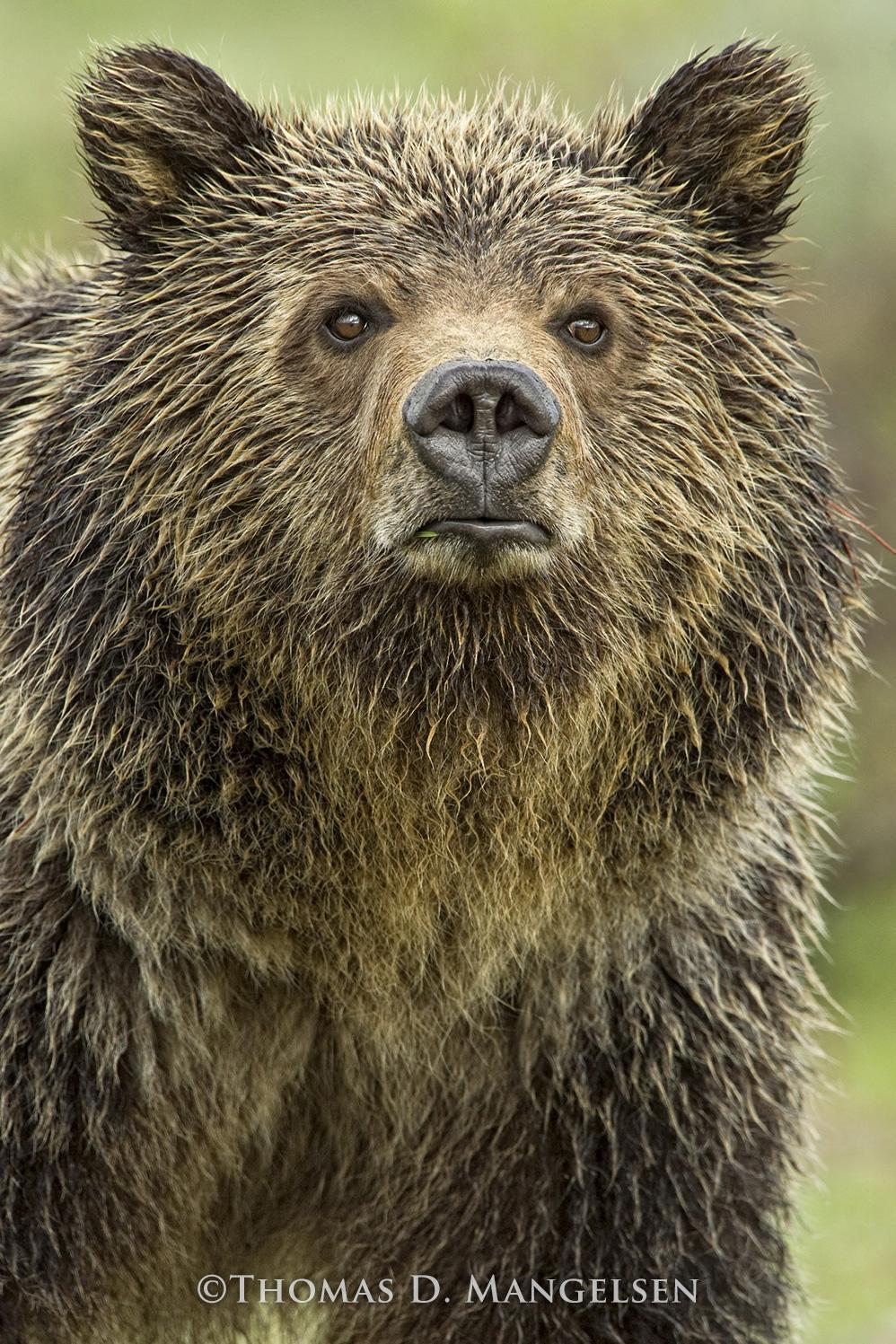
The Haggin Museum is currently featuring “A Life in the Wild,” a photography exhibition featuring 40 of Thomas D. Mangelsen’s most powerful images, capturing wildlife in their natural habitats.
The photographs were “taken over decades and under challenging conditions,” notes the museum. “Each photograph reflects Mangelsen’s deep understanding of animal behavior and his extraordinary patience.”
The exhibition includes iconic works like Polar Dance, which raises awareness about climate change, and Catch of the Day, a globally recognized image of a bear catching a salmon mid-air.
Exhibition runs through January 11. Visit the museum’s website for admission details.
GRANTS
$15,000 Grant for Emerging Native Artists
A grant specifically designed to “support Indigenous artists completing a project ready to be shared with the world” is accepting applications through January 9.
The $15.000 Emerging Native Arts Grant, awarded twice annually, provides flexible funding for artists to support exhibitions, studio expenses, research travel, materials, or dedicated creative time while completing a proposed project.
The Walker Youngbird Foundation is looking for work that “bridges tradition and innovation, honoring cultural roots while pushing creative boundaries.”
Apply Here
CLASSES AND WEBINARS
Los Medanos College Lecture Series: Lifelong Learning
The following courses will be held at the College's Brentwood Center:
• Mediterranean Pioneers: Spain, Portugal and Italy - 1-3pm, Jan 14. ID:100 Section 1. Session fee: $25
• ANZA 250 Sestercentennial Celebration: California Statehood and United States - 1-3pm, Jan 21, ID:100 Section 1. Session fee: $25
Enrollment at Los Medanos is not required, but you must register in advance at the Los Medanos College website.
EVENTS
An up-to-date Delta events calendar is now available on the VisitCADelta website. It includes community events throughout the legal Delta and the National Heritage Area.
Community events in the Delta (PDF map) or Delta National Heritage Area (PDF map) may be submitted for the calendar by using this form or emailing submit@delta.ca.gov. Please submit events at least one week in advance to ensure time for processing.
|