|
Turning winter season rain into future water supply
As California enters the winter rain season, the Newsom administration and local agencies are working to capture and store stormwater to prepare for dry summers and future droughts. Reservoirs currently have available capacity, including Lake Oroville at 54% full, allowing managers to handle floods while saving runoff. Recent storms, especially in Los Angeles, have already added billions of gallons of water to existing supplies through stormwater-capture projects. The State is expanding water storage and groundwater recharge by partnering with local agencies to divert floodwaters, prepare land, and deploy equipment to reduce flood risk and replenish aquifers. Read the governor’s December 23 press release to learn more about how these efforts support California’s water strategy.
|
Fresno farmers can get paid to save groundwater
Fresno Irrigation District (FID) growers can apply for federal funding to improve irrigation systems and support on-farm groundwater recharge through two Natural Resources Conservation Service programs: the Groundwater Recharge Pilot Program and the EQIP-WaterSMART Initiative. Both programs offer financial incentives for recharge projects, irrigation efficiency upgrades, and conservation practices, with funding prioritized for items such as well meters and soil moisture sensors. FID expects approximately $1.4 million in this funding round. Read more on the SJV Water website or visit the FID Grant Opportunities webpage for details and to apply. The application deadline is Thursday, Jan. 15. Applications received in winter 2026 are for recharge to be completed in fall 2026–winter 2027.
|
Watershed Studies help inform the next CVFPP update
Earlier this month, DWR released the San Joaquin Basin Flood-MAR Watershed Studies (Watershed Studies) to address the region's escalating cycle of severe flooding and groundwater depletion. Central to this effort is an innovative strategy called FIRO-MAR (forecast-informed reservoir operations with managed aquifer recharge). FIRO-MAR uses improved weather forecasting to guide how reservoirs store and release water during flood events and has the potential to greatly diminish the size and frequency of flood flows while diverting substantial volumes of water to recharge. The Watershed Studies provide new insights that will help inform the State’s long-term flood management strategy. In coordination with the Watershed Studies, the technical analysis for the 2027 update of the Central Valley Flood Protection Plan (CVFPP) also will be incorporating FIRO-MAR to optimize water storage and flood management. The CVFPP serves as California's strategic blueprint to improve flood risk management in the Central Valley and is updated every five years.
|
Operations are underway at the Big Notch Project
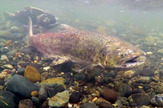
Operations have officially begun for the Big Notch Project, one of the largest floodplain salmon-rearing habitat projects in California history. The Big Notch Project is built into the Fremont Weir, which is part of the Fremont Weir State Wildlife Area in Yolo County. The $58 million project is an example of state-of-the-art infrastructure being incorporated into infrastructure from the early 1900s. Construction included the removal of a section of the Fremont Weir, excavation of 180,000 cubic yards of material to carve new channels for the salmon, installation of three gates, a pedestrian bridge, and more. The Big Notch Project is one of the key actions highlighted in Governor Newsom’s California Salmon Strategy for a Hotter, Drier Future, which aims to restore populations of salmon as the state experiences increased temperatures as a result of a changing climate.
|
CDFW gives $2.5M for improvements, combating golden mussels
The California Department of Fish and Wildlife (CDFW) has awarded $2.5 million in grants for five projects aimed at enhancing public recreational boating access and combating the spread of invasive golden mussels in the state's waterways. These initiatives seek to improve boating facilities, safeguard aquatic ecosystems, and promote stewardship among waterway users. A key focus is on controlling the invasive golden mussel, discovered in the Sacramento-San Joaquin Delta in October 2024. Approximately $1.3 million from these grants is dedicated to purchasing decontamination units, establishing high-pressure wash stations, improving boat ramps, and training staff in inspection and decontamination procedures to prevent further spread. These investments aim to protect waterways, improve public boating access, and expand recreational opportunities statewide.
|
To subscribe to California Water Plan eNews, visit the DWR email subscription page and select the “California Water Plan eNews” option.
Subscribe to the Save Our Water newsletter.
|
|
|
|