|
CNRA Secretary Speaker Series: Live from COP 30 in Brazil
The California Natural Resources Agency (CNRA) Secretary Speaker Series happens today at noon. The hour-long webinar will stream live from the United Nations (UN) climate change conference in Brazil. Now in its 30th year, the annual Conference of the Parties (COP 30) is the largest global UN-hosted event for discussions on climate change. This year’s summit focuses on the consequences of breaching the 1.5-degree Celsius threshold that experts warn is a turning point for irreversible climate damage on the world. CNRA Secretary Wade Crowfoot and CNRA Deputy Director for Climate Change Amanda Hansen are at the event and will offer updates and analysis from the climate summit and report on progress CNRA has made in combatting climate change. Registration is required for this Secretary Speaker Series online event.
|
Multibenefit land repurposing for water security
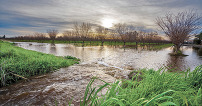
A new peer-reviewed article in the online journal Frontiers in Water advocates for multibenefit land repurposing (MLR) as an innovative strategy to address water scarcity, contrasting it with the negative impacts of simply leaving unplanted land barren. MLR is a proactive alternative that strategically incorporates multiple benefits from the start, supporting a mosaic of productive agriculture, healthy communities, and thriving habitat. The article, Enhancing water security and landscape resilience through multibenefit land repurposing, spotlights California's Multibenefit Land Repurposing Program (MLRP) and the San Joaquin Valley as a primary example. MLRP repurposes agricultural lands into uses that deliver multiple benefits, such as habitat restoration, groundwater recharge, and open space creation. The article concludes that lessons from California's ongoing experimentation can be applied to other agricultural areas worldwide facing similar water scarcity issues.
|
State Water Board launches new webpage and dashboard
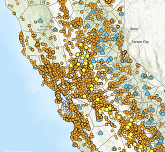
The State Water Resources Control Board's (State Water Board’s) Groundwater Ambient Monitoring and Assessment (GAMA) Program has launched a new webpage titled "Effects of Recharge on Groundwater Quality" and it includes a new Aquifer Recharge and Groundwater Quality (ARGQ) Dashboard. The new webpage features sections such as the Data Visualization Dashboard, groundwater quality case studies, and related recharge projects. The new ARGQ Dashboard is a tool developed to help individuals and agencies visualize potential connections between water quality and groundwater recharge events. The dashboard allows users to view charts of water quality results from wells alongside historic precipitation and groundwater elevation data. These new additions aim to improve understanding of groundwater recharge in California.
|
Los Angeles' new strategy: Coordination among agencies
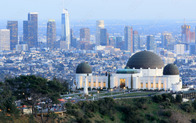
In the wake of the catastrophic Los Angeles firestorms of January 2025, and in partnership with the Los Angeles Department of Water and Power, the UCLA Luskin Center for Innovation has released a report identifying key areas for strengthening water and power infrastructure against intensifying climate-related disasters and fire risks. Innovation Opportunities for a Resilient L.A. emphasizes that a single-strategy approach is insufficient for reducing risks as emergencies intensify, driven by climate change. Instead, the report contends, Los Angeles must pursue a mix of approaches, from upgrading infrastructure to improving coordination across agencies. Learn more by reading the 59-page report online or downloading the pdf.
|
Earth's vital signs are flashing red
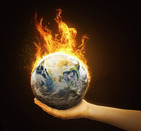
A sobering new journal article published in BioScience, a monthly peer-reviewed online scientific journal, warns that the Earth’s climate is in a critical state and that the window to prevent the worst outcomes is rapidly closing. The 2025 State of the Climate Report: A Planet on the Brink shows evidence of accelerated warming and documents alarming changes in Earth’s vital signs, such as record land temperatures, record ice mass lows, diminishing water availability, and record-level atmospheric cardon dioxide levels. The article also examines recent extreme weather disasters and discusses the physical and social tipping points associated with these crises. Despite the apocalyptic forecast, the article offers climate change mitigation strategies that can drive rapid improvements, from sustained actions that can shift public norms to technical approaches that can transform governance and polices. Learn more by reading the article on BioScience or an overview of the article on SFGate.
|
To subscribe to California Water Plan eNews, visit the DWR email subscription page and select the “California Water Plan eNews” option.
Subscribe to the Save Our Water newsletter.
|
|
|
|