California Artificial Reef Program Plan
Technical Writing Group Gets to Work
Building off the momentum of the Tribal and open listening sessions held at the beginning of the year, California Sea Grant (CASG) has convened the Technical Writing Group (TWG) in partnership with the California Department of Fish and Wildlife (CDFW) and the Ocean Protection Council (OPC) to support the development of the California Artificial Reef Program (CARP) Plan. The TWG is made up of twelve scientific and technical experts that have knowledge and expertise in biology, ecology, oceanography, human uses, tribal perspectives, fishing, fisheries, engineering, ecosystem services, habitat valuation, mitigation, resources management and monitoring. The experts on the TWG represent a wide range of affiliations including government agencies, California Native American Tribes, research institutes, and universities.
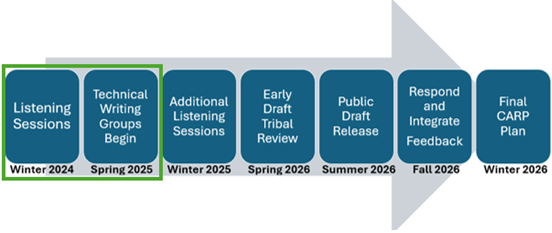
The TWG began its work on June 12, 2025, and will continue working through 2026 to compile the best available science and develop guidance to inform the development of future California artificial reef projects. This includes addressing topic areas related to defining terminology; performance of existing projects; design, materials and siting; connectivity; habitat conversion; mitigation; potential impacts, risks, and benefits; and monitoring recommendations for artificial reefs. The TWG’s initial efforts include
- Defining what type of project is an artificial reef in California.
- Considering the role of biological productivity and biodiversity in artificial reef development.
- Defining the types of ecosystem services artificial reefs may provide (e.g. shoreline protection, recreational opportunities, carbon sequestration, cultural uses, and research and education).
- Developing a short list of artificial reefs to include as case studies. Currently the TWG is considering including:
- CDFW Historical Fishing Artificial Reefs
- Wreck Alley and other CA Shipwrecks
- Wheeler North/San Onofre Nuclear Generation Station (SONGS) Artificial Reef
- Palos Verdes Restoration Artificial Reef
- Giant Marsh Living Shoreline Project
The goal is to produce a CARP Plan rooted in the best available science that is accessible and useful to a broad range of end users. The CARP Plan Project Team anticipates hosting listening sessions at the beginning of 2026 to report out on progress to date and present summaries of draft content. Interested parties will have the opportunity to provide feedback.
Consultation is available for California Native American Tribes on the CARP Plan at any time by contacting Tribal.Liaison@wildlife.ca.gov.
We look forward to your continued participation in the CARP Plan development. Please contact ArtificialReefs@wildlife.ca.gov with any questions or comments. You can also always get the latest updates at the CARP web page.
|