|
Groundwater Accounting Platform showcase, Sept. 9, at CNRA
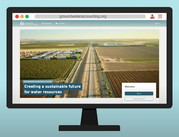
On Tuesday, Sept. 9, the California Water Data Consortium will host a half-day event to showcase the Groundwater Accounting Platform (Platform). The Platform enables water managers, landowners, and water users to track groundwater availability and usage with user-friendly dashboards and workflows. Learn more on the Platform’s webpage and through this video walk-through. The event will be held at the California Natural Resources Agency (CNRA) headquarters building in Sacramento. Doors open at noon. The event runs from 1 to 5 p.m. Registration is required.
|
SDA dashboards for selected watersheds now available
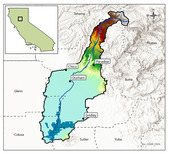
The California State Water Resources Control Board’s Supply and Demand Assessment (SDA) Unit has published new interactive surface water demand visualization dashboards for Butte Creek, Gualala River, Mattole River, Napa River, Navarro River, Putah Creek, Russian River, Salmon Creek (Sonoma County), and Tomales-Drakes Bay. The SDA Unit was established in 2022 in response to the challenges faced during the 2020–2023 drought, which highlighted the need for improved tools to manage water resources. The SDA Unit’s primary functions include developing hydrologic models to accurately assess the availability of surface water; refining water use data, using information from water right holders to understand demand during different water years; and enhancing water allocation tools to analyze how various water use scenarios impact the overall water supply.
|
TERC releases annual “Tahoe: State of the Lake Report”
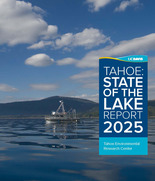
The UC Davis Tahoe Environmental Research Center (TERC) recently released its Tahoe: State of the Lake Report, an annual update on the ecological health of Lake Tahoe. The 2025 report uses data from 2024 and compares it to decades of long-term records, offering a historical perspective on the lake's condition. Not surprisingly, the report finds that Lake Tahoe is experiencing warmer and rainier conditions and less snowfall. Since 1911, the number of days below freezing has decreased by 27. Snow now accounts for 30–40% of total annual precipitation, a notable drop from 50% recorded in 1910. The report also speaks to the water clarity of Lake Tahoe and looks at periphyton, or attached algae, which can make shoreline rocks slimy and green. The full report is available for download at the TERC website.
|
SAFER Advisory Group application deadline is this weekend

Those interested in filling one of the 10 open seats for the SAFER Advisory Group’s 2026–2027 term have until 11:59 p.m., Sunday, Aug. 31, to apply. The California State Water Resources Control Board’s (State Water Board’s) Safe and Affordable Funding for Equity and Resilience (SAFER) drinking water program helps to ensure that Californians who lack safe and affordable drinking water receive it as quickly as possible. The SAFER Advisory Group is a consultative body that provides recommendations to the State Water Board on the SAFER Fund Expenditure Plan and other key analyses and policies as needed. This group does not make decisions or come to consensus on discussion topics. Applicants will be notified by winter 2025 if appointed. Additional tools and resources on how to apply are available on the SAFER Advisory Group webpage.
|
Journal article outlines the benefits of integrated project funding
Climate and ecological challenges are deeply connected, but current funding models often hinder solutions that address both. Although projects that offer multiple benefits — such as floodplains that manage water and restore ecosystems — can be highly effective, most funding is “siloed” and geared toward single-purpose projects, which doesn't align with the integrated goals of multibenefit projects. A recently published journal article by UC Berkeley Law, "Siloed funding of multibenefit projects highlights the need for funding programs that integrate cobenefits," examined the Pajaro River Flood Risk Management Project, underway near Watsonville; it found that even with funding limitations, local leaders were able to integrate multiple benefits into a single-purpose project. The article advises that agencies and policymakers update funding programs to better support these multibenefit projects. The full article is available on the Frontier’s website. A shorter version of the article is also available on LegalPlanet, an independent, academic blog.
|
To subscribe to California Water Plan eNews, visit the DWR email subscription page and select the “California Water Plan eNews” option.
Subscribe to the Save Our Water newsletter.
|
|
|
|