|
Rivers and Mountains Conservancy - October, 2023 |
|
A Message from RMC's Executive Officer
Dear Friends,
One of the perks of our roles at the Rivers and Mountains Conservancy and Watershed Conservation Authority is our office’s location at Azusa River Wilderness Park, within walking distance of the Angeles National Forest. Performing our duties with towering mountain backdrops through our windows to the soundtrack of a flowing river keeps the importance of our mission front of mind. Sadly, this past Labor Day weekend we were forced to close Azusa River Wilderness Park to the public. In the weekends leading up to the holiday, we received a multitude of complaints and reports of vandalism, excessive littering, graffiti, and other manmade nuisances that cause significant harm to natural processes and distract from the majesty of this protected environment. The decision to close the park was not easy to make, but as the leader of agencies that promote both conservation and low-impact recreational access, I regularly must find the delicate balance between the two.
We can find a better balance and ensure sustainable public interaction if we practice and promote “Leave No Trace” principles on a larger scale and on a regular basis. The U.S. Fish and Wildlife Service’s national Leave No Trace educational campaign gives us 7 well-established principles to help us get there. These include planning and preparing for your visit in advance, and in small groups if possible. Travelling and camping on durable surfaces, the best campsites are found and not made. Disposing of waste properly, packing it in and packing it out. Leaving what you find, looking at but not touching precious cultural artifacts or structures. Minimizing the impacts of campfires, as a wise bear once said “Only you can prevent forest fires.” Being considerate of other visitors, protecting the experience for future guests. Finally, respecting wildlife as a visitor to their domain.
Ensuring a harmonious relationship with our natural spaces is a collective effort. I hope that you will do your part and encourage your companions to do the same.
See you on the trails,
-Mark
|
|
Recognizing Hispanic Heritage Month: Ruben Salazar Park
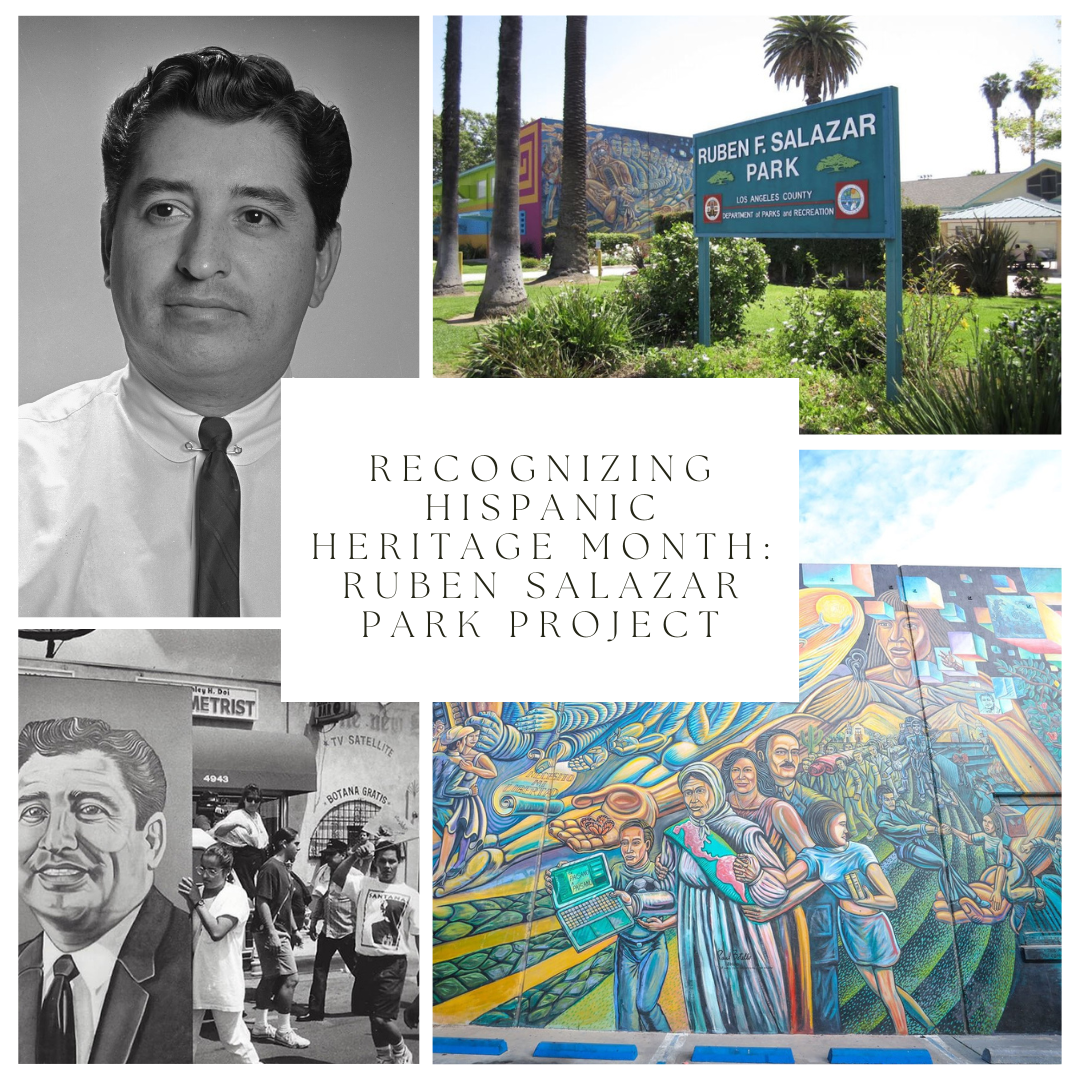 The Ruben Salazar Park Water Conservation Project is an LA County Department of Park and Recreation led redevelopment project, funded by the RMC. Located near Whittier Boulevard and Indiana Street in the heart of East Los Angeles, Salazar Park is a heavily used recreation space in one of the densest park poor communities in the country. The water conservation project will create a drought tolerant demonstration garden in the center of the park to serve as a focal point for the community. The project includes amenities such as walking paths, educational signage, benches and tables, shade trees and permeable pavement. These amenities will serve a very active senior community that uses the park as a daily social space, as well as a popular baseball league and sports program.
The project will relocate a basketball court and replace existing parking lots with permeable pavements and drought tolerant landscaping. The park often has drainage and flooding issues during the rainy season (hence its original name Laguna Park), which underscores the need for water capture best management practices provided by this project. Because of the constant use of the park and 2 parking lots by the community, construction will be arranged to minimally impact park activities. The project is currently in the Preconstruction phase, having been delayed by the COVID-19 pandemic.
The park is named after famed civil rights activist and journalist Ruben Salazar. During the 1960’s Salazar became the first mainstream journalist to cover the American Chicano movement with depth, with a particular focus on the East Los Angeles community. As reporter for the Los Angeles Times, Salazar was critical of the LAPD’s mistreatment of Chicanos and their lack of political representation on the city council. His outspoken support for the movement as a Mexican-American made him a target of the FBI, who maintained an internal file on him.
On the night of August 29th 1970 an estimated 20 to 30 thousand demonstrators participated in the National Chicano Moratorium Against the Vietnam War, near East Los Angeles’s Laguna (now Salazar) Park. What had started as a peaceful march escalated into violence as 1,500 police officers arrived at the scene. Seeking respite from the chaos, Ruben Salazar entered a nearby bar to collect his thoughts. As he sat at down at the bar, a tear gas canister fired by a Sheriff’s Deputy stuck him in the head, killing him instantly. No one was ever criminally charged for Ruben Salazar’s death.
Laguna Park was eventually renamed Ruben Salazar Park to pay homage to the fallen journalist and civil rights icon. We at the RMC hope that the upgrades and improvements to the park funded by this grant will honor his legacy and provide years of enjoyment for the community that he covered so passionately.
|
|
RMC's Headquarters, Haunted?
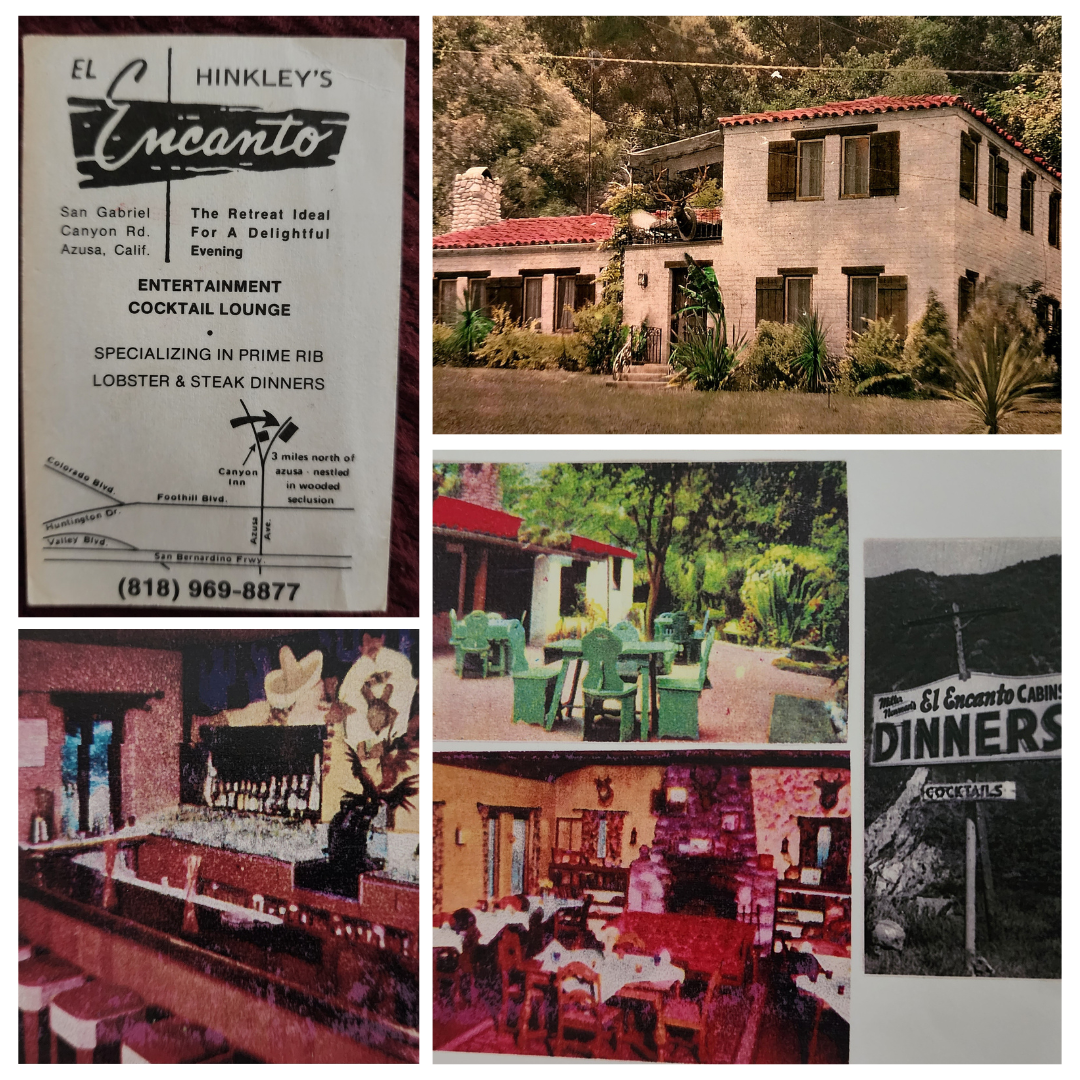 In 1924, Henrietta and Miller Newman built what would become our “El Encanto” headquarters in Azusa Canyon, as their family home and “Camp One” for the US Forest Service. Miller patrolled San Gabriel Canyon as a Forest Ranger for decades. Henrietta was an amazing cook, she hosted dinner parties at the location in the early 1930’s that were so popular, she converted the home into El Encanto Restaurant in 1934. Their living room became its dining room, and their dining room became the bar. Famous for its corn fritters, fried chicken, and salad dressing, it quickly became successful and one of the best restaurants in Los Angeles County. Miller passed away in 1952. With the help of her family members Henrietta continued operations for a few more years before selling the buisness to Bill and Donna Hinkley in 1964, who continued the tradition of great food and service.
In the Summer of 1968, the “Canyon Inn Fire” burned almost all of the building’s surrounding hillsides. On January 19, 1969 torrential rains doused the charred landscape around El Encanto and at 2:30 in the morning a mudslide rushed violently though the back of the building and through its front windows. The powerful and overflowing river adjacent to the restaurant swept away the whole parking lot with it, right up to El Encanto’s doors. The next morning, a helicopter rescued the Hinkley’s, who had been stranded in the building’s second story. It took 21 months for the Hinkley’s to clean up the damage, re-opening to the public on October 1st, 1970.
Mrs. Henrietta Newman, whose famous corn fritters attracted hungry patrons from across the county for decades, passed away in 1970, leaving behind countless happy memories for her loved ones. It has been long rumored that her spiritual presence is still felt throughout El Encanto, which remained open until the early 2000’s and eventually purchased by the WCA as office space in 2006. Watercooler whispers of supernatural occurrences in the building have swirled among RMC and WCA staff members ever since, particularly among new hires. Lucky for them, the presence allegedly felt there is friendly, and a culinary master. It’s been said that staff working alone on projects late into the night, particularly rainy ones, might catch the smell of fresh baked corn fritters emanating from what once was the kitchen. El Encanto may not be haunted, but it’s certainly enchanted.
Happy Halloween!
|
|
Welcome Faby Sarwono & Nola Eaglin-Talmage!
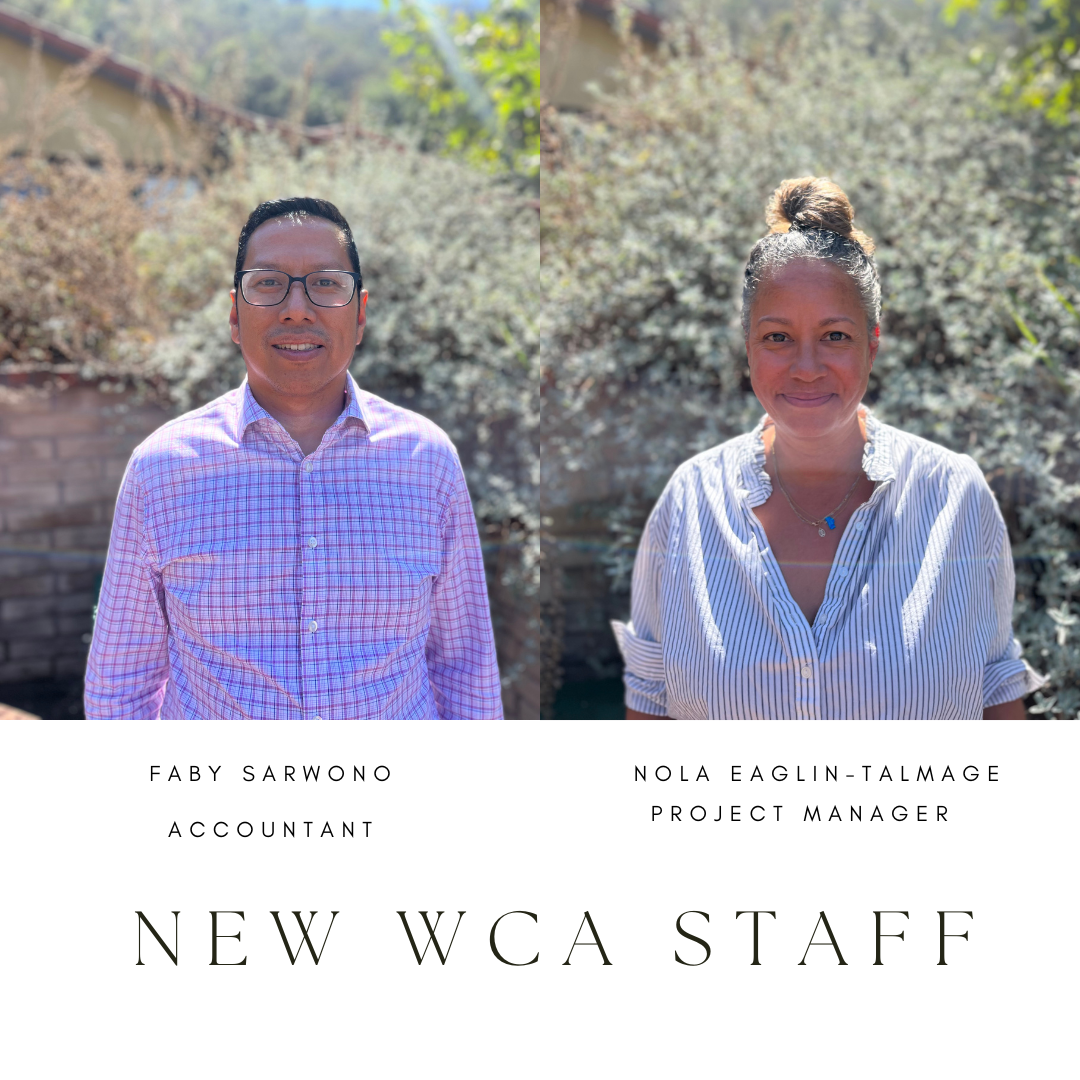 The WCA is proud to announce the hiring of Project Manager Nola Eaglin-Talmage and Accountant Faby Sarwono.
Nola Eaglin-Talmage is a Landscape Designer and graduate of the UCLAx Landscape Architecture Program. She’s also a Founding Principal at Field Sound — a Los Angeles-based landscape design studio. She is excited to bring her experience in construction document support, knowledge of Best Management Practices and her passion for sustainable environmental design to WCA. Nola is a mother of 2 teenagers and has lived in Los Angeles for 25 years. In her previous career she worked in commercial photography as a technical assistant, producer, and location scout. Her advocacy work includes serving as the Membership Chair for the Los Angeles Conservancy Modern Committee for several years. Most recently she’s engaged as a student outreach volunteer with YO! 4 LA (Youth Outreach for Landscape Architecture in Los Angeles), a committee of the Southern California ASLA Chapter, and is a Board Member of NAMLA (National Association of Minority Landscape Architects).
As Faby Sarwono begins his journey with the WCA, he is excited to merge his accounting experience from both the private and public sectors with his passion for the outdoors. This passion aligns perfectly with the WCA’s mission, and he is enthusiastic about contributing to the organization’s environmental efforts. By working closely with project managers and fiscal manager, Faby will ensure accurate and efficient budgets for WCA projects.
|
|
LCWA Receives Nearly $32 Million from the
State Coastal Conservancy
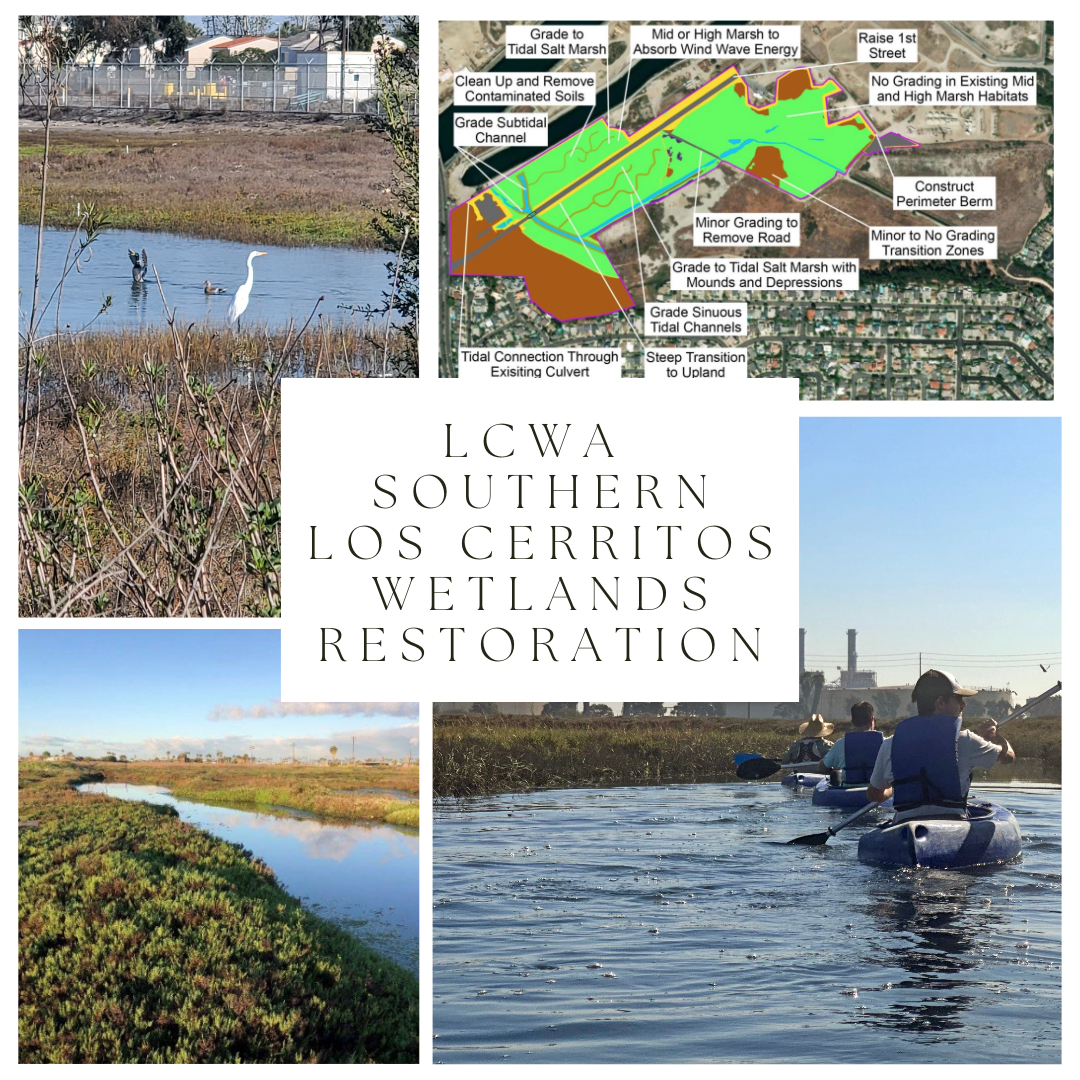 On September 14th the California State Coastal Conservancy Board approved a $31,852,000 grant to the Los Cerritos Wetlands Authority (LCWA) for its Southern Los Cerritos Wetlands Restoration Project. After more than a decade of stakeholder engagement and planning, the LCWA will move forward with the Phase 1 restoration of 54 acres of the 103.5-acre property near the mouth of the San Gabriel River, straddling Los Angeles and Orange Counties. The grant will fund the restoration of degraded uplands and tidal salt marsh, remediation of contaminated soils, enhancement of existing habitat areas, management of the wetlands, as well as planning and permitting.
Historically, public access to the wetlands has been limited to guided stewardship program events held twice monthly. The improvements funded by this grant will allow for public access with the creation of trails, interpretive signage, and a formal gathering site which could include shade, seating, and equipment storage.
In 2021 the LCWA facilitated the creation of a Tribal Advisory Group for the project, consisting of representatives from tribes traditionally affiliated with the site. With their input, Phase 1 improvements will include tribal specific access features and allow for the protection of cultural resources and the reconnection of tribes to the land.
“This grant will allow us to expand the public’s access to green space while restoring and preserving critical wildlife habitat that has deteriorated for far too long. When completed, these enhancements will broaden opportunities for public education on the ecological importance of the wetlands and their cultural significance.” stated Mark Stanley, LCWA Executive Officer.
“The RMC worked hard to champion this project I’m thrilled that we’ll soon see more restoration and public access to the Los Cerritos Wetlands.” stated Assemblymember Josh Lowenthal (D-Long Beach).
“This is a major win for the Los Cerritos Wetlands and I am proud to be involved in taking a major step to restore these wetlands for our future generations”, said Long Beach Councilmember Kristina Duggan.
|
|
  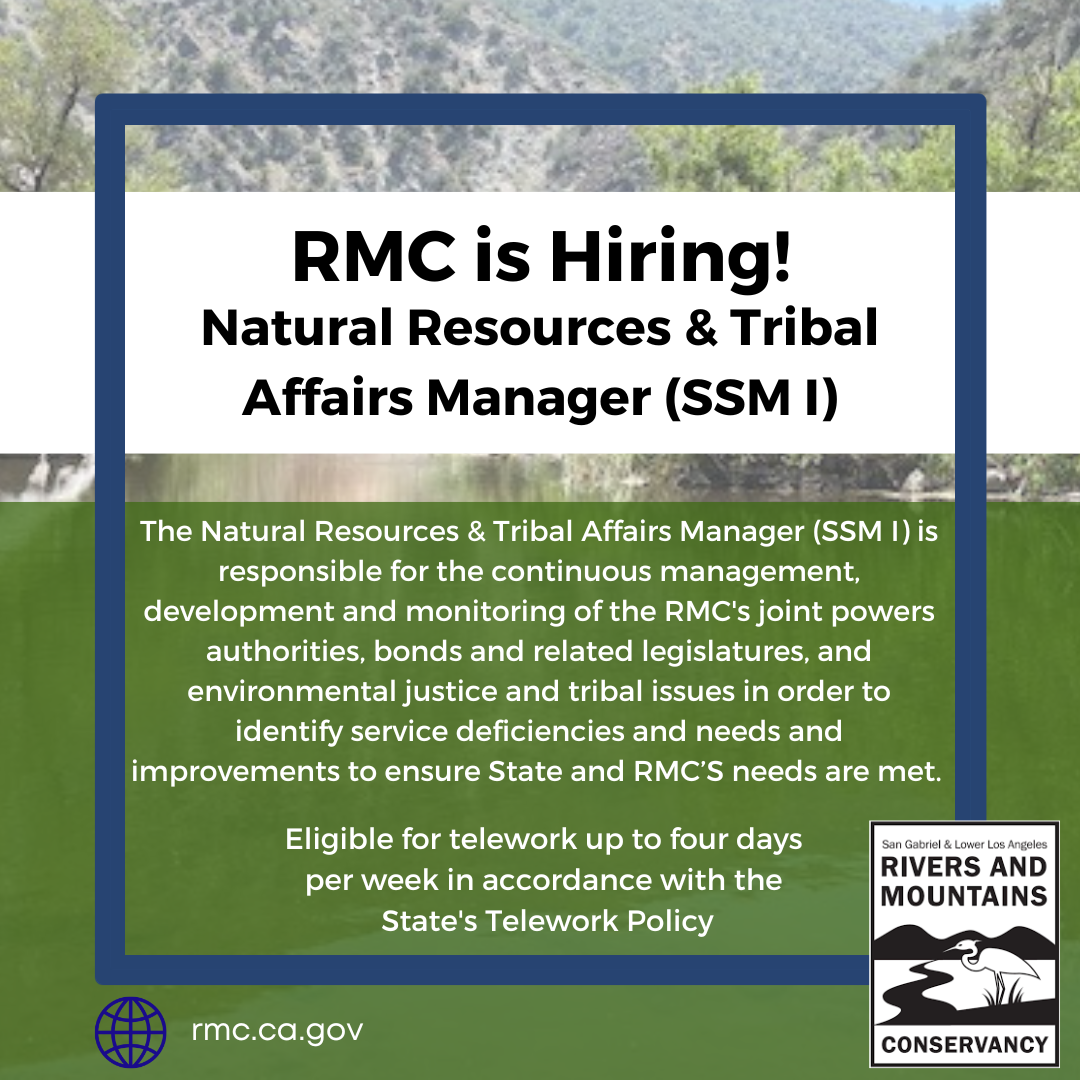 For more information on the WCA Project Manager Position, visit the job posting here.
For more information or to apply for the RMC CPDA II position, visit CalCareers here.
For more information or to apply for the RMC SSM I position, visit CalCareers here.
|
|
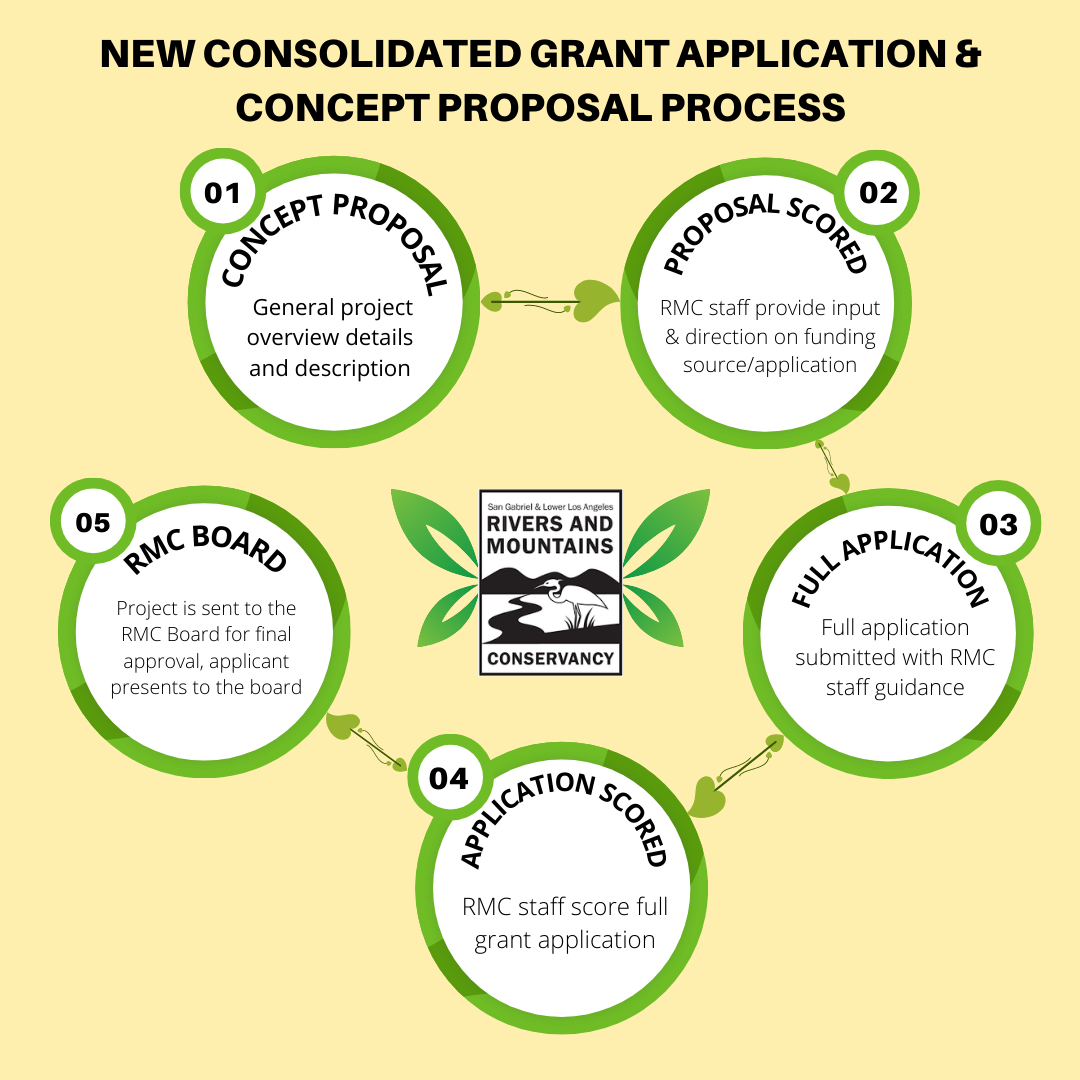 As of July 25th, the RMC has adopted a new grant application and concept proposal process for all potential grantees. This streamlined process will allow us to better match applications with funding sources, and better serve our stakeholders.
The process is as follows: Applicants submit a Concept Proposal Grant Application Form. The concept proposal will be reviewed and scored by RMC staff. If the proposal is not approved, the applicant will be notified. If feasible, RMC staff will provide technical assistance to remedy denial reasons and encourage the grantee to submit a revised concept proposal.
If approved, the applicant will be invited to complete a full grant application form for the funding source that best fits the project’s components. If the full grant application is not approved, the applicant will be notified. If feasible, RMC staff will provide technical assistance to remedy denial reasons and encourage the grantee to submit a revised grant application.
If the full application is approved, the applicant will be notified and the project will be brought before the RMC board. Applicants will have the opportunity to give a brief presentation on their project to the board. For more information please visit our website, or email info@rmc.ca.gov.
|
|
|
|
|