Monitoring Monday – Quality Assurance and Quality Control
Join us Mondays as the Clean Water Team shares information and resources on watersheds and water quality monitoring. This Monday is about Quality Assurance and Quality Control.
You’ve likely heard of Quality Assurance (QA) and Quality Control (QC) but you may not be sure what these terms mean or why they are important.
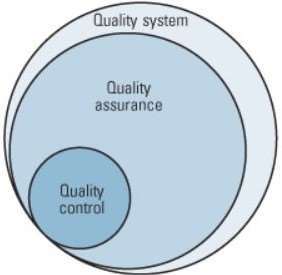
Quality assurance and quality control are components of a quality system. A quality system is a structured system that describes the policies and procedures for ensuring that work processes, products, or services satisfy the user's specifications and expectations. A quality system is how an organization manages its data quality aspects. One of the most basic goals of implementing a quality system is to produce usable data. That is data which can be used to answer the program’s monitoring questions.
|

· What is Quality Assurance (QA)?
Quality Assurance (QA) occurs before ever stepping out into the field. QA consists of an integrated system of management activities that involves planning, implementation, documentation, assessment, reporting, and quality improvement to ensure that a process, item, or service is of the type and quality required for the project needs.
A QA plan should describe how you will undertake and document all of a programs’ project related procedures such as volunteer training, study design, data management and analysis, and specific quality control measures.
· What is Quality Control (QC)?
Quality Control (QC) is an overall system of technical activities and occurs during data collection. QC measures the attributes and performance of a process (i.e. standard procedure), item (i.e. water quality monitoring sensor), or service (i.e. laboratory contract) against defined standards to verify that they meet the stated requirements established by the monitoring program.
Examples of quality control components are field blanks, field duplicates, lab duplicates, spike samples, calibration blanks, calibration standards and also that collected samples are representative of the true condition of the area being sampled.
|
You’ve also likely heard the term data of known quality. This refers to a data set which has metadata (data that provides information about other data) that describes the data's quality. This metadata consists of the documentation of a program’s quality system when a particular data set was produced and follows the implementation of its Quality Assurance Project Plans (QAPP).
QAPPs are documents that provide detailed information on procedures for data collection and analyses, and other components of a specific monitoring project. If your project is funded through EPA, a QAPP is required and must be approved by them. All monitoring programs funded by the Water Boards are also required to have a QAPP which must be approved before monitoring activities can occur. But, even if it’s not required, a QAPP is beneficial to develop as it provides each program and its volunteers with detailed written information that outlines procedures to obtain reliable data. A QAPP also enables others to use your data when it is shared.
The QAPP often contains detailed information concerning project management, measurement/data acquisition, assessment and oversight, and data validation and usability that must be implemented for a specific project. QAPPs are usually developed in conjunction with EPA, a state agency, and/or quality assurance experts such as a Technical Advisory Committee (TAC).
This differs from a Quality Management Plan (QMP) which describes an organization's quality program (which may span many different projects), that is, its management structure for quality. While citizen monitoring programs and community science projects typically only use QAPPs, those programs can benefit from reviewing and applying certain aspects of QMPs from programs and projects doing similar work or monitoring in similar areas.
An extremely important aspect of having a QAPP and metadata relating to your water quality monitoring data is when that data is shared. An external investigator or user of that data should be able to evaluate the metadata to ascertain whether the data is of sufficient quality for their own uses and agency environmental decisions. This exercise in determining data comparability is defined as the measure of confidence that one dataset can be compared to another and can be combined for a decision(s) to be made. This exercise can only be done with your monitoring program’s data if it has a QAPP, and documentation of its QA/QC implementation.
|
RESOURCES & REFERENCES
EPA Quality Program
EPA is committed to the collection, production, evaluation, and use of environmental information of known and documented quality. Incorporating quality assurance improves EPA’s policy-making and analysis and helps drive reliable, cost-effective, and legally defensible decisions all while preventing unacceptable environmental and human health risks to individuals and communities. https://www.epa.gov/quality
- EPA - Guidance for Data Quality Assessment
Demonstrates how to use data quality assessment in evaluating environmental data sets and illustrates how to apply some graphical and statistical tools for performing DQA. https://www.epa.gov/quality/guidance-data-quality-assessment
- Quality Assurance, Quality Control, and Quality Assessment Measures
Water: Monitoring & Assessment https://archive.epa.gov/water/archive/web/html/132.html
- Data Validation and Laboratory Quality Assurance in EPA's Pacific Southwest (Region 9)
EPA's Pacific Southwest (Region 9) implements and enforces federal environmental laws in Arizona, California, Hawaii, Nevada, the Pacific Islands, and 148 tribal nations. https://www.epa.gov/quality/r9-data-validation-lab-qa
- The Volunteer Monitor's Guide to Quality Assurance Project Plans
Developing a QAPP is a dynamic, interactive process that should ideally involve quality assurance experts, potential data users, and members of the volunteer monitoring project team. It is not an easy process. This document is designed to encourage and facilitate the development of volunteer QAPPs by clearly presenting explanations and examples. Readers are urged to consult, as well, the additional resources listed in the appendices to this document, and to contact their state or U.S. Environmental Protection Agency (EPA) Regional quality assurance staff for specific information or guidance on their projects. https://www.epa.gov/sites/default/files/2015-06/documents/vol_qapp.pdf
- Quality Assurance Handbook and Toolkit for Participatory Science Projects
Quality Assurance Handbook and Guidance Documents for Citizen Science Projects https://www.epa.gov/participatory-science/quality-assurance-handbook-and-toolkit-participatory-science-projects - guide
USGS - Manage Quality
Data-quality management is a process where protocols and methods are employed to ensure that data are properly collected, handled, processed, used, and maintained at all stages of the scientific data lifecycle. https://www.usgs.gov/data-management/manage-quality
Water Board's Quality Assurance/Quality Control
The State Water Resources Control Board has prepared documents that are used in our Quality System. They consist of the Quality Management Plan (QMP) which is the overall Quality Assurance (QA) plan for the entire State Water Resources Control Board; Quality Assurance Program Plans (QAPrP), e.g. SWAMP's QA Program Plan; and numerous Quality Assurance Project Plans (QAPP). https://www.waterboards.ca.gov/water_issues/programs/quality_assurance/
SWAMP IQ
The SWAMP (Surface Water Ambient Monitoring Program) Information Management and Quality Assurance Center (SWAMP IQ) is tasked with assisting ambient monitoring projects and programs throughout the state. We offer resources that support each stage of water quality monitoring, from sample collection to data entry, as well as providing quality assurance review, verification, and data storage. SWAMP IQ staff strives to promote question-driven monitoring, and to ensure the highest quality data is used to evaluate the health of California’s water bodies. https://www.waterboards.ca.gov/water_issues/programs/swamp/swamp_iq/
- SWAMP - Quality Assurance
A key component of the Surface Water Ambient Monitoring Program (SWAMP) is the development, implementation, and maintenance of the monitoring infrastructure (e.g., indicators, methods, quality assurance/quality control [QA/QC], and data management) necessary to support a robust monitoring program while also fostering data comparability and collaboration with monitoring partners. This page provides access to those tools. https://www.waterboards.ca.gov/water_issues/programs/swamp/quality_assurance.html
Clean Water Team - CWT - Quality Assurance/Quality Control (QA/QC)
The Clean Water Team has QA/QC resources and assistance available in its Technical Support Section
Some of the most useful are items for QA/QC are contained within:
River Network - Quality Control and Quality Assurance
If you want your monitoring efforts to be successful, you should have a Quality Assurance Project Plan (QAPP). A QAPP includes your monitoring plan, standard operating procedures (SOPs) for your monitoring methods, and all quality assurance measures to ensure proper data collection. https://www.rivernetwork.org/our-impact/how-we-help/providing-science-support-2/science-and-technical-resources-portal/monitoring-data-production/quality-control-and-quality-assurance/
|