|
Monitoring Monday – Groundwater Awareness
Join us Mondays as the Clean Water Team shares information and resources on watersheds and water quality monitoring. Let's look at groundwater as Groundwater Awareness Week begins.
Groundwater Awareness Week (GWAW) is taking place March 10-16 in 2024!
GWAW is an annual observance established to highlight the responsible development, management, and use of groundwater. The event is also a platform to encourage yearly water well testing and well maintenance, and the promotion of policies impacting groundwater quality and supply. Groundwater advocates across the country also use GWAW to highlight local water issues in their communities.
Join California’s Department of Water Resources' GWAW March 10-16 and celebrate the upcoming 10th Anniversary of SGMA and the progress made with local partnerships and innovative projects to put more water into the ground. Online events will take place March 11-15.
|
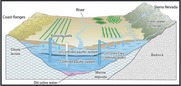
Groundwater is a vital component of California’s water supply.
California depends heavily on groundwater to meet its water supply needs, using more groundwater than any other state and its groundwater storage capacity is more than 10 times that of all its surface reservoirs. Nearly 40% of the state's water supply comes from groundwater. About 83% of Californians depend on groundwater for some portion of their water supply and many communities are 100 percent reliant on groundwater for their water needs.
-
Groundwater is the water found underground in the cracks and spaces in soil, sand and rock. It is stored in and moves slowly through geologic formations of soil, sand and rocks called aquifers.
-
Ground water basins are defined as the volume of subsurface through which ground water flows from the water table to a specified discharge location
-
Aquifers are typically made up of gravel, sand, sandstone, or fractured rock, like limestone. Water can move through these materials because they have large connected spaces that make them permeable. The speed at which groundwater flows depends on the size of the spaces in the soil or rock and how well the spaces are connected.
-
Surface water is any body of water above ground, including streams, rivers, lakes, wetlands, reservoirs, and creeks.
-
Groundwater and surface water are essentially one resource, physically connected by the hydrologic cycle in which water evaporates, forms clouds, and falls to the ground as rain or snow. Some of this precipitation seeps into the ground and moves slowly into an underground aquifer, eventually becoming groundwater. Water law and water policy often consider groundwater and surface water as separate resources, though they are functionally inter-dependent.
|
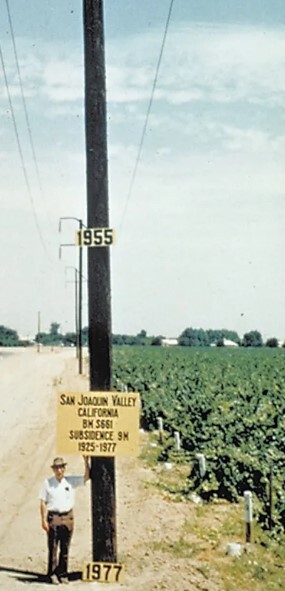
Groundwater management's ultimate goal is to provide a sufficient amount and quality of water for human health, livelihood, and productivity. Water resources, ecosystems, and water security are the three main components of modern management paradigms. California’s Sustainable Groundwater Management Act (SGMA) set forth a statewide framework to help protect groundwater resources over the long-term. It requires local agencies to form groundwater sustainability agencies (GSAs) for the high and medium priority basins. These GSAs develop and implement groundwater sustainability plans (GSPs) to avoid undesirable results and mitigate overdraft within 20 years.
SGMA defines sustainability as the avoidance of six undesirable results including: (1) declining groundwater levels, (2) reduction of groundwater storage, (3) seawater intrusion, (4) degraded water quality, (5) land subsidence, and (6) depletions of interconnected surface water.
-
Land Subsidence - Land subsidence occurs when large amounts of groundwater have been withdrawn from certain types of rocks, such as fine-grained sediments. The rock compacts because the water is partly responsible for holding the ground up. When the water is withdrawn, the rocks fall in on themselves.
-
Overdraft - Groundwater overdraft occurs when groundwater use exceeds the amount of recharge into an aquifer, which leads to a decline in groundwater level. Severe overdraft can lead to subsidence, the gradual caving in or sinking of an area of land.
-
Reduction Of Groundwater Storage - Long-term declines in groundwater levels, if predominant within a basin and not offset by rising groundwater levels, can lead to long-term reductions in groundwater storage.
-
Seawater Intrusion - Saltwater intrusion is the movement of saline water into freshwater aquifers. This can lead to the degradation of water quality. Saltwater intrusion can naturally occur in coastal aquifers, owing to the hydraulic connection between groundwater and seawater. Because saline water has a higher mineral content than freshwater, it is denser and has a higher water pressure. As a result, saltwater can push inland beneath the freshwater. It also occurs when storm surges or high tides overtop areas low in elevation. Excessive groundwater pumping contributes to the encroachment of seawater into the state's fresh groundwater supplies.
-
Groundwater Contamination - Groundwater contamination occurs when man-made products such as gasoline, oil, road salts and chemicals get into the groundwater and cause it to become unsafe and unfit for human use or other beneficial uses. This can occur when pollutants on or placed in the land’s surface move through the soil and end up in the groundwater.
-
Nitrate Contamination – Nitrates can get into groundwater from many sources, including fertilizers, manure on the land, and liquid waste discharged from septic tanks. Natural bacteria in soil converts various forms of nitrogen into nitrate. Rain and irrigation water can carry nitrate down through the soil into groundwater. Nitrate contamination of groundwater is a concern because contaminated drinking water can cause serious health risks.
-
Salinity Accumulation - Salts accumulate in soils and shallow groundwater in arid and semi-arid areas because higher evapotranspiration rates and lower precipitation leave salt in the soil. This can then require additional irrigation water to be used in leaching soil salinity to groundwater or drainage systems.
-
Decreased Streamflows - Streamflow depletion occurs when groundwater that would have discharged into the stream is captured by the pumping well. As pumping continues, the effects of groundwater withdrawals can spread to distant connected streams, lakes, and wetlands through decreased rates of discharge from the aquifer to these surface-water systems.
|
REPORTS & RESOURCES
DISCOVERING AND TEACHING ABOUT GROUNDWATER
The Groundwater Game: A fun, hands-on simulation of the challenges and solution strategies of groundwater management
The Groundwater Game provides players with an interactive opportunity to experience the challenges of managing increasingly scarce groundwater when there are competing needs. The game also provides players with a greater understanding of different management tools, including groundwater trading.
The game provides opportunities to learn concepts related to groundwater use such as drawdown and depletion as well as gain insight into common pool resources, groundwater governance, groundwater management, and collective action.
https://www.un-igrac.org/special-project/groundwater-game
https://www.edf.org/ecosystems/groundwater-game
The Groundwater Term Game
This Groundwater Game tests your knowledge of major terms used to describe parts of the aquifer systems, from groundwater to permeability to saturated zone. Drag and drop the correct term into a sentence to make it accurate and to match the illustration. Can you score 12 out of 12? https://ca.pbslearningmedia.org/resource/a019b2e6-8c43-4093-915c-9e3082ea3910/the-groundwater-term-game/
Test Your Groundwater Knowledge! https://groundwater.org/games/
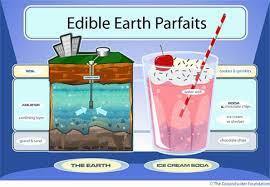
Build an Edible Aquifer
Can ice cream, chocolate, sprinkles, candy, and soda redeem themselves by becoming a teaching tool? Create an edible aquifer the healthiest way possible and teach about groundwater management in a way that gets the attention of all kids.
- Explore how water moves through various media, and changing rates of infiltration.
- Investigate how pollution makes its way into the subsurface, and how it might end up in municipal water wells.
- Learn how human activity can affect the limited water resources that we rely on.
- Delve into wildlife ecology and add some (gummy) worms and tardigrades aka water bears (gummy bears)
Key Topics: Aquifer, Earth science/geology, Groundwater, Wells, Contamination and Pollution Prevention
https://alltogether.swe.org/2022/02/march-engineering-activity-build-an-incredible-edible-aquifer/
https://www.esi.utexas.edu/files/EdibleAquifer.pdf
https://www.palmdalewater.org/student-projects/fun-projects-build-an-edible-aquifer/
http://girlstart.org/wp-content/uploads/2017/09/12.EdibleAquifer.pdf
https://sajblearning.org/courses/what-is-an-aquifer/lessons/activity-3-build-an-edible-aquifer/
VIDEOS
The Groundwater Story https://www.youtube.com/watch?v=-nr-K9W_uRQ
Groundwater: California’s Vital Resource https://www.youtube.com/watch?v=JpvTslYuS4Y
|
|