Monday, Dec. 1, 7 to 8 p.m.
What is the Anthropocene (Anthropos or humanity as an earth altering force)? What does the Anthropocene indicate about the nature of our humanity?
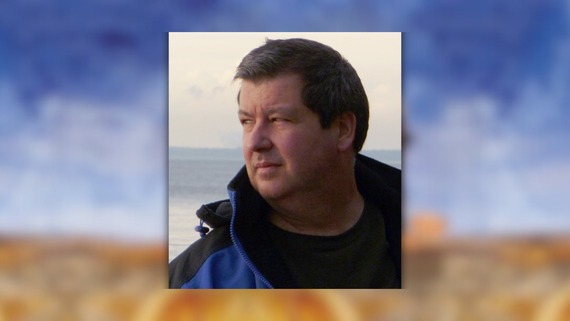
Join us for an online discussion with Jason Wirth, Chair and professor of Philosophy at Seattle University. Through reconsidering what it means to inhabit the earth Professor Wirth will offer insights for understanding our relation to the planet's ongoing ecological crisis, further covering the concept of earth democracy and the interconnectedness of all beings.
Jason M. Wirth is Chair and professor of Philosophy at Seattle University. His areas of specialization include environmental philosophy, Buddhist philosophy and the philosophy of art. He is the author of Mountains, Rivers, and the Great Earth: Reading Gary Snyder and Dōgen in An Age of Ecological Crisis, Nietzsche and Other Buddhas: Philosophy After Comparative Philosophy and Schelling's Practice of the Wild: Time, Art, Imagination.
This program will take place online over Zoom. Registration is required.
Tuesday, Dec. 2, 11 a.m. to Noon
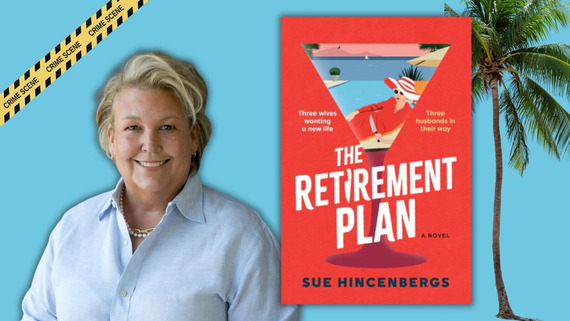
Buckle up for a wild ride and join us as we sit down for an online chat with debut author Sue Hincenbergs to discuss her novel The Retirement Plan. When the only thing standing between three best friends and a sunny beachfront retirement condo are their husbands, what ensues is a diabolical plan. You won’t want to miss this darkly humorous debut, filled with both laugh-out-loud and genuinely tense moments, as our headstrong wives pursue their dream retirement at all costs.
Sue Hincenbergs is a former television producer who has worked on multiple award-winning programs ranging from sitcoms to lifestyle. She oversaw the content on two national daily shows, including Canada’s longest running morning show before turning her talents to live music specials, and eventually to writing. Sue lives in Toronto with her (very much alive) husband, her scruffy, middle-aged rescue dog Kramer, and the rooms full of the stuff her three sons left behind when they moved out.
Register and ask questions of the author.

Wednesday, Dec. 3, 7 to 8 p.m.
Yiddish language in film began as a daring attempt to document and entertain the Jewish masses. It has since become a powerful visual and esthetic record on 20th and 21st century Jewish culture.
Covering over a dozen films starting in the silent era, this talk by Henry Sapoznik not only celebrates the great stars of the Yiddish stage and screen but also sheds light on the nearly lost legacy of pioneers who helped will Yiddish films into existence despite tremendous odds. In addition to films made by and for the immigrant Jewish community, the talk will also focus on how Yiddish was presented in mainstream Hollywood film.
Henry Sapoznik is an award-winning producer, musicologist and performer, and writer in the fields of traditional and popular Yiddish and American music and culture. A five-time Grammy-nominated producer and performer, Sapoznik has been on over fifty records including having reissued over 30 anthologies of Yiddish, jazz, old-time, cantorial, ragtime, blues, Italian, swing and bluegrass recordings. Most recently, Sapoznik published The Tourist's Guide to Lost Yiddish New York City (Excelsior Press) and is finishing its companion audiobook for Blackstone Audio.
This program will take place online over Zoom. Registration is required.
Thursday, Dec. 4, 5:30 to 6:30 p.m.
For a clean energy future, few technologies are more important than batteries. Used for powering zero-emission vehicles, storing electricity from solar panels and wind turbines, and revitalizing the electric grid, batteries are essential to scaling up the renewable energy resources that help address global warming. But given the unique environmental impact of batteries—including mining, disposal, and more—does a clean energy transition risk trading one set of problems for another?
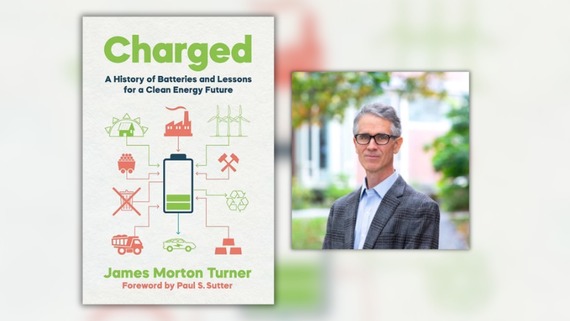
Join us for an online session with author Jay Turner, professor of Environmental Studies at Wellesley College, as he unpacks the history of batteries to explore why solving "the battery problem" is critical to a clean energy transition.
James (Jay) Morton Turner is a historian working on topics including climate change, the clean energy transition, and environmental politics. His public-facing work has appeared in venues including Science, The New York Times, Natural History, Lapham's Quarterly, Literary Hub, and The Conversation. He is currently president of the American Society for Environmental History. His current research focuses on prospects for and challenges ahead for a clean energy future.
This program will take place online over Zoom. Registration is required.

Thursday, Dec. 4, 6 to 7 p.m.
Join us for a Sewing by Hand. Each month will feature a different hand sewing project that can be completed in about an hour even if you’ve never sewn before. For December we are making snow monster ornaments.
This program is for adults and will take place in the Fiction Room. Registration is not required but supplies are limited (first come first served). Register for an email reminder.

Friday, Dec. 5, 4 to 5 p.m.
¡Únete a nuestro Club de lectura en español! Nos reuniremos una vez al mes y tendremos copias del libro para el siguiente mes. En nuestra undécima sesión, nos pondremos de acuerdo sobre como será el Club de lectura y también discutiremos temas y autores para futuras sesiones.
Nuestro libro este mes es En agosto nos vemos de Gabriel García Márquez. Tenemos copias disponibles y podemos ayudarte a pedir una copia de la biblioteca, si es necesario.
En la sala de la programas de la biblioteca.
This program is in Spanish will take place in the Program Room.

Saturday, Dec. 6, 1 to 3 p.m.
Join the Master Gardeners and learn how to make a succulent yule log and other succulent décor, as we talk about caring for, decorating, and designing with succulents. Bring your questions about succulents and we will do our best to answer them. Please note this program does not include a hands-on crafting or making component.
This program will take place in the library's Program Room. Registration is not required.
Thank you to the UC Master Gardeners of Santa Clara County for bringing us this talk.
|