|
Over 250 county leaders including elected officials and representatives from public safety, health, education, labor, housing, nonprofits, and more rallied at the Redwood City Fire Department Headquarters, warning that more than $1 billion will be withheld over the next decade if Sacramento fails to act now to fix a broken State funding mechanism.
REDWOOD CITY, CA – April 7, 2026 – In a powerful and unified call to action this morning, San Mateo County leaders gathered at Downtown Redwood City Fire Station 9 to appeal for inclusion in the State budget of in-lieu Vehicle License Fee (VLF) revenue that is legally owed to San Mateo County and its cities, and for enactment of a permanent fix to a broken State payment mechanism that is leaving the County uniquely and unfairly shortchanged without State action.
With urgency mounting and stakes escalating, leaders made clear: the clock is ticking.
President of the San Mateo County Board of Supervisors Noelia Corzo stated the County's position plainly: "Today our message to Governor Newsom and state leaders is clear: we need two things to correct this inequity – full payment of the outstanding amount owed, and a permanent legislative fix so this never happens again. This is not about asking for more. It is about receiving what the County and our 20 cities are legally entitled to, which amounts to over $157 million right now, and more than $1 billion over the next decade if this is not resolved."
At the heart of the issue is a stark inequity: while 55 California counties receive their full VLF funding, San Mateo County is one of just three counties statewide being shortchanged by an outdated State payment mechanism, unless the State takes action. The problem traces back to a 2004 State budget deal, when local governments accepted a permanently reduced VLF rate and contributed additional local funding to help balance the State budget, in exchange for reliable State replacement revenue.
That promise has not been kept.
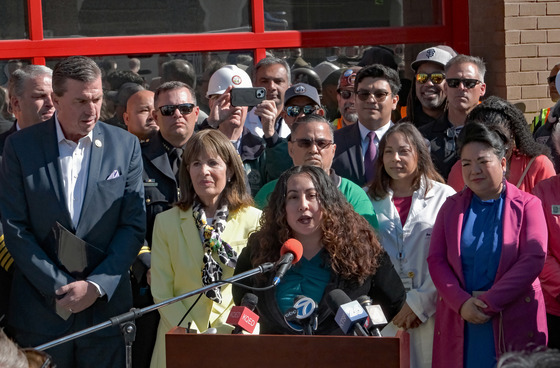 Board of Supervisors President Noelia Corzo warned the shortfall could exceed $1 billion over the next decade if the issue is unresolved.
|