|
 |
View this email in your browser
About the Harm Reduction and Overdose Prevention Newsletter
The Harm Reduction and Overdose Prevention Newsletter is compiled by the County of Santa Clara Public Health Department Sexual Health and Harm Reduction Program. The newsletter elevates various harm reduction and overdose prevention initiatives occurring throughout Santa Clara County, in an effort to build partnerships, awareness, and engagement. Please email odfreescc@phd.sccgov.org if you have a harm reduction and overdose prevention initiative that you would like to share with the newsletter's members!
News and Announcements
📢 Funding Alert: Opioid Overdose Prevention Grants (2027–2030)
The City of San José is now accepting applications for the Opioid Overdose Prevention (OOP) Grant. Eligible 501(c)(3) nonprofits and government agencies can secure three years of funding. Email questions to Crystal Betances at crystal.betances@sanjoseca.gov.
Deadline📅: September 1, 2026
You’re Invited to 2026 International Overdose Awareness Day
Join us for International Overdose Awareness Day, a free community event dedicated to remembering loved ones lost to overdose and strengthening community support.
This event will feature:
- Resource fair with housing, mental health, and substance use support
- Free naloxone, fentanyl test kits, and training
- Free harm reduction supplies
- Local speakers and a community open mic
- Opportunities to honor loved ones lost to overdose
- Food will be available on a first come first serve basis
 Schedule a Harm Reduction Pop-Up Visit
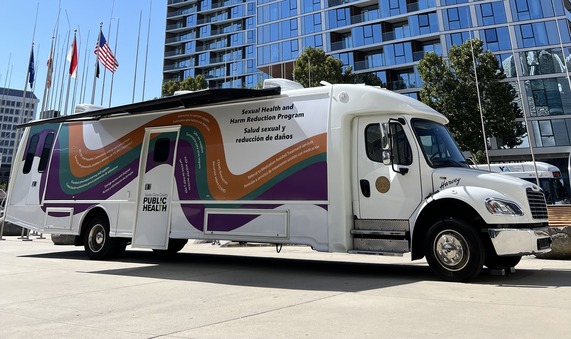
Starting in September, the Harm Reduction Program is revamping how we schedule pop-up visits. Any housing site in Santa Clara County will have the opportunity to sign up for a visit through our new monthly sign-up process bringing harm reduction supplies, services, and education directly to your residents.
Whether your site has hosted us before or is new to harm reduction services, we want to hear from you.
To learn more or get on the list, email harmreduction@phd.sccgov.org.
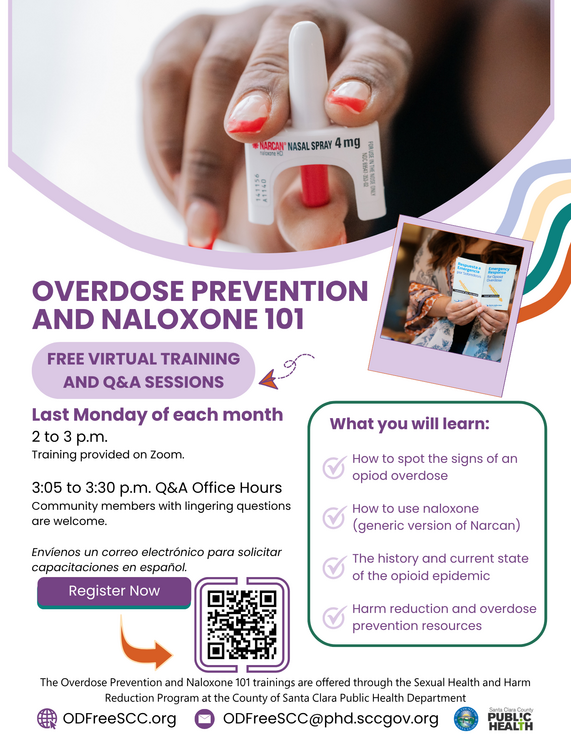 Free virtual overdose prevention and naloxone 101 trainings
The Overdose Prevention and Naloxone 101 trainings are offered through the County of Santa Clara Public Health Department's Sexual Health and Harm Reduction Program. Trainings are held on Zoom the last Monday of each month from 2 to 3 p.m. followed by office hours for lingering questions from 3:05 to 3:30 p.m. Learn how to spot the signs of an overdose and use naloxone.
Upcoming training dates:
- September 28, 2026
- October 26, 2026
- November 30, 2026
- December 28, 2026
If you have questions about this training or have trouble registering, email ODFreeSCC@phd.sccgov.org.
 Free in-person opioid overdose prevention trainings
The Santa Clara County Public Health Department’s Sexual Health and Harm Reduction Program, in partnership with the Santa Clara County Library District, is hosting free naloxone trainings. Learn to identify overdose signs and administer naloxone safely; participants will receive a free kit upon completion while supplies last.
September training dates:
-
September 2: 3 to 4 p.m. at Los Altos Library
-
September 16: 3 to 4 p.m. at Milpitas Library
The Santa Clara County Medical Association features Naloxone Stand Box Initiative
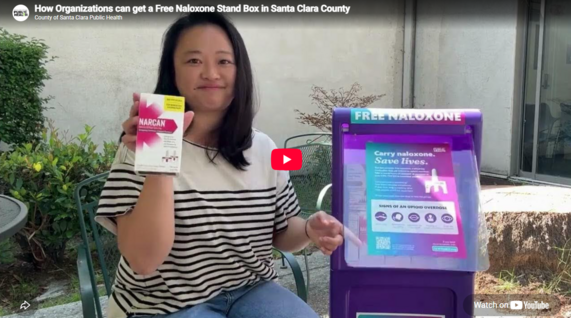 Click the image above to watch a video on how organizations can get a free naloxone stand box.
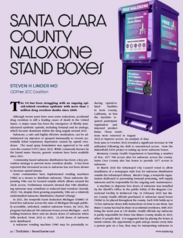
In the June 2026 issue of The Bulletin by the Santa Clara County Medical Association, Dr. Steve Linder, a member of the ODFreeSCC Coalition, wrote an article that highlighted the Sexual Health and Harm Reduction Program's initiative to distribute free Naloxone Stand Boxes (NSBs) to local organizations, expanding community access to overdose-reversal medication. Modeled after successful programs in neighboring regions, these self-service stations allow partners like health centers and colleges to host life-saving naloxone directly on their premises; while the county provides the physical boxes at no cost, participating organizations are responsible for stocking them with naloxone, which can be ordered for free through the state’s Naloxone Distribution Project.
From March to June 2026 a total of 1,247 boxes of naloxone were been distributed through NSBs in Santa Clara County. Join the NSB initiative and host an NSB by visiting the link below.
|
Harm ReduQion Treats and Trivia
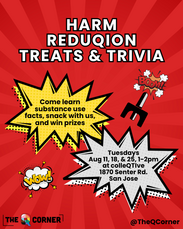
Looking for a fun way to test your knowledge? Then join The Q Corner during drop-in hours for a lively trivia session all about substance use facts and harm reduction strategies. Come hang out, learn something new, and walk away with some awesome prizes!
Bring a friend, grab a snack, and show off your trivia skills!
|
Share your experience on overdose disparities in Santa Clara County
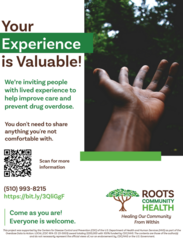
Roots Community Health is recruiting African and African Ancestry individuals in Santa Clara County with lived experience using drugs, in recovery, or supporting someone who uses to share their perspectives in a study on overdose disparities and structural barriers. Participants will join focus groups to help shape more equitable responses and will receive a $50 gift card plus food and drinks as a token of appreciation. Please help spread the word by sharing the sign up link below with your networks.
Questions? Call (510) 993-8215.
|
Staff Spotlight
Richard Guardado: Keeping Doors Open
“I know what it’s like to be the person systems weren’t built for,” says Richard Guardado, Program Supervisor at Gardner Health Services’ Proyecto Primavera in San Jose. A Registered Associate Marriage and Family Therapist and new father, Richard draws on his own migration story from El Paso to the Bay Area to shape a practice rooted in safety, dignity, and second chances.
His mission began at home. “Growing up in a single-parent household, I watched addiction get treated as a moral failure instead of what it actually is, a response to pain, poverty, and disconnection.” He entered the field to offer something different: “No judgment, no ultimatums, just a door that stays open no matter how many times someone walks through it.”
For Richard, harm reduction is the bridge to recovery, not an alternative to it. “Meeting someone where they are isn’t giving up on them; it’s the only thing that’s ever actually worked. Judgment closes doors. Harm reduction keeps them open long enough for change to become possible.”
This approach transforms lives. Richard recalls a client who lost his family to alcohol use and entered treatment resistant and defensive. Instead of demanding abstinence, the team focused on trust and safety. “No shame, no lectures, just a calm and receptive presence.” The client eventually chose sobriety on his own terms, rebuilding relationships with his children and now mentoring others.
“That’s what people miss about harm reduction,” Richard says. “It’s not the ‘soft’ option. It’s often what makes real, lasting change possible because it treats people like they’re capable of choosing their own recovery, not like a problem to be managed.”
Trainings and Conferences
Conferences
In-person:
Virtual:
Free trainings
In-person
Virtual
Live webinars:
Recorded webinars:
Self-paced courses:
-
Free Harm Reduction Training for CA Residents: Get free online courses (Foundations, Overdose Prevention, Engaging Drug Users) from the National Harm Reduction Coalition. Enroll at their Online Training Institute and click “Are you a California resident? Click here for a free course bundle” or use code california100 at checkout.
-
Trauma-Informed Care for Post-Overdose Outreach: Learn to apply trauma-informed approaches in post-overdose outreach. CEUs available.
Funding Opportunities
City of San Jose Opioid Overdose Prevention Grants
The City of San José is now accepting applications for the Opioid Overdose Prevention (OOP) Grant. Eligible 501(c)(3) nonprofits and government agencies can secure three years of funding. Email questions to Crystal Betances at crystal.betances@sanjoseca.gov.
Deadline📅: September 1, 2026
Substance Use Disorder Dissertation Research Award
The goal of this grant is to support doctoral candidates from a variety of academic disciplines for up to two years for the completion of the doctoral dissertation research project. Research projects should align with NIDA funding priorities. This award will facilitate the entry of promising new investigators into the field of substance use/substance use disorder (SU(D) research, enhancing the pool of highly talented SU(D) researchers.
Deadline📅: September 7, 2026
Patient-Centered Outcomes Research Institute (PCORI) Substance Use Funding Announcement
Eligible applicants include researchers, academic institutions, and community partners with lived experience who can conduct patient-centered comparative clinical effectiveness research on overdose prevention. Awards range up to $12 million for projects lasting up to five years.
Deadline📅: Letter of Intent due September 9, 2026, and full applications due January 12, 2027
HIV and Substance Use Grant
The purpose of this grant is to support innovative basic, clinical, translational, and implementation science research relevant to HIV and substance use. This initiative encourages high risk high impact transformative studies that advance knowledge and strategies for HIV prevention, diagnosis, treatment and virus suppression in people who use substances and/or have a substance use disorder.
Deadline📅: September 25, 2026
Comer Family Foundation
The Comer Family Foundation offers grants for syringe services and community-based harm reduction programs that provide safer use supplies, education, and wraparound services to reduce opioid overdoses and the spread of HIV and viral hepatitis. Applications are accepted annually on May 1 and November 1. Grants range from $2,500 to $20,000 and support organizations with budgets under $600,000, especially those led by people who use drugs or from communities disproportionately impacted by drug criminalization and health disparities.
Deadline📅: November 1, 2026
Development of Interventions to Prevent and Treat Substance Use Disorders and Overdose
The purpose of this National Institutes of Health (NIH) grant is to support research on the discovery and development of interventions to prevent and/or treat substance use disorders (SUDs) and overdose, including medications and medical devices to treat co-morbid SUDs. This includes preclinical and clinical research studies that will have high impact and quickly yield the necessary results to advance candidate interventions closer to regulatory approval or clinical adoption.
Deadline📅: August 21, 2028
Points of Distribution Fiscal Sponsorship
Points of Distribution (POD) offers fiscal sponsorship to harm reduction organizations who do not already have 501(c)(3) status and deliver physical harm reduction resources to people who use drugs. There are no no fees on the first $25,000 of funding, followed by a 5% administrative fee on subsequent funds.
Deadline📅: Funding provided on a case-by-case basis
Gilead Sciences Focus on Overdose (Community Grants)
Nonprofit organizations with strong community trust and a health equity focus are eligible to apply for support addressing overdose, particularly where it intersects with HIV/Hepatitis C. Funding amounts vary by project need.
Deadline📅: Letters of Inquiry accepted on a rolling basis
The Health Trust
The Health Trust offers three funding pathways for harm reduction work: Health Partnership Grants and the Health Equity Fund accept Concept Forms year-round with no deadlines (decisions made quarterly), while Community Grants (up to $5,000) are available on a rolling basis and require applications at least 60 days before your event or project start date.
Deadline📅: Concept Forms and applications accepted on a rolling basis
The Awesome Foundation
The Awesome Foundation awards $1,000 monthly grants with no strings attached to creative, community-focused projects worldwide. Individuals, groups, or organizations can apply, and funding decisions are made by local or thematic chapters independently.
Deadline📅: Applications are accepted year-round.
Resources for Community Organizations
Overdose prevention social media toolkit
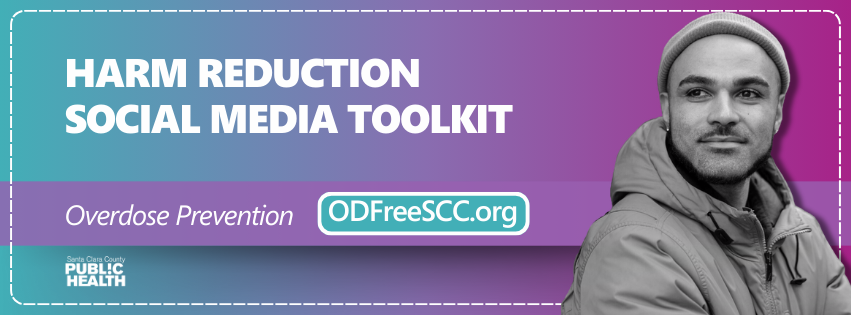
The Santa Clara County Public Health Department’s Overdose Prevention Hub (ODFreeSCC.org in English and SCCSinSobredosis.org in Spanish) is dedicated to ending overdoses and connecting people to life-saving resources. We launched a new social media toolkit this year to help raise awareness about these resources, including free naloxone, treatment options, safer use supplies, support groups, and more. The toolkit includes ready-to-share graphics and messages in English and Spanish. Download the materials and help spread the word!
Aware and Prepare: A Comprehensive Curriculum for Fentanyl and Other Opioid Overdose Prevention and Harm Reduction
Equip your community with Stanford REACH Lab’s free Aware and Prepare curriculum, a comprehensive two-lesson resource designed to prevent opioid overdoses and save lives. Fully compliant with California AB2429, this toolkit provides essential education on the dangers of illicit fentanyl, practical harm-reduction strategies like using test strips and naloxone, and ready-to-use videos and infographics for educators, parents, and youth. Access these life-saving materials today to foster safety and awareness in your organization.
City of San José Homeless Services Guide
The City of San José Homeless Services Guide helps connect individuals with the right government agencies and nonprofits. Visit the Homeless Services Guide page to download a digital version in English, Spanish, and Vietnamese.
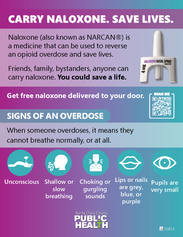
Harm Reduction Health Ed Materials Available for Download
Two new harm reduction resources are now available for download! The brochure "How to Use More Safely and Reduce Overdose Risks" offers practical tips for safer substance use and information on where to access free harm reduction supplies. Also available is the easy-to-carry card "How to Save a Life with Naloxone," which outlines overdose signs and where to get free naloxone.
|
Toolkit: Naloxone and fentanyl test strip distribution for CBOs and clinics
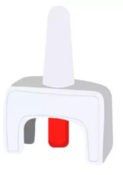
The Naloxone Distribution Project (NDP) has released a comprehensive toolkit for community-based organizations (CBOs) and clinics outlining how to request and distribute free naloxone and fentanyl test strips. This toolkit includes guidance on inventory tracking, storage, distribution policies, and best practices for low-barrier, needs-based harm reduction services.
Access the toolkit here:
NDP Toolkit 👈
|
Overdose prevention and harm reduction trainings
Santa Clara County Public Health Department's Sexual Health and Harm Reduction Program (SHHRP) offers local organizations free trainings and technical assistance on overdose prevention and harm reduction.
Trainings include:
•Naloxone Distribution Program Overview •Harm Reduction Principles and Practices •Overdose Prevention •Recognizing the Signs of Overdose •Stigma Reduction •Other overdose prevention topics
Technical Assistance for: • Overdose prevention activities • Ordering and distributing supplies through the Naloxone Distribution Project
Stay connected: Follow us on LinkedIn for harm reduction updates.
Free technical assistance from the Opioid Response Network
The Opioid Response Network (ORN) offers free, tailored education and technical assistance on preventing, treating, and supporting recovery from opioid and other substance use disorders.
|

Free safer sex supplies for organizations
In partnership with the California Department of Public Health's Condom Distribution Program, the Sexual Health and Harm Reduction Program offers community organizations free condoms, lube, and dispensers to help reduce HIV transmission. Get your free safer sex supplies today.
|
Get Involved
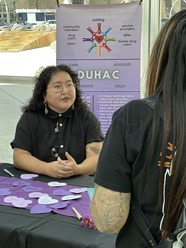
Join the Drug User Health Advisory Committee (DUHAC)
DUHAC is a collaborative space for people who use drugs and community partners to shape harm reduction services in Santa Clara County. Share feedback, offer recommendations, and help improve support for the community.
Meetings: Every 4th Thursday from 5 to 6 p.m. on Zoom.
Subscribe to our mailing list to stay up to date or contact us below to join the next meeting.
|
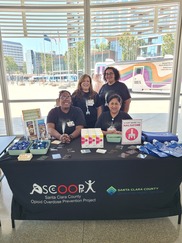
Join the ODFree SCC Coalition
ODFree SCC (formerly known as "SCCOOPP") is a coalition of community members and volunteers, healthcare providers, and professionals working to reduce overdoses in Santa Clara County through equity, community, and collaboration. The coalition's vision is to create a Santa Clara County free from fatal and non-fatal overdoses and other harms of drug use through the mobilization of multi-sectoral partnerships and the use of data to inform action.
Meetings: Last Tuesday of each month from 12 to 1:30 p.m. on Zoom and in-person.
Questions? Contact us at ODFreeSCC@phd.sccgov.org.
|
Tell us what you think
We value your feedback! Take our anonymous 2-minute survey to help shape future editions.
📬 Was this newsletter forwarded to you? Subscribe to stay updated.
|