|
 |
View this email in your browser
News and Announcements
You’re Invited to 2026 International Overdose Awareness Day
Join us for International Overdose Awareness Day, a free community event dedicated to remembering loved ones lost to overdose and strengthening community support.
This event will feature:
- Resource fair with housing, mental health, and substance use support
- Free naloxone, fentanyl test kits, and training
- Free harm reduction supplies
- Local speakers and a community open mic
- Opportunities to honor loved ones lost to overdose
- Food will be available on a first come first serve basis
Interested in volunteering at this event? Fill out the Volunteer Interest Form by Friday, June 26, 2026.
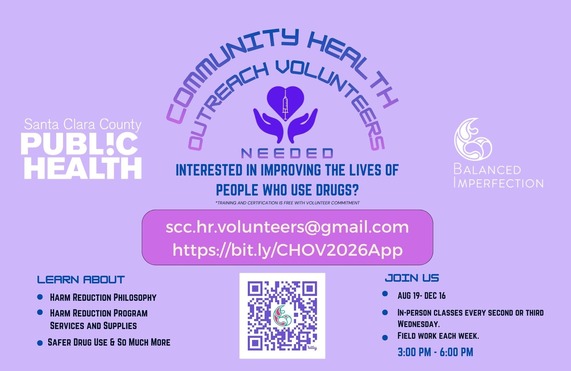
Join the Community Health Outreach Volunteer (CHOV) Program
Become a Community Health Outreach Volunteer (CHOV) in harm reduction. The 14-week program (August 19 to December 16) trains volunteers in harm reduction philosophy, harm reduction services and supplies, and safer use practices through online, in-person, and hands-on sessions. The program ends with a final project to showcase your skills. Email to learn more: scc.hr.volunteers@gmail.com.
Deadline to apply: Friday, July 31, 2026
 Clinician training series
The County of Santa Clara Public Health Department, in partnership with CA Bridge and Balanced Imperfection, is pleased to offer a clinician training series on chronic pain management, harm reduction, and Medication Assisted Treatment (MAT) for substance use treatment. Register for these upcoming trainings:
- June 26, 2026, 8 a.m. to 9: Medication for stimulant use disorder
- Note: This training is limited to physicians only. Non-physicians will have access to the training through the recording that will be posted to the Trainings for Clinicians webpage shortly after June 26.
- August 5, 2026, 8 a.m. to 9: The Compass Clinic
On-demand trainings
Missed a live training? Watch the recording now.
Share your experience on overdose disparities in Santa Clara County
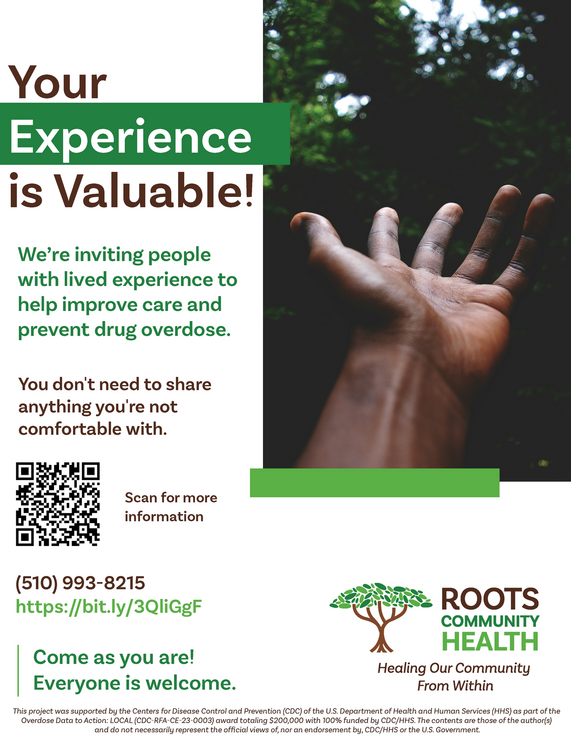
Roots Community Health is recruiting African and African Ancestry individuals in Santa Clara County with lived experience using drugs, in recovery, or supporting someone who uses to share their perspectives in a study on overdose disparities and structural barriers. Participants will join focus groups to help shape more equitable responses and will receive a $50 gift card plus food and drinks as a token of appreciation. Please help spread the word by sharing the sign up link below with your networks.
Questions? Call (510) 993-8215.
Harm Reduction Service Highlight
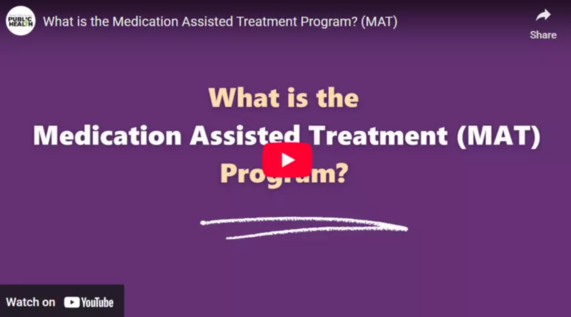 Click the image above to watch a video about Medication Assisted Treatment (MAT)
Medication Assisted Treatment (MAT) Program
The County of Santa Clara's Public Health Department offers a low-barrier Medication Assisted Treatment (MAT) Program designed to provide safe, quick access to medication for opioid use disorder and substance use disorder. Our harm reduction approach meets clients where they are, allowing them to set their own goals, whether that means reducing use, taking a break, or quitting altogether.
Since its inception, the program has successfully supported over 600 participants. If you have clients who might benefit from our services, please share our information.
Interested organizations can learn more by contacting us. We can provide brochures or give presentations to your group.
If you or someone you know is interested in learning about MAT options or starting MAT, email, text, or call our MAT Navigator below.
Harm Reduction Staff Spotlight
Meet Dr. Terrence M. Cole: A Leader in Harm Reduction Compassion and Evidence
As Dr. Terrence M. Cole prepares to depart our Sexual Health and Harm Reduction Program, we honor his transformative contributions to the field of harm reduction through his own words. As a leader in the field of Social Behavioral Sciences with a focus in Public Policy and Public Administration, Dr. Cole has dedicated his tenure specifically to advancing harm reduction strategies.
Dr. Cole serves “as a public health leader focused on advancing harm reduction through strategic partnerships, data-informed interventions, and systems-level coordination,” work that is dedicated to “strengthening provider engagement” and supporting vulnerable populations. Driven by equity, he notes, “My work has consistently focused on equity and improving outcomes for underserved communities,” championing harm reduction as a “practical, compassionate approach that meets people where they are.”
For Dr. Cole, success in harm reduction is “seeing tangible impact... when individuals gain access to life saving resources, services are better coordinated, and systems begin to respond more effectively to community needs.” He emphasizes, “I wish more people understood that harm reduction is about compassion and evidence,” explaining it is “about reducing risk, building trust, and creating pathways for people to engage in care when they’re ready.” Reflecting on his tenure, Dr. Cole highlights “supporting initiatives that improved coordination between healthcare providers and community partners,” proving “how aligned systems can significantly improve outcomes” in harm reduction. The program thanks Dr. Cole for his leadership and wishes him well in his future endeavors.
Trainings and Conferences
Conferences
In-person:
Virtual trainings
Live webinars:
Recorded webinars:
Self-paced courses:
-
Free Harm Reduction Training for CA Residents: Get free online courses (Foundations, Overdose Prevention, Engaging Drug Users) from the National Harm Reduction Coalition. Enroll at their Online Training Institute and click “Are you a California resident? Click here for a free course bundle” or use code california100 at checkout.
-
Trauma-Informed Care for Post-Overdose Outreach: Learn to apply trauma-informed approaches in post-overdose outreach. CEUs available.
Funding Opportunities
Silicon Valley Clean Energy (SVCE) Community Grants Program
Silicon Valley Clean Energy (SVCE) is seeking applications from nonprofits, community-based organizations, and schools in its service territory for the Community Grants Program. SVCE is offering $3.2 million in capital funding to support building electrification, transportation electrification, and energy resilience projects.
Deadline📅: July 22, 2026
Points of Distribution Fiscal Sponsorship
Points of Distribution (POD) offers fiscal sponsorship to harm reduction organizations who do not already have 501(c)(3) status and deliver physical harm reduction resources to people who use drugs. There are no no fees on the first $25,000 of funding, followed by a 5% administrative fee on subsequent funds.
Deadline📅: Funding provided on a case-by-case basis
Comer Family Foundation
The Comer Family Foundation offers grants for syringe services and community-based harm reduction programs that provide safer use supplies, education, and wraparound services to reduce opioid overdoses and the spread of HIV and viral hepatitis. Applications are accepted annually on May 1 and November 1. Grants range from $2,500 to $20,000 and support organizations with budgets under $600,000, especially those led by people who use drugs or from communities disproportionately impacted by drug criminalization and health disparities.
Deadline📅: November 1, 2026
The Health Trust
The Health Trust offers three funding pathways for harm reduction work: Health Partnership Grants and the Health Equity Fund accept Concept Forms year-round with no deadlines (decisions made quarterly), while Community Grants (up to $5,000) are available on a rolling basis and require applications at least 60 days before your event or project start date.
Deadline📅: Concept Forms and applications accepted on a rolling basis
The Awesome Foundation
The Awesome Foundation awards $1,000 monthly grants with no strings attached to creative, community-focused projects worldwide. Individuals, groups, or organizations can apply, and funding decisions are made by local or thematic chapters independently.
Deadline📅: Applications are accepted year-round.
Resources for Community Organizations
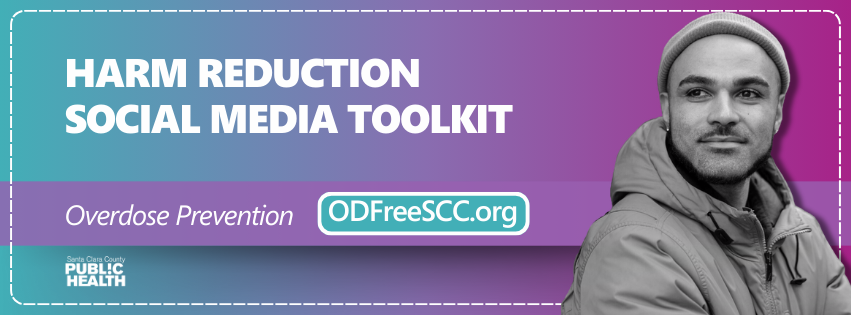
Overdose prevention social media toolkit
The Santa Clara County Public Health Department’s Overdose Prevention Hub (ODFreeSCC.org in English and SCCSinSobredosis.org in Spanish) is dedicated to ending overdoses and connecting people to life-saving resources. We launched a new social media toolkit this year to help raise awareness about these resources, including free naloxone, treatment options, safer use supplies, support groups, and more. The toolkit includes ready-to-share graphics and messages in English and Spanish. Download the materials and help spread the word!
Aware and Prepare: A Comprehensive Curriculum for Fentanyl and Other Opioid Overdose Prevention and Harm Reduction
Equip your community with Stanford REACH Lab’s free Aware and Prepare curriculum, a comprehensive two-lesson resource designed to prevent opioid overdoses and save lives. Fully compliant with California AB2429, this toolkit provides essential education on the dangers of illicit fentanyl, practical harm-reduction strategies like using test strips and naloxone, and ready-to-use videos and infographics for educators, parents, and youth. Access these life-saving materials today to foster safety and awareness in your organization.
City of San José Homeless Services Guide
The City of San José Homeless Services Guide helps connect individuals with the right government agencies and nonprofits. Visit the Homeless Services Guide page to download a digital version in English, Spanish, and Vietnamese.
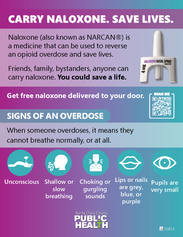
New Harm Reduction Health Ed Materials Available for Download
Two new harm reduction resources are now available for download! The brochure "How to Use More Safely and Reduce Overdose Risks" offers practical tips for safer substance use and information on where to access free harm reduction supplies. Also available is the easy-to-carry card "How to Save a Life with Naloxone," which outlines overdose signs and where to get free naloxone.
|
Toolkit: Naloxone and fentanyl test strip distribution for CBOs and clinics

The Naloxone Distribution Project (NDP) has released a comprehensive toolkit for community-based organizations (CBOs) and clinics outlining how to request and distribute free naloxone and fentanyl test strips. This toolkit includes guidance on inventory tracking, storage, distribution policies, and best practices for low-barrier, needs-based harm reduction services.
Access the toolkit here:
NDP Toolkit 👈
|
Overdose prevention and harm reduction trainings
Santa Clara County Public Health Department's Sexual Health and Harm Reduction Program (SHHRP) offers local organizations free trainings and technical assistance on overdose prevention and harm reduction.
Trainings include:
•Naloxone Distribution Program Overview •Harm Reduction Principles and Practices •Overdose Prevention •Recognizing the Signs of Overdose •Stigma Reduction •Other overdose prevention topics
Technical Assistance for: • Overdose prevention activities • Ordering and distributing supplies through the Naloxone Distribution Project
Stay connected: Follow us on LinkedIn for harm reduction updates.
Free technical assistance from the Opioid Response Network
The Opioid Response Network (ORN) offers free, tailored education and technical assistance on preventing, treating, and supporting recovery from opioid and other substance use disorders.
|
Substance use and suicide prevention trainings

The Santa Clara County Behavioral Health Services Department (BHSD) – Prevention Services Division and their community partners offer free prevention services and materials for schools, families, and community organizations.
Trainings and programs are available for:
|

Free safer sex supplies for organizations
In partnership with the California Department of Public Health's Condom Distribution Program, the Sexual Health and Harm Reduction Program offers community organizations free condoms, lube, and dispensers to help reduce HIV transmission. Get your free safer sex supplies today.
|
Get Involved
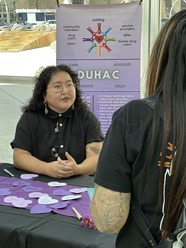
Join the Drug User Health Advisory Committee (DUHAC)
DUHAC is a collaborative space for people who use drugs and community partners to shape harm reduction services in Santa Clara County. Share feedback, offer recommendations, and help improve support for the community.
Meetings: Every 4th Thursday from 5 to 6 p.m. on Zoom.
Subscribe to our mailing list to stay up to date or contact us below to join the next meeting.
|
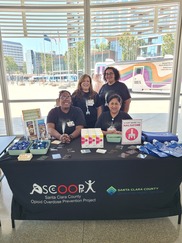
Join the ODFree SCC Coalition
ODFree SCC (formerly known as "SCCOOPP") is a coalition of community members and volunteers, healthcare providers, and professionals working to reduce overdoses in Santa Clara County through equity, community, and collaboration. The coalition's vision is to create a Santa Clara County free from fatal and non-fatal overdoses and other harms of drug use through the mobilization of multi-sectoral partnerships and the use of data to inform action.
Meetings: Last Tuesday of each month from 12 to 1:30 p.m. on Zoom and in-person.
Questions? Contact us at ODFreeSCC@phd.sccgov.org.
|
Tell us what you think
We value your feedback! Take our anonymous 2-minute survey to help shape future editions.
About the Harm Reduction Program
For the past three decades, the Harm Reduction Program has been at the forefront of public health efforts to promote safer behaviors proven to control the spread of blood borne viruses, such as HIV and Hepatitis C. The program is also playing a vital role in helping to decrease opioid overdose deaths and serve as a bridge to other health and social services.
The Harm Reduction Program is housed within the Sexual Health and Harm Reduction Program of the County of Santa Clara Public Health Department.
📬 Was this newsletter forwarded to you? Subscribe to stay updated.
|