|
Upcoming Telebriefing will be Thursday, July 24th, 2024, from 2:00 - 3:00 PM
Next Guest Presenter:
PHPR Nurse Team - Evacuation and Emergency Planning
New Zoom Meeting Link:
https://sdcounty-ca-gov.zoom.us/j/83298991634
Meeting ID: 832 9899 1634 Dial in: +16694449171, 83298991634#
Submit Telebriefing Topics
Submit Telebriefing Questions
July 11, 2025
The California Department of Social Services, Community Care Licensing Division (CCLD) has released PIN 25‑10‑CCLD, outlining important emergency preparedness guidance for licensed adult, senior, child, and residential care facilities. The notice provides updated recommendations for responding to extreme heat, wildfires, Public Safety Power Shutoffs (PSPS), and West Nile Virus threats. Key action items include reviewing and updating emergency plans, maintaining hydration and cooling protocols, ensuring access to backup power sources, and implementing mosquito control and surveillance. Facilities are also reminded to train staff, coordinate with local agencies such as fire and public health departments and communicate proactively with families and responsible parties during emergencies.
Also, Candida auris (C. auris) remains a significant healthcare-associated infection (HAI) concern, particularly in long-term care (LTC) settings, including ventilator-capable skilled nursing facilities and those providing chronic care. A recent CDC Morbidity and Mortality Weekly Report shared promising findings from five dialysis facilities across four states where six patients infected or colonized with C. auris received treatment for up to four months without spreading the organism to others. Notably, most facilities relied solely on standard infection prevention and control (IPC) measures, highlighting that consistent application of core IPC practices like hand hygiene, environmental cleaning, PPE use, and resident screening can effectively prevent transmission of multidrug-resistant organisms, even in high-risk environments.
Lastly, the San Diego Skilled Nursing Facility (SNF) Infection Preventionist (IP) Collaborative continues to serve as a valuable forum for IPs to stay informed and engaged. The collaborative offers monthly sessions featuring updates from federal, state, and local public health partners, along with practical guidance tailored to infection prevention in congregate care settings. Meetings are held every 4th Wednesday from 11:00 a.m. to 12:00 p.m. via Microsoft Teams. For more information, please visit the HAI Events page.
Latest guidance from county, state, and federal organizations, which include All Facility Letters, Provider Information Notices, California Health Advisory notices and Public Health Orders relevant to your facility or program:
PIN 25-10-CCLD: Preparation for Extreme Heat, Wildfires, Public Safety Power Shutoffs and West Nile Virus
Health Advisory: Increased West Nile Virus detection in mosquitos, San Diego County
Health Advisory: Increased Invasive Meningococcal Disease (IMD), San Diego County
 |
|
California Department of Public Health
|
 |
|
California Department of Social Services
|
Vaccinations and Respiratory Illness Resources
|
COVID-19 and Other Vaccines
On-Site Clinic Options and Vaccine Information: To review your options for on-site clinics offering COVID-19 and other vaccines, please click here.
Assistance with Accessing Vaccinations: If you are having difficulty accessing vaccinations, please email our HCPS team at MOC.HCPS.HHSA@sdcounty.ca.gov, and our team members can assist you.
|
Emergency Preparedness Resources
|
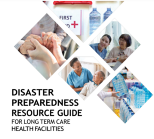
Disaster Preparedness Resource Guide for Long Term Care Health Facilities
This resource guide is designed to optimize facility responses in a timely and effective manner and does not supersede the Emergency Operations or Continuity of Operation Plan of each facility. Acquainting facility staff members with this guide and being well-prepared can greatly enhance preparation and response efforts during a disaster or any unforeseen event. Click here for guide
|
Public Health Preparedness and Response MHOAC Duty Officer
The Duty Officer serves as the central point of contact for all-hazards emergencies, promoting strong collaboration with local, state, and federal agencies, as well as community partners. The Duty Officer is equipped to assist with a wide range of needs, including evacuation planning, utility outages, medical supply chain issues, facility concerns, planned strikes, command center activation, patient tracking, and non-emergency support.
24/7 Medical and Health Operational Area Coordinator (MHOAC) Duty Officer:
|
Healthcare-Associated Infections Program
This program, with public health professionals and support staff, promotes infection prevention in San Diego's healthcare community. It focuses on preventing, monitoring, and reporting healthcare-associated infections (HAIs) and antimicrobial-resistant (AR) pathogens. Services include investigating disease incidents and outbreaks, providing infection prevention guidance, conducting surveillance and data analysis, promoting best practices, and offering consultation, education, and outreach.
San Diego Skilled Nursing Facility Infection Prevention (SNF IP) Collaborative: Meets every 4th Wednesday of the month, 11 AM - 12 PM. View the SNF IP Collaborative flyer for additional information and how to join via Teams.
|
Storm Preparedness and Safety CDPH
Storms can cause flooding, mudslides and power outages that can lead to public health challenges like mold and diseases. Be careful of mold, which can be a risk to health or an issue for individuals with asthma or respiratory issues. CDPH has updated our Storm Preparedness communications toolkit to help Californians take precautions before, during, and after storms.
Additional resources:
|

Be Prepared for Wildfire & Public Safety
SDG&E continually monitors weather and other climate conditions and may have to shut off power to help prevent a wildfire. All residents in San Diego County could be affected and should be prepared. To learn how to stay informed and how to be prepared visit the SDGE Wildfire Safety website.
|
ALERT San Diego:
Alert San Diego provides emergency preparedness resources, including creating disaster plans, registering for emergency alerts, and downloading the SD Emergency app. They offer guidance on preparing for floods, wildfires, heatwaves, power outages, earthquakes, tsunamis, pandemics, and terrorism. They also provide tips for making evacuation kits and staying informed during emergencies. Visit Alert San Diego for details
|
SD Emergency App
Download the free SD Emergency App to help you plan, prepare, stay informed and recover from an emergency. Find out more by visiting the Ready San Diego website.
|
Resident and Staff Health and Wellbeing
|

Alzheimer's Awareness
Alzheimer’s disease is projected to impact more of us as our population gets older. As a result, it is important to reduce risks and spot signs as soon as possible. Early detection of Alzheimer’s disease helps families plan for the future and improves health outcomes. Visit TakeOnAlz.com to help raise awareness and learn more about Alzheimer’s. Visit the Take On Alzheimer's communications toolkit.
|
Understanding Air Quality & Making Improvements at the Workplace
Protecting your health during periods of poor air quality requires an understanding of what air quality is, how it is evaluated, and the most important indoor and outdoor safety measures to take when air quality is unhealthy. PHCC’s newest resource, Protect Your Health: Understanding Air Quality, will help you communicate about air quality and protective measures people can take to stay safe. This resource is available in English and Spanish and includes:
- The fundamentals of understanding air quality and the Air Quality Index (AQI).
- A visual guide to the major sources of air pollution.
- Recommendations for protecting your health routinely and during air-quality alert days.
|
Wildfire Safety Awareness
Wildfires can release ash into the air, which can cause persistent cough, runny nose, phlegm, wheezing, and difficulty breathing. Take steps to reduce air pollutants in your home.
- Stay inside as much as possible and close all windows, doors and vents.
- Check the air quality and sign up for updates.
- Change settings on your A/C unit to re-circulate, close outdoor air intakes and/or run an air purifier.
If you need to go outside, wear an N95, KN95 or KF94 mask. Learn more about how you can protect yourself from smoke and ash during wildfires at Wildfires (ca.gov) & Smoke & Ash Safety (ca.gov).
|

Stay Safe During Extreme Heat
Parts of California are under an excessive heat warning this week. Extreme heat can lead to serious medical emergencies, like heat stroke and heat exhaustion. Heat waves can be dangerous, especially for people who may be more sensitive to heat like older adults.
It’s important to protect yourself and your loved ones by regularly checking in on friends and family who may need assistance. Make sure to monitor weather forecasts, stay hydrated, limit time spent in the heat, and spend time in air-conditioned spaces or visit places with air conditioning to stay cool and safe.
Find tips for preventing or treating heat-related illness at cpdh.ca.gov and HeatReadyCA.
|
More to come!
|