|
Having trouble viewing this email? View it as a Web page.
 May 1, 2025

 Put down that cell phone and just drive
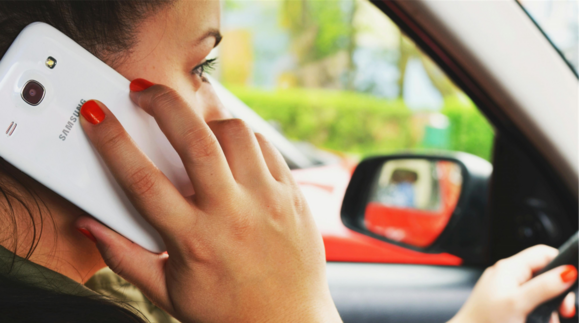
Using your cell phone while driving is not only dangerous, but also illegal in California. You cannot use a cell phone or similar electronic communication device while holding it in your hand. You can only use it in a hands-free manner, such as speaker phone or voice commands, but never while holding it. Any driver under the age of 18 is prohibited from using a cell phone for any reason.
Engaging in distracting behaviors with a phone like dialing, talking, or texting increases the risk of getting into a crash by three times. The youngest and most inexperienced drivers are most at risk when driving distracted. All functions of a phone can be distracting: using an app, shuffling through music or playing videos, looking at social media, maps or photos. They are all dangerous and illegal when you are driving. The safest thing drivers can do is put down the phone and just drive.
According to the National Safety Council:
- There are around 1.6 million car accidents each year because of texting while driving.
- There are around 400,000 injuries that occur every year from car accidents caused by texting and driving.
- Texting is one of the most dangerous activities involved with using a cell phone. It is more dangerous than talking on speakerphone with another person.
The average time it takes to respond to a text is 5 seconds, which does not give the driver enough time to come to a complete stop if they were traveling above 55 mph.
And remember, other serious driver distractions such as eating, grooming, reading, reaching for objects on the floor, changing clothes or talking with passengers are also dangerous.
 Going on vacation? Sign-up for a free vacation house check
The Vacation House Check program is a free service offered by the police department for Roseville residents and is meant to be supplemental to your primary home security arrangements.
Volunteers from our Citizens on Patrol (COP) program will check your residence on a random basis looking for signs of suspicious activity such as open doors, open or broken windows, unfamiliar cars, or other suspicious conditions. Any situation discovered by our COP volunteers that needs immediate attention will be addressed by Roseville police officers.
For more information and how to submit an application visit our website at roseville.ca.us/VacationHouseCheck.
 Curious about recent crimes occurring in your neighborhood?
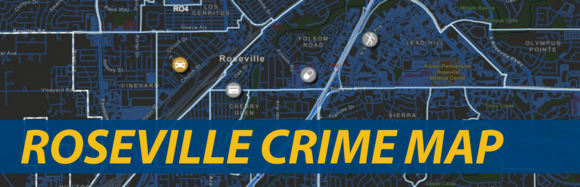
Check out the Roseville Police Department's City of Roseville Crime Map. Also, check out the Roseville Police Crime Log, a snapshot of crime that happens throughout the community.
Information is power, and many crimes are preventable. Look at our current edition to see the trends and where you could take proactive steps to avoid becoming the next victim.
 Say goodbye to clutter: Spring cleaning events happening in April and May
Streamline your spring cleaning by participating in a complimentary spring clean-up organized by the City of Roseville and the Roseville Coalition of Neighborhood Associations (RCONA).
2025 event locations:
Spring clean-up days are scheduled on Saturdays from 8 a.m. to 2 p.m. at the following locations:
-
May 17: St John's Church, 2351 Pleasant Grove Blvd
-
May 31: Bridgeway Church, 8150 Industrial Avenue
Visit the Neighborhood clean up page for unacceptable items.
For questions or more information, contact RCONA by email at springcleanup@rcona.org or phone at (916) 248-4878.
 Medication take-back
Did you miss our last medication take-back event? You can still protect our community and the environment by finding a FREE year-round drop-off site for both medication and sharps.
Another option is to participate in the free mail-in option. For more information on these options call 211 or visit Medtakebackcalifornia.org and Sharpstakebackcalifornia.org
 Talk to your kids about text scams
You are not the only one getting text scams. If your high school or college student has a smart phone, they are most likely getting them, too. You can tell your kids to delete these unexpected texts, but you also want them to understand why. Tell your kids that scammers want to get personal information like Social Security numbers, credit card numbers, or bank information. Let your kids know why never to click links in unexpected text messages. Clicking could lead to a website that tries to steal personal data.
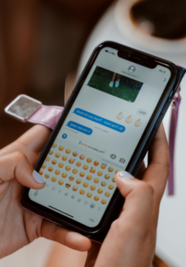
Here are some tips from the Federal Trade Commission (FTC) when talking to your kids about text scams:
-
Scammers might pretend to be someone from school or a well-known business.
-
Scammers say there’s a problem or prize to get you to respond. Not sure that problem or prize is real? Get help from a parent or trusted adult.
-
Scammers use pressure so you don’t have time to think. Slow down.
Scammers tell you to pay with cash, a gift card, wire transfer, cryptocurrency, or payment app. Paying in these ways makes it hard to get your money back.
Teach your kids about online safety when they are young. By teaching them now, you can help them avoid scams and having their personal information compromised.
|
Beat: 7
Date: March 20
Neighborhood: Sun City
The victim stated on 3/19/25 at about 1:22 p.m., she received a text message about a fraud alert claiming to be from her bank. The text stated there were fraudulent charges on her debit card that were made in Charlotte, North Carolina at Walmart. She texted the number back and said she did not make any purchases there. She contacted a female through the number provided who knew some personal information about her. The victim thought the female was an employee at her bank and also spoke with a male about the fraudulent purchases. The male had the victim follow directions on how to recover the money by cancelling her debit card. She also had to reset her Apple wallet. The male had her add his personal debit card into her Apple wallet. She did that and went to the bank to get $8600. She went to another ATM machine and transferred the money into the male’s account by scanning a barcode that transferred the money into the account. After the transaction was completed, she was instructed to delete the male’s debit card from her Apple wallet, so she did. She tried to contact the male multiple times and could not get a hold of anyone on the phone number she had been in contact with. The victim knew at this point she had been a victim of fraud. She verified there were no fraudulent transactions in North Carolina.
Beat: 1
Date: March 11
Neighborhood: Stoneridge
The victim stated on the morning of 03/10/2025 she received a text message claiming fraudulent charges were made on her iTunes account and was prompted to contact “the bank” via a number provided. Upon making contact, the victim was advised her bank account was charged at several locations amounting to a loss of approx. $11,000. The victim explained the person she believed to be a bank representative told her to withdraw the rest of her funds from the bank account to prevent further transactions. The victim stated the “bank representative” told her if anyone asked what she was using the money for, to say she was buying a car. Using her debit card, the victim withdrew $5,000 cash and promptly drove to an address given by the scammer. When the victim arrived at the address, a QR code was sent to her via text message. Using the QR code, the victim accessed the Bitcoin station inside the building to deposit $1,000. Immediately after making this deposit, the victim continued to the next destination provided by the suspect and another QR code was sent to her via text message, which she used to deposit $3,900 into the Bitcoin station at that location. The victim added she was advised to purchase Apple gift cards from Walmart. However, when Walmart did not have those cards, the victim was told to purchase two separate gift cards for $1,000 from Lulu Lemon, which she did. Shortly after this purchase the victim was advised to scratch off the bar at the back of the gift cards and send a photo of both cards via text message. The victim admitted it seemed strange, but she was doing what they asked of her. The next time she heard from the suspect the victim realized she was being scammed, so she began blocking their numbers. Ultimately, the victim explained she was at a loss of $7,000.
Beat: 7
Date: March 1
Neighborhood: Fiddyment Farms
The victim noticed an estate sale on Facebook Marketplace that was advertised from the Facebook account of an acquaintance. The victim and her husband decided to purchase a “Four-Wheeler quad” advertised on the estate sale. The victim also saw a deep freezer that she decided to buy. The victim inquired about the quad and deep freezer and sent money via Zelle and Apple Pay to save the items. The victim sent a total of $1500 for both items. The thousand dollars was supposed to be a deposit for the quad. The suspects asked the victim to send $500 for the deep freezer to a different Zelle account. The victim was unable to send more money via Zelle, so was asked to send the money via Apple Pay. The victim thought it was suspicious that there were different numbers connected to names that had nothing to do with the acquaintance from Facebook. The victim called a mutual friend of hers and the acquaintance to check on the validity of the estate sale. She learned the acquaintance had their Facebook account hacked and the account was being used to swindle money out of people by fraudulently promising items and taking their money. The victim then called the police.
|