|
Having trouble viewing this email? View it as a Web page.
 September 1, 2024

 Dangerous things teens drivers do
High schools are back in session and if you have a teen driver you want to make sure they arrive home safely every day.
According to safekids.org, there are seven especially risky behaviors teens do in cars that can lead to death or injuries.
Does your teen engage in any of these seven risky driving behaviors?
-
Skipping seat belts – More than half of teens killed in crashes weren’t wearing their seat belts.
-
Texting while driving – On average, texting while driving takes your eyes off the road for five seconds. At 55 m.p.h., that’s like traveling the length of a football field blindfolded.
-
Afraid, and not speaking up – Half of teen passengers report feeling unsafe riding with a driver who isn’t alert. One third of teens feel unsafe riding with a parent.
-
Too many passengers – When two or more teens ride in a vehicle with a teen driver, the risk of a fatal crash can double or triple.
-
Drinking and driving – 15% of drivers between 15-19 who were killed in crashes had a blood alcohol content of .08% higher.
-
Driving when it’s dark – The risk of a fatal crash at night can me more than three times higher for teens than adults.
-
Speeding – More than one third of teens killed in crashes were speeding.
If you have teenage drivers, make sure to sit down with them and go over your expectations when they get behind the wheel. Make sure your teen is aware of the seven risky behaviors and not to engage in them. By taking just a few minutes to talk with your teen, can make all the difference in ensuring they come home safely every day.
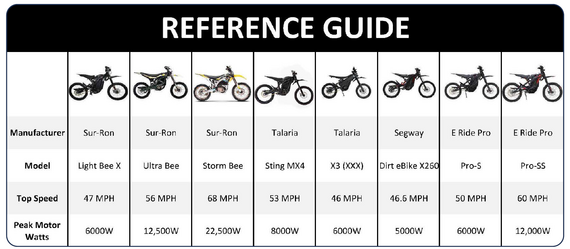
 E-Motorcycles are a No-Go
Any self-propelled device, whether gasoline or electric powered, that goes faster than 30 miles per hour is considered a motorcycle, a motor driven cycle or a pocket bicycle. Due to their self-propelled nature, they are subject to the California Vehicle Code (CVC).
E-Motorcycle
Only e-motorcycles registered with the California Department of Motor Vehicles (DMV) may be ridden on roads or at off-highway vehicle (OHV) parks. These vehicles may not be ridden on trails, bike lanes, or sidewalks. They must have a license plate issued by the DMV to be driven on the street. Riders must have a California Driver’s Licensed with a M1 or M2 endorsement and the drivers must carry insurance. Riders and passengers, regardless of age, must wear at DOT approved helmet. These vehicles are subject CVC 400(a)/(b), CVC 405, and CVC 473(a).
Certain e-motorcycles, typically those marketed as off-highway electric motorcycles, are not easily registered in California and must be registered to be used on streets. E-motorcycles, classified as off-highway or not, may not be used on sidewalks, bike trails, bike lanes or bike paths.
Many e-motorcycles perform and have features similar to dirt bikes. E-motorcycles that do not have headlights, taillights, blinkers, mirrors, reflectors, or a horn also cannot be driven on the street, sidewalks, bike trails, bike lanes, or bike paths. Even though e-motorcycles do not traditionally have pedals, adding pedals does not change its classification from "e-motorcycle" to "e-bike". They must still be registered with the DMV.
Failure to comply with California Vehicle Codes regarding e-motorcycles may result in towing or impounding of your vehicle.
Please direct questions regarding e-motorcycles to Roseville Police Traffic Sergeant Mike Ryland at mryland@roseville.ca.us.
 E-Bikes and E-Scooters
Different classifications and models of e-bicycles and e-scooters have different rules regarding their general use, minimum age requirements, whether licenses are needed to operate them, what materials they must be equipped with, and where they can be used.
For more safety tips on e-bikes and e-scooters, visit Roseville Public Works here.
 Senior Resource Fair
Day 1 - Meet over 60 senior-based resource providers in Placer County from 10 a.m. - 2 p.m., Thursday, September 12 at the Maidu Community Center. Participate in a free Legal and Technology clinic.
Day 2 - Learn more about senior scams, healthy living, and how to protect yourself as you age from 10 a.m. - 4 p.m., Tuesday, September 17 at the Maidu Community Center.
 Senior Safety presentation
Learn how to recognize and avoid fraud, scams, elder abuse, and other crimes that target seniors from 1 - 3 p.m., Thursday, September 19 at the Maidu Community Center.
 Join us for coffee and conversation, no agenda or speeches, from 9 - 11 a.m., Wednesday, October 2 at Fourscore Coffee House, 325 Lincoln Street. This is a great opportunity to ask questions, voice concerns, and get to know the officers that serve your community.
 Registration is open and closes Friday, October 4
The Citizens Academy is a great opportunity to listen and learn in a classroom setting and engage in interactive presentations. The classes will be held from 6 - 9 p.m., Mondays through Thursdays on October 14 - 24 at the Roseville Police Department, 1051 Junction Blvd.
Register today online. If the class is full, your name will be placed on a wait list.
 Scammers target drivers with fake toll payment
In today's digital era, convenience is often accompanied by caution. Recently, scammers have begun impersonating toll collection services via text messages, aiming to trick consumers into paying fictitious toll fees. This elaborate scheme exploits the immediacy of mobile communication and the credibility associated with official service notifications.
How it works:
You receive a text message that appears to be from a legitimate toll authority like FasTrak. The message claims you owe a small sum for an overdue toll fee, and threatens a substantial late fee if not paid promptly, often exceeding $50. It includes a link supposedly directing you to the toll service’s payment portal, designed to appear authentic.
However, clicking on the link leads to a fraudulent website aimed at stealing your personal and financial information. Scammers may request sensitive details such as your Social Security number or credit card information under the pretext of settling your toll debt, potentially leading to identity theft or unauthorized transactions.
How to protect yourself:
Verify legitimacy: Instead of clicking links in unsolicited texts, independently confirm any outstanding toll fees by visiting your toll service provider’s official website. Log in through a trusted browser or contact customer service using verified contact details.
Recognize red flags: Be wary of urgent payment demands, vague messages, or grammatical errors—potential signs of a scam.
Avoid sharing personal information: Refrain from providing sensitive information like Social Security or driver’s license numbers unless absolutely certain of the recipient’s authenticity.
As digital threats evolve, so do the strategies of scammers aiming to exploit unsuspecting individuals. By staying vigilant and informed, you can safeguard yourself and others from falling prey to text message phishing scams.
Remember, legitimate toll agencies such as FasTrak never request payments via text messages with links to external websites. Always verify payment requests independently and report any suspicious activity promptly.
Beat: 4
Date: July 8
Neighborhood: Diamond Oaks
An elderly female victim stated that sometime in September 2023, she started talking to the male suspect via Facebook. They would send messages back and forth on the Facebook messenger application.
Around October 2023, the victim began to send money to the suspect. The suspect always gave a reason he needed money such as a sick dog, being in jail, being in the hospital, and needing money to speak with his daughter.
From then on, the victim began using the WhatsApp application to communicate with the subject. The victim would send anywhere from $100-$200 in gift cards monthly. Once she purchased the gift cards, she would provide the suspect with a photograph of the gift cards. The subject told the victim he would repay her later.
Additionally, the victim sent four PayPal payments from her Wells Fargo checking account to an unknown female. The victim sent two payments of $1,009. According to the bank staff, someone also requested more funds from the victim’s bank account, which prompted the bank to close the account.
The victim has since canceled all bank accounts and changed login credentials to online accounts. Estimated loss $2,500.
Beat: 3
Date: July 16
Neighborhood: Cirby Side
Victim's home computer froze, and a pop-up message appeared on his computer telling him to call Microsoft support. He then was informed his computer had been hacked and his bank account was compromised. He was then told he would be getting a call from a bank representative for further details and how to address the situation. He was informed there were charges for child pornography on his account which needed to be addressed if he did not authorize them. He was instructed to go to his local bank and obtain a cashier check for $133,000. This money would be held by FDIC until the investigation was completed and then would be returned to him. After sending the cashier’s check, the victim realized he had been scammed.
Beat: 6
Date: July 23
Neighborhood: Foothills Junction
The victim purchased gifts cards at a cosmetics store and provided the information on the gift cards to someone who the victim thought worked at her bank. The victim later confirmed with her bank that they never asked her for gift cards and it was a scam.
|



